
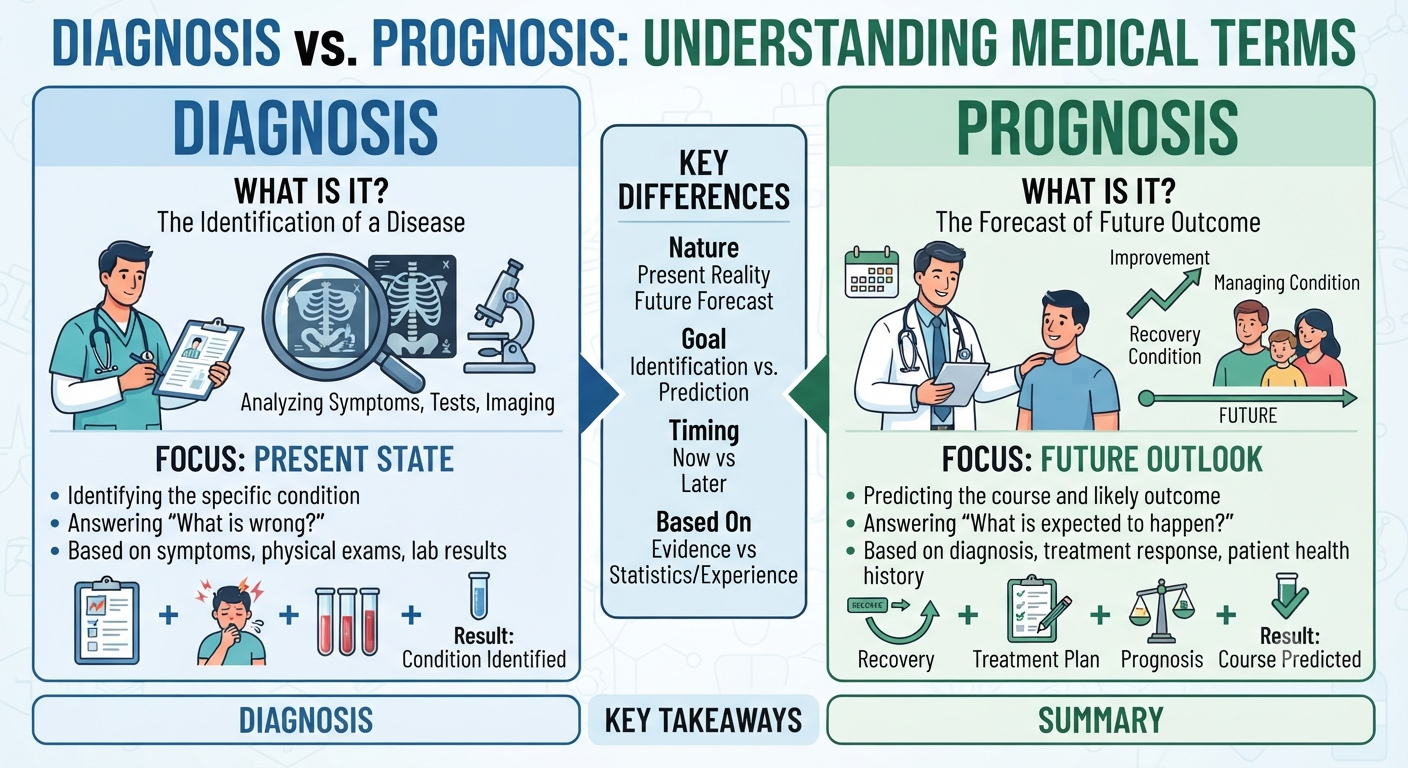
When people hear medical terms like diagnosis and prognosis, they often assume they mean the same thing. However, the prognosis diagnosis difference is one of the most important concepts in healthcare because these terms answer two completely different questions. A diagnosis explains what condition or disease a person has, while a prognosis explains what may happen in the future because of that condition.
Think of diagnosis as identifying the problem. Prognosis is the medical expectation about the journey ahead.
For example, if a doctor diagnoses someone with lung cancer, the diagnosis identifies the disease. The prognosis may discuss how the cancer is expected to respond to treatment, possible outcomes, survival expectations, and factors that could influence recovery.
Understanding the prognosis diagnosis difference helps patients communicate better with healthcare providers, interpret medical reports correctly, and make informed decisions about treatment options.
What Is the Difference Between Prognosis and Diagnosis?
The simplest way to understand the prognosis diagnosis difference is by looking at the questions each term answers.
A diagnosis answers:
“What disease, condition, or health problem does this person have?”
A prognosis answers:
“What is likely to happen after this diagnosis?”
Doctors use diagnosis and prognosis together, but they serve different purposes.
Diagnosis: Identifying the Medical Condition
A diagnosis is the process of identifying an illness, injury, or medical condition based on symptoms, examinations, medical history, and testing.
Doctors may use several methods to reach a diagnosis, including:
- Physical examinations
- Blood tests
- Imaging scans such as X-rays, CT scans, or MRIs
- Biopsies
- Genetic testing
- Patient history and symptoms
For example:
A patient experiences chest pain and shortness of breath. After testing, a doctor determines the person has coronary artery disease. That conclusion is the diagnosis.
The diagnosis provides a name and explanation for the health problem.
Prognosis: Predicting the Possible Outcome
A prognosis is a healthcare professional’s prediction about the likely course and outcome of a disease.
It may include information about:
- Expected recovery
- Disease progression
- Treatment response
- Possible complications
- Long-term health outlook
- Survival rates in certain conditions
Using the previous example, after diagnosing coronary artery disease, a doctor may explain the prognosis:
“Your condition can often be managed successfully with medication, lifestyle changes, and monitoring, but untreated disease may increase the risk of heart complications.”
That prediction represents the prognosis.
Prognosis Diagnosis Difference Explained Through Real Examples
Understanding medical terminology becomes easier with practical examples.
Example 1: Cancer Diagnosis and Prognosis
A biopsy confirms that a patient has breast cancer.
The diagnosis:
- Breast cancer
- Specific cancer type
- Cancer stage
- Tumor characteristics
The prognosis:
- Likelihood of successful treatment
- Expected response to chemotherapy or surgery
- Risk of recurrence
- Long-term survival outlook
Two people can have the same diagnosis but completely different prognoses.
Why?
Because prognosis depends on many individual factors.
Example 2: Diabetes Diagnosis and Prognosis
A blood test shows elevated glucose levels and confirms type 2 diabetes.
The diagnosis identifies the disease.
The prognosis depends on factors such as:
- Blood sugar control
- Diet and exercise habits
- Medication effectiveness
- Presence of complications
- Overall health
Someone who manages diabetes carefully may have a much better prognosis than someone with uncontrolled blood sugar levels.
Example 3: Broken Bone Diagnosis and Prognosis
A doctor uses an X-ray to diagnose a fractured arm.
The diagnosis:
- Type of fracture
- Location of injury
- Severity
The prognosis:
- Expected healing time
- Chance of full movement returning
- Possibility of complications
A simple fracture may have an excellent prognosis, while a complex fracture involving nerves or blood vessels may have a more cautious outlook.
Why Understanding the Prognosis Diagnosis Difference Is Important
Many patients focus only on the diagnosis because it gives the condition a name. However, the prognosis often provides information that affects future decisions.
Understanding the difference helps people:
1. Make Better Treatment Decisions
A diagnosis tells patients what they have. A prognosis helps them understand possible outcomes of different treatments.
For example, two treatments may have different risks and benefits depending on the expected disease progression.
2. Set Realistic Expectations
A diagnosis does not always tell someone how severe a condition will become.
For example:
- Early-stage cancer and advanced-stage cancer are different situations.
- Mild arthritis and severe joint damage have different outlooks.
- Controlled heart disease and uncontrolled heart disease have different risks.
The prognosis provides additional context.
3. Improve Communication With Doctors
Patients often hear medical words during stressful moments and misunderstand their meaning.
Knowing the prognosis diagnosis difference allows patients to ask better questions, such as:
- “What is my exact diagnosis?”
- “What factors affect my prognosis?”
- “What can improve my expected outcome?”
- “Are there different possible outcomes?”
Key Factors That Influence a Medical Prognosis
A prognosis is not a guaranteed prediction. It is an educated medical estimate based on available information.
Several factors influence prognosis.
Disease Type and Severity
Some diseases naturally progress faster than others.
For example:
- Early-stage diseases often have better outcomes.
- Advanced conditions may require more aggressive management.
- Certain diseases respond better to treatment.
Patient Age and Overall Health
A person’s general health can significantly influence prognosis.
Doctors consider:
- Age
- Physical condition
- Existing medical conditions
- Immune system function
- Lifestyle factors
A healthy person may respond differently to treatment compared with someone with multiple health challenges.
Treatment Response
How a disease reacts to treatment can change the prognosis.
For example:
A cancer patient whose tumor responds well to therapy may receive a more favorable prognosis compared with someone whose disease continues progressing despite treatment.
Timing of Diagnosis
Early detection often improves treatment options.
A condition discovered at an early stage may have a better prognosis because doctors can intervene sooner.
This is why regular screenings and medical checkups are important for many conditions.
Can Diagnosis and Prognosis Change Over Time?
Yes. Both diagnosis and prognosis can change as new medical information becomes available.
A diagnosis may change when:
- Additional tests reveal more details
- Symptoms develop differently
- A previous diagnosis was incomplete
- New medical evidence appears
A prognosis may change when:
- Treatment works better than expected
- The disease progresses faster
- New therapies become available
- Patient health improves or declines
Medical professionals regularly update prognosis based on the latest information.
Common Misunderstandings About Prognosis and Diagnosis
“A Serious Diagnosis Always Means a Poor Prognosis”
This is not always true.
Many diseases sound frightening but can have excellent outcomes with proper treatment.
For example:
Some cancers detected early have high treatment success rates.
The diagnosis alone does not determine the final outcome.
“A Prognosis Is a Certain Prediction”
A prognosis is not a guarantee.
Doctors use medical research, experience, test results, and patient information to estimate possible outcomes.
However, every individual case is unique.
“A Better Diagnosis Means a Better Prognosis”
A diagnosis does not have a quality rating.
A diagnosis simply identifies the condition.
The prognosis describes the expected future course.
Prognosis vs Diagnosis: Quick Comparison Table
| Feature | Diagnosis | Prognosis |
|---|---|---|
| Meaning | Identifies a disease or condition | Predicts possible future outcomes |
| Main Question | What is wrong? | What may happen next? |
| Based On | Tests, symptoms, examinations | Diagnosis, research, patient factors |
| Timing | Usually happens first | Usually follows diagnosis |
| Purpose | Determine the condition | Guide expectations and planning |
| Example | “You have pneumonia” | “You are expected to recover within weeks with treatment” |
How Doctors Create a Prognosis After Diagnosis
Creating a prognosis involves combining medical knowledge with individual patient information.
Doctors usually consider:
1. Medical Evidence
Research studies, clinical guidelines, and historical outcomes provide general expectations.
2. Patient-Specific Information
Every person has different circumstances.
Doctors evaluate:
- Medical history
- Test results
- Current symptoms
- Treatment options
3. Disease Behavior
Some diseases are predictable, while others vary significantly between patients.
4. Response to Treatment
The patient’s progress can provide important clues about future outcomes.
Questions Patients Should Ask About Their Diagnosis and Prognosis
When receiving medical information, asking clear questions can reduce confusion.
Useful questions include:
- “What exactly is my diagnosis?”
- “How serious is this condition?”
- “What is my expected prognosis?”
- “What factors could improve my outcome?”
- “What treatments may change my prognosis?”
- “What warning signs should I watch for?”
These questions help patients become active participants in their healthcare decisions.
Prognosis Diagnosis Difference in Medical Reports
Medical reports often contain both terms, but they appear in different contexts.
A pathology report, imaging report, or clinical note may focus mainly on diagnosis.
A treatment plan or specialist consultation may discuss prognosis.
For example:
Diagnosis section:
“Stage II colon cancer identified.”
Prognosis section:
“Patient has a favorable outlook with appropriate surgical and medical treatment.”
Understanding this distinction makes medical documents easier to interpret.
How Technology Is Changing Diagnosis and Prognosis
Modern healthcare technology is improving both diagnosis and prognosis.
Artificial intelligence, advanced imaging, and genetic analysis are helping doctors identify diseases earlier and predict outcomes more accurately.
Examples include:
- AI-assisted medical imaging analysis
- Genetic risk assessments
- Personalized cancer treatment planning
- Predictive healthcare models
These tools do not replace doctors, but they provide additional information to support medical decisions.
Frequently Asked Questions About Prognosis Diagnosis Difference
1. What is the main difference between prognosis and diagnosis?
The main prognosis diagnosis difference is that diagnosis identifies the medical condition, while prognosis predicts the likely future outcome of that condition. A diagnosis explains what is happening now, whereas a prognosis explains what may happen next.
2. Can a person have the same diagnosis but a different prognosis?
Yes. Two people can have the same diagnosis but different prognoses because factors such as age, overall health, disease stage, genetics, and treatment response influence outcomes.
For example, two patients may both have the same type of cancer, but one may respond better to treatment because the disease was detected earlier.
3. Does a poor prognosis mean there is no chance of recovery?
No. A poor prognosis means doctors believe the likelihood of certain outcomes may be lower compared with average expectations. It does not mean recovery is impossible.
Medical outcomes can change because of new treatments, lifestyle improvements, and individual responses.
4. Which comes first, diagnosis or prognosis?
Usually, diagnosis comes first.
Doctors need to identify the condition before they can estimate the likely future course. Once enough information is available, they can discuss prognosis.
5. Why is understanding prognosis important after receiving a diagnosis?
Understanding prognosis helps patients make informed choices, prepare for possible outcomes, and understand how treatment may affect their future health.
A diagnosis provides information about the present. A prognosis helps patients plan for what comes next.
Final Thoughts: Understanding the Prognosis Diagnosis Difference
The prognosis diagnosis difference becomes much easier to understand when you remember one simple idea:
Diagnosis tells you what you have. Prognosis tells you what may happen because of it.
Both terms work together. A diagnosis gives doctors a starting point, while a prognosis helps guide treatment decisions, expectations, and future planning.
If you or someone you care about receives a medical diagnosis, do not stop at the name of the condition. Ask about the prognosis, the factors affecting it, and what actions can improve the possible outcome.
Knowledge is one of the most valuable tools patients have when navigating healthcare decisions.









Leave a Reply