
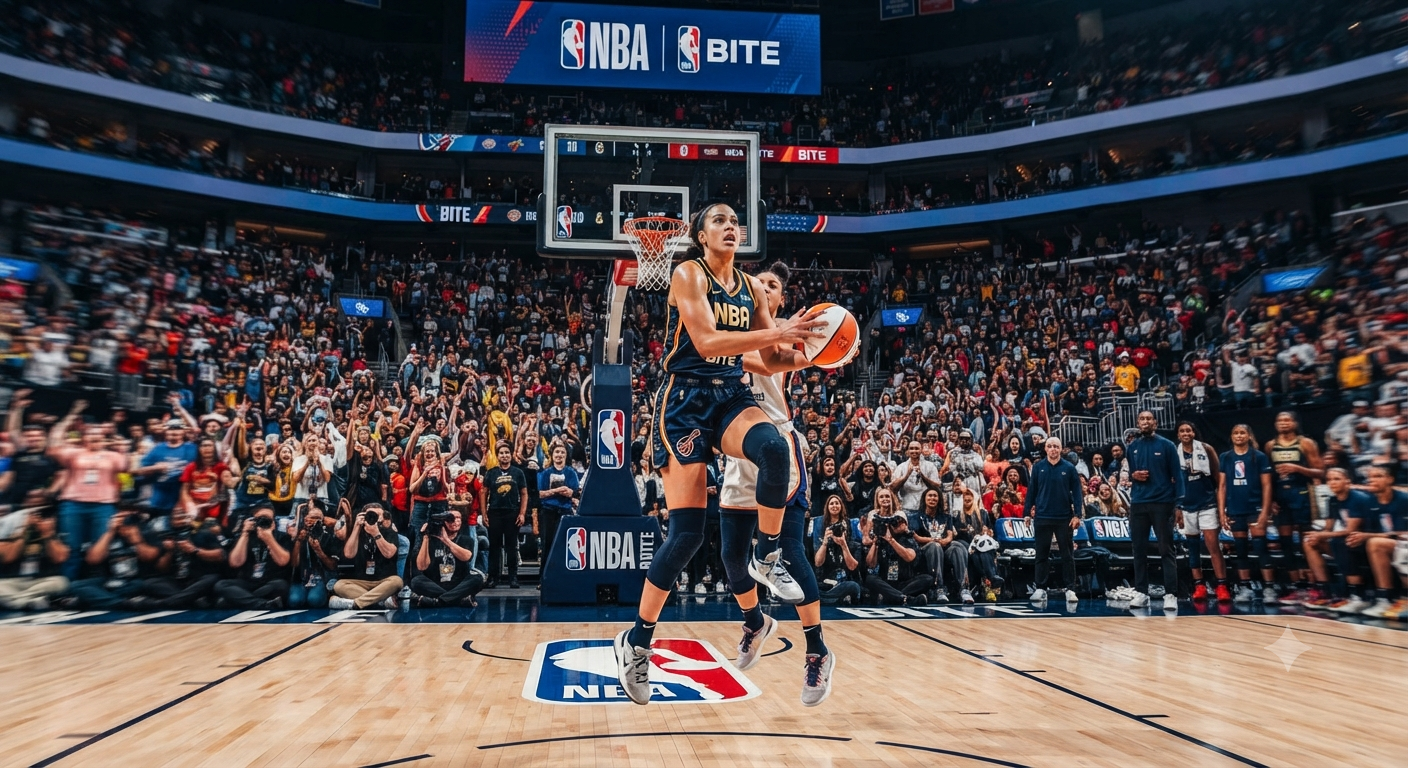
NBABite is commonly described as a free basketball-streaming directory that points visitors toward third-party broadcasts of NBA games. Its appeal is obvious: fans search for a matchup, select a link, and hope to watch without paying for several television or streaming subscriptions. The real experience, however, is far less simple.
Before relying on NBABite, readers should know that the service is not an official NBA product, and the streams associated with its name may be unlicensed, unstable, heavily tracked, or surrounded by deceptive advertising. This guide explains how the platform model works, why it became popular, what risks users should understand, and how to choose a legitimate NBA viewing option without wasting money.
Key Takeaways
- NBABite is generally an aggregator, not a licensed broadcaster with its own verified NBA rights.
- A stream being free or accessible does not make it authorized, safe, private, or reliable.
- Unofficial streaming ecosystems have been linked to aggressive tracking, deceptive ads, malicious extensions, scams, and malware.
- NBA games in the United States are now distributed nationally across ABC/ESPN, NBC/Peacock, and Prime Video, while NBA League Pass remains important for out-of-market viewing.
- The best legal option depends on whether the game is national, local, or out of market.
What Is NBABite?
NBABite is a brand name for similar sites that curate resources to watch basketball games. Unlike Netflix or the sports channel, an aggregator does not host any content. Instead, it offers a schedule of events, team names with times, and several links to external playback addresses. In most cases, the videos are hosted by a different provider.
This nuance is often overlooked when a customer visits a well-designed NBABite page. A useful schedule and attractive design lead many to believe they are on a reliable webpage. However, each link can belong to a different organization that provides the stream, which means varying levels of security and privacy protection.
It is also noteworthy that the appearance of a working directory hides the potential instability of individual links. In reality, visitors are on different webpages for each video link they choose. This can confuse many and lead to problems because the game schedule changes every day, and the address changes when the user clicks a different link. Most often, such an experience is associated with advertising, which is why many users become more cautious than usual when they enter an unfamiliar website.
The Usual Procedure for Streaming
At first glance, the procedure seems straightforward: the user views the schedule, finds the desired connection, and clicks on the link. In reality, the process involves several more steps:
• Finding the link;
• Removing pop-up windows;
• Eliminating unnecessary redirection;
• Removing obstacles such as advertising;
• Opening a playable video stream;
• Searching for new connections if the previous ones fail.
The last two steps show that the ease of use is deceptive, and the high traffic volume is justified by frequent failures and redirects. On the other hand, the interaction with the interface is much more transparent than, say, a Netflix page. However, viewers are not aware of what happens when they leave the directory, which exposes them to potential fraud opportunities.
The Connection to Reddit’s Former NBA Streaming Community
The popularity of names such as NBABite grew partly from the audience that had gathered around Reddit’s r/nbastreams community. Reddit banned that subreddit in June 2019 under its repeat copyright-infringement policy after it had become a major destination for links to unauthorized NBA broadcasts.
The ban did not eliminate demand. It pushed viewers toward independent websites, mirrors, social posts, messaging channels, and search queries built around phrases such as “NBA streams,” “free NBA live stream,” and team-specific game searches.
That migration helps explain why the brand may appear across changing domains rather than one permanent, transparent corporate platform. It also makes it harder to determine who controls a particular version of the site.
Is NBABite Legal?
The safest description is that streams promoted under this name are often unofficial and potentially unauthorized. NBA games are copyrighted broadcasts licensed to specific media partners, regional distributors, and international rightsholders.
A third party that retransmits those broadcasts without permission can infringe those rights. Embedding someone else’s unauthorized stream or directing a large audience toward it does not automatically remove the copyright problem.
The NBA’s current U.S. national media agreements run through the 2035–36 season and assign coverage to Disney’s ABC and ESPN, NBCUniversal’s NBC and Peacock, and Amazon’s Prime Video.
For that reason, NBABite does not acquire broadcast rights merely by embedding a player, listing a schedule, or linking to another host.
Is Watching the Same as Operating the Stream?
Not necessarily. Copyright rules and enforcement priorities differ by country, and legal exposure can depend on whether a person watches, downloads, records, restreams, operates a service, sells access, or knowingly distributes infringing links.
This article provides general information rather than legal advice. Users who require guidance about a specific country or situation should consult a qualified legal professional in that jurisdiction.
Still, viewers should not confuse uncertain enforcement against individual users with lawful authorization. The history of takedowns, platform bans, and domain changes shows that the ecosystem exists under persistent copyright pressure.
Reddit’s previous enforcement against sports-streaming communities illustrates how repeat infringement complaints can remove even large, established link-sharing hubs.
Is NBABite Safe to Use?
Evaluating NBABite safety requires caution because there is no reliable basis for treating every site, mirror, player, or advertisement using the name as safe. The main schedule page may not directly deliver malware, but it can send users into a chain of third-party domains where the original directory has little visible control over what happens next.
Research into illegal live-streaming services examined more than 27,000 streams across 467 domains. It identified extensive tracking, deceptive advertisements, scams, and attempts to push malicious browser extensions.
The researchers also found that link aggregators did not reliably filter out hosts using invasive tracking practices. A directory’s clean appearance therefore tells users very little about the safety of the final player.
The U.S. Federal Trade Commission has separately warned that illegal streaming websites, apps, and add-ons can expose devices to malware.
This does not prove that every page carrying the NBABite label is infected. It does show why “the video played successfully” is not a meaningful security test.
Common Warning Signs
Leave the page when you encounter any of the following:
- A request to install a browser extension, codec, media player, or mobile app.
- A fake Play, Continue, or Allow button that requests notification permission.
- Multiple new tabs opening after a single click.
- A login form requesting an email, social-media account, or payment card for a supposedly free stream.
- A “virus detected” warning generated inside the webpage.
- A download that begins automatically.
- A player that repeatedly redirects to gambling, adult, cryptocurrency, or prize pages.
- A domain name that imitates a well-known broadcaster but contains misspellings.
- A countdown claiming that access will disappear unless the user acts immediately.
A legitimate streaming provider may require an account or subscription, but it will clearly identify the company, terms, privacy policy, customer support, and billing relationship. Anonymous mirrors rarely provide the same level of accountability.
Why Fake Play Buttons Are So Effective
Unofficial streaming pages frequently place several advertisement layers over the actual video player. Each layer may display a convincing play icon, close button, loading message, or full-screen prompt.
A viewer focused on catching the start of a game may click quickly without checking what the button actually does. That urgency is valuable to advertisers, scammers, and operators attempting to obtain notification permissions or software installations.
The safest response is simple: never install software to unlock a browser-based basketball stream. An ordinary web video should not require a new codec, security certificate, extension, or device-management profile.
Why NBABite Links Stop Working
When NBABite stops working, users often assume a broken player means their internet connection is slow. Sometimes it is. More often, unofficial streams fail because the entire delivery chain is fragile.
A stream can disappear when a host receives a copyright complaint, a domain is blocked, a server reaches capacity, an embedded token expires, or the person relaying the broadcast stops the feed. Mirrors can also be abandoned and copied by unrelated operators.
This means yesterday’s familiar design is a poor indicator of today’s ownership. A cloned site may reproduce the same logo, layout, and game listings while replacing the original links with advertisements, phishing forms, or non-functioning players.
The Most Common Causes of Failure
Expired links: Some player URLs are temporary and stop functioning when an event begins or an access token times out.
Server overload: High-profile games attract sudden traffic that low-cost hosts cannot handle.
Rights enforcement: Hosts, platforms, registrars, and infrastructure providers may remove infringing material.
Regional blocking: Internet providers or courts in some jurisdictions may restrict access to known piracy domains.
Aggressive advertising scripts: A page can load advertisements and trackers successfully while the actual video player fails.
Fake mirrors: Search results may surface copycat pages designed to capture traffic rather than provide a working broadcast.
Source interruption: The individual rebroadcasting the game may lose access, close the stream, or switch to a different source.
This instability is structural, not a minor technical bug. An unauthorized service cannot offer the same continuity guarantees as a rights-holding broadcaster with contractual distribution, controlled applications, customer support, and dedicated infrastructure.
Streaming Quality, Delay, and Privacy Trade-Offs
A free player may advertise HD, 1080p, or even 4K, but the label does not guarantee the delivered bitrate, frame rate, resolution, or stability. Video may be heavily compressed, stretched from a lower-resolution source, or interrupted whenever the upstream feed changes.
The image may look sharp when nothing is moving but become blocky during fast breaks, crowd shots, or rapid camera pans. That is usually caused by insufficient bitrate rather than the viewer’s screen.
Latency is another overlooked problem. Unofficial relays often sit several steps behind the original broadcast, so alerts, group chats, betting apps, and social media may reveal a score before it appears on screen.
Audio can also drift out of sync, commentary tracks may change without warning, and mobile playback can consume more battery or data because of inefficient advertising scripts.
Privacy is the less visible trade-off. A stream can work while third parties collect IP addresses, browser characteristics, cookies, referral data, device information, and behavioral signals.
Academic analysis found that illegal live-streaming services used more obscure and extensive tracking than legitimate comparison sites.
There Is No Real Customer Support
When an official service fails, users can contact support, request a billing correction, review service-status information, or reinstall a verified application. Unofficial streaming directories generally offer none of these protections.
A broken NBABite link may be replaced without explanation, while a payment submitted to a fake registration page may be difficult to recover. There is usually no verified company accepting responsibility for the transaction.
Best Legal Alternatives to NBABite
Instead of repeatedly searching for a working NBABite mirror, use the legal viewing landscape strategically. It is fragmented, but it becomes much easier to navigate when you classify the game first.
Ask one question: Is this matchup national, local, or out of market?
The NBA’s 2025–26 U.S. structure introduced national coverage across ABC and ESPN, NBC and Peacock, and Prime Video. The league’s official viewing guide identifies those partners as the core national destinations under the current 11-year agreements.
| Viewing need | Best place to start | Important limitation |
|---|---|---|
| Nationally televised game | ABC/ESPN, NBC/Peacock, or Prime Video | The correct platform varies by game |
| Out-of-market regular-season games | NBA League Pass | Local and national blackouts may apply in the U.S. |
| Local team games | The team’s authorized local broadcaster or streaming partner | Availability depends on the market |
| Highlights and recaps | NBA app, NBA.com, official team and broadcaster channels | Usually not a full live-game replacement |
| International viewing | NBA League Pass or the authorized local rightsholder | Packages differ by country |
NBA League Pass
NBA League Pass is the most direct official product for fans who want broad access to out-of-market games. It also offers replays and other league content, but it is not a universal replacement for every live broadcast.
In the United States, local team games and nationally televised games may be blacked out live. The NBA states that locally blacked-out games become available on demand three days after the live broadcast, while national games become available at 6:00 a.m. Eastern Time the following day.
Before subscribing, enter your location or ZIP code on the official purchase page and review the blackout information. This prevents the common mistake of buying League Pass specifically for a local team that cannot be watched live through the package.
National Broadcast and Streaming Partners
For national matchups, check the official NBA schedule or viewing guide before tip-off. The game may appear on ABC or ESPN, NBC or Peacock, or Prime Video, depending on the date and broadcast package.
This extra check takes less time than cycling through broken mirrors. It also provides consistent video quality, reliable casting, closed captions, device support, and a clear customer-service route when something goes wrong.
Local Team Coverage
A fan living inside a team’s home market should identify the authorized local broadcaster or direct-to-consumer service for that franchise. The answer can vary significantly by city and may change between seasons.
Use the team’s official website or the NBA’s current game listing rather than relying on an old blog post. Regional sports arrangements, over-the-air broadcasts, and team-specific streaming packages can change.
Local coverage is also the reason some League Pass games are unavailable live. Blackouts protect the exclusive rights held by local and national partners; they are not random technical errors.
Official Highlights and Condensed Coverage
Fans who cannot justify another subscription still have legal options. Official NBA, team, and broadcaster channels routinely publish highlights, interviews, recaps, statistics, and postgame analysis.
These options do not replace a complete live broadcast, but they can be enough for casual viewers. They are also safer than entering personal information into an unknown page claiming to provide free premium access.
How to Choose the Cheapest Legitimate Setup
Do not begin by buying every service. Begin with your actual viewing habits.
- One favorite team, outside its local market: Start with NBA League Pass, then check how many desired games are nationally televised.
- One favorite team, inside its local market: Find the team’s local rights partner first.
- Only marquee national games: Compare the platforms carrying the specific schedule you care about.
- Playoffs and Finals focused: Review the postseason broadcaster list when the bracket and official schedule are published.
- Casual fan: Use official highlights, free broadcast television where available, and short-term subscriptions during the months you watch most.
- International viewer: Check the official NBA availability page and your country’s authorized sports broadcaster.
The biggest savings usually come from avoiding year-round overlap. Rotate subscriptions when the terms permit, verify cancellation dates, and use official schedule data to determine which service is genuinely necessary.
Build a Personal Game List First
Create a list of the ten or twenty games you most want to watch. Record the date, opponent, and official broadcaster next to each matchup.
Patterns will quickly appear. You may discover that most desired games are carried by one service, or that a single month contains nearly all the national matchups you care about.
This method is more efficient than subscribing to several platforms at the start of the season. It also gives users a practical alternative to searching for NBABite every time a game begins.
What to Do If You Already Used an Unofficial Stream
Simply visiting a page does not mean your device is compromised. Take action based on what actually happened.
- Close all tabs opened by the stream and do not return through browser history.
- Delete any file, app, extension, profile, or “player” you were prompted to install.
- Review browser notification permissions and remove unfamiliar sites.
- Run the built-in security scan on your operating system.
- Update your browser, operating system, and security software.
- Change passwords immediately if you entered credentials into a suspicious form.
- Contact the card issuer if you submitted payment information.
- Watch for unusual logins, password-reset emails, or unauthorized transactions.
The FTC recommends keeping security software, browsers, and operating systems updated and avoiding untrusted pirate apps or add-ons.
Check Browser Notification Permissions
Notification abuse can continue after the streaming tab is closed. A suspicious site that received permission may send fake virus warnings, prize offers, gambling ads, or misleading system messages directly through the browser.
Open the browser’s privacy or site-settings menu and review the list of websites allowed to send notifications. Remove any domain you do not recognize.
Change Reused Passwords
Entering an email address and password into a fake registration form creates a bigger problem when the same password is used elsewhere. Attackers may test those credentials against email accounts, social platforms, shopping sites, and financial services.
Change the exposed password everywhere it was reused. Enable two-factor authentication on important accounts, especially email, because access to an email inbox can be used to reset other passwords.
Is NBABite Worth the Risk?
For most viewers, NBABite offers a poor trade: uncertain legality, inconsistent playback, invasive advertising, weak accountability, and no dependable support. The zero-dollar price is appealing, but the user may pay with time, privacy exposure, interruptions, and the possibility of device compromise.
A stream that fails during the final minutes of a close game delivers little value. Neither does a free player that leads to unwanted browser notifications, stolen credentials, or hours spent cleaning a device.
The better approach is not necessarily the most expensive package. It is the smallest legitimate combination that matches your team, market, and viewing schedule.
Check the official game listing first, identify the rights holder, and subscribe only when the content you want is actually available.
Frequently Asked Questions
1. What is NBABite used for?
NBABite is generally used to locate third-party links to live NBA games and sometimes other sports content. It functions more like a directory than an official broadcaster, meaning the website displaying the schedule may not host or control the actual video stream.
This separation makes responsibility difficult to trace. One game page can lead users through several unrelated advertising networks, redirects, and video hosts.
2. Does NBABite have an official app?
There is no verified NBA-authorized app under that name. Be especially cautious with downloadable files, mobile installation packages, browser extensions, or device add-ons claiming to be required for access.
Illegal streaming apps and add-ons can carry malware or create additional security risks. Download NBA services only through official app stores and verified NBA or broadcaster pages.
3. Can I watch every NBA game with NBA League Pass?
Not always live. League Pass is designed primarily for out-of-market access, and U.S. viewers can face local and national blackouts.
Blackout rules exist because other broadcasters hold exclusive live rights in particular markets. Blacked-out games generally become available later as replays under the NBA’s stated delay rules.
4. Why does NBABite keep changing domains?
Unofficial streaming brands can move because domains are blocked, removed, abandoned, copied, or replaced. A change may also occur when a hosting provider or registrar receives complaints.
Domain changes make it difficult for users to distinguish an established operator from a phishing page or opportunistic clone. A familiar logo or layout does not prove that the same people control the new domain.
5. What is the safest way to watch NBA games online?
Use the NBA’s official schedule or viewing guide to identify the authorized broadcaster for that specific game. In the United States, current national partners include ABC/ESPN, NBC/Peacock, and Prime Video, while League Pass serves many out-of-market viewing needs.
For local games, check the official website of the team. International viewers should verify the licensed broadcaster or League Pass availability in their country.
Conclusion: Check the Rights Holder Before Tip-Off
NBABite became visible because basketball fans wanted a simple answer to an increasingly fragmented streaming market. Yet simplicity on the schedule page can hide unstable hosts, copyright concerns, invasive tracking, deceptive advertising, and unreliable video.
Before the next game, open the official NBA schedule, classify the matchup as national, local, or out of market, and choose the authorized service that carries it. Compare only the subscriptions needed for the games you genuinely plan to watch.
That one-minute check is the most reliable way to protect your device, preserve your privacy, and avoid missing the fourth quarter because an unofficial stream suddenly disappeared.









Leave a Reply