
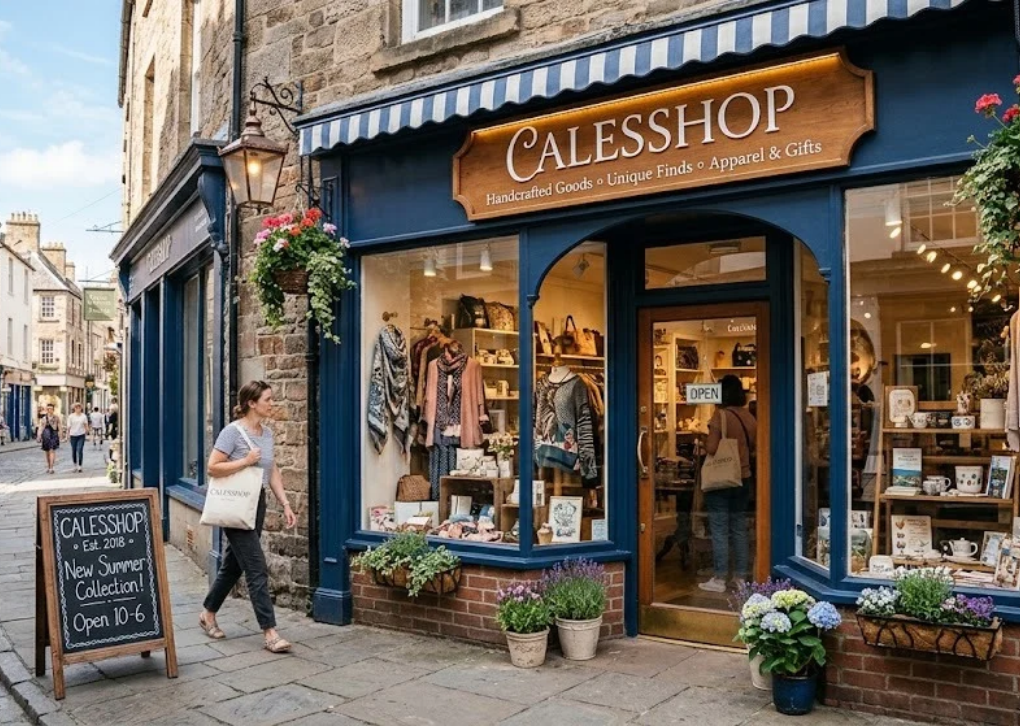
Calesshop has attracted attention among people searching for online shopping platforms, affordable products, and emerging e-commerce websites. Yet behind the familiar-sounding name lies an important question: is this a legitimate online store, a digital information platform, or simply a website whose business identity remains unclear? Understanding the difference is essential before trusting an unfamiliar website with personal information or payment details.
The information surrounding Calesshop is surprisingly inconsistent. Some online articles describe a fashionable marketplace offering clothing, electronics, beauty products, and home accessories, while others portray it as an informational website rather than a functioning retailer. More importantly, a review of the associated domain, calesshop.com, returned a Hostinger parked-domain page rather than an operational shopping website.
This comprehensive guide examines what can actually be verified, why conflicting descriptions exist, how website trust scores should be interpreted, and what consumers should check before making purchases. It also explains the practical steps to take if you have already paid an unfamiliar online seller and encounter problems.
What Is Calesshop?
Calesshop is a name commonly associated with online retail, digital commerce, and shopping-related content. However, identifying its exact business model is more difficult than the name initially suggests because public descriptions do not consistently establish a single operating company, verified marketplace, or active retail platform.
An important distinction exists between a registered domain name, an operational e-commerce website, and a legitimate business fulfilling customer orders. These three things are not interchangeable, even when a website has been mentioned in numerous articles or appears prominently in search engine results.
For Calesshop, the available information establishes online discussion and the existence of an associated domain, but does not independently confirm a functioning shopping operation during this review. That does not establish fraudulent activity; it means the claims surrounding the platform require additional verification.
Calesshop Website Status: What Can Actually Be Verified?
The most useful starting point in evaluating an unfamiliar business is its actual website, rather than descriptions published elsewhere. During this review, the response for calesshop.com displayed a Hostinger registration and hosting page, with information about website-building services instead of product listings, customer accounts, or a retail checkout.
That observation matters because it directly limits what can be confirmed about Calesshop. Without an accessible storefront, it is not possible to independently test the ordering process, examine current merchandise, calculate delivery charges, or verify the seller’s advertised refund terms.
A parked domain does not necessarily mean a company has permanently closed or acted dishonestly. A business might be rebuilding its website, changing hosting providers, or maintaining a domain without actively selling products, but none of those explanations should be assumed without supporting evidence.
Registered Domain vs. Active Online Store
A registered web address gives its holder the ability to maintain an online identity. It does not automatically provide a shopping cart, inventory management, payment processing, shipping arrangements, or customer service.
An operational retailer must establish the practical infrastructure needed to complete transactions and resolve problems after payment. An established, accountable seller should also make it reasonably easy to identify the business responsible for fulfilling orders.
| Verification area | Findings during this review |
|---|---|
| Associated domain | calesshop.com |
| Website response | Hostinger parked-domain page |
| Active product catalog | Not verified |
| Working shopping cart | Not verified |
| Checkout and payment options | Not verified |
| Business ownership | Not independently established |
| Shipping and refund policies | Not independently verified |
| Order fulfillment history | Insufficient corroborated evidence |
These findings describe the accessible information during the research period, not a permanent judgment about the domain’s future status.
Why Are There Conflicting Descriptions of Calesshop?
One of the most revealing aspects of researching Calesshop is the significant variation in how independent websites describe it. Some articles present a broad product marketplace, while others suggest a blog-style platform offering general information about shopping, technology, and digital trends.
Such inconsistencies are not automatically evidence of misconduct. However, they create an important research problem: articles may repeat assumptions made by earlier publications without verifying them against an official, functioning website.
The Difference Between Marketing Claims and Verified Features
A shopping website might be described as affordable, personalized, sustainable, or customer-focused. These are attractive qualities, but their usefulness depends on whether there is verifiable evidence behind them.
For example, personalized shopping recommendations require an identifiable recommendation interface or demonstrable product-discovery process. Sustainability claims require information about sourcing, materials, certifications, manufacturing conditions, or environmental practices.
Similarly, describing a platform as a marketplace implies relationships between sellers, buyers, and the service operating the platform. Without evidence of these relationships, the description remains an unverified characterization rather than an established business fact.
This distinction provides an essential lesson for online shoppers: the number of articles discussing a brand is not a substitute for evidence that the business operates as described.
What Products Does Calesshop Sell?
Calesshop is frequently associated in third-party articles with consumer products, particularly fashion, lifestyle accessories, household goods, beauty merchandise, and electronics. These descriptions reflect what other publications have claimed, rather than merchandise confirmed through a current storefront.
Fashion and Clothing
Several articles describe women’s clothing, casual apparel, seasonal outfits, bags, shoes, and fashion accessories. Affordable styling and fashionable product collections are recurring themes in these descriptions.
However, independently verified clothing inventory, sizing information, fabric specifications, and actual stock availability were not established during this review. Shoppers should therefore avoid assuming that particular clothing lines or brands are available for purchase.
Home, Beauty, and Electronics
Other descriptions mention home decoration, kitchen accessories, personal-care products, phone accessories, and small electronic gadgets. These are common categories among general online retailers, especially businesses using third-party supply arrangements.
The presence of these categories in promotional content does not confirm that an active business stocks or ships them. Actual product availability should be established through accessible listings that clearly identify specifications, prices, availability, and seller responsibilities.
Why Product Information Matters
Accurate product descriptions protect shoppers against unexpected quality differences. A reliable listing should communicate what the buyer will actually receive, including dimensions, materials, compatibility, accessories, and applicable warranties.
For electronics, compatibility details and electrical safety information are especially important. For cosmetics, ingredient disclosures, expiry information, and clear manufacturer identification can be equally significant.
Until a functioning catalog becomes available, no specific product range, price, discount, or delivery promise should be treated as confirmed for this domain.
Is Calesshop Legit or a Scam?
The central question about Calesshop is whether it can be trusted as a place to spend money. Based on the available evidence, there is not enough independently verifiable information to endorse it as an operational, dependable online retailer.
That finding is different from proving fraud. A website can lack sufficient public information without necessarily being operated for dishonest purposes, and responsible consumer analysis should preserve that distinction.
The more practical question is whether a prospective buyer has enough evidence to make a reasonably informed purchasing decision. When basic transaction features, business accountability, and purchase protections cannot be verified, the appropriate response is to avoid entering payment details until those gaps are resolved.
Understanding the Website’s Trust Rating
The website-evaluation service Scam Detector has published a score of 24.7 out of 100 for calesshop.com, labeling it suspicious according to its proprietary assessment model. Its report also lists the domain’s creation date as May 8, 2023, and references technical risk indicators, including phishing- and malware-related metrics.
However, automated trust scores are not legal findings, financial audits, or definitive proof of fraudulent activity. Such systems assess patterns and technical indicators, and their results may reflect older website configurations or information that is no longer current.
The most useful way to interpret a low rating is as a reason to investigate further. It should not be presented as conclusive proof that customers have been defrauded.
Does HTTPS Mean a Website Is Trustworthy?
No. An HTTPS connection means that information exchanged between a browser and website is encrypted in transit, provided the connection and certificate are functioning correctly.
The US Federal Trade Commission explicitly cautions that encryption does not establish seller legitimacy. Fraudulent websites can use HTTPS too, making the padlock symbol an inadequate measure of whether an online business deserves customers’ trust.
Calesshop Customer Reviews: What Should Shoppers Believe?
Finding dependable Calesshop reviews requires more than reading a few favorable or negative articles. The most valuable evidence comes from identifiable transactions, independently documented delivery experiences, and detailed accounts showing how businesses respond when something goes wrong.
Some third-party publications report concerns about delivery delays, product quality, and customer support. Yet the underlying purchase records, verified reviewer identities, and complete dispute outcomes are not consistently available to substantiate those claims, making them unsuitable as confirmed customer-experience statistics.
How to Recognize Reliable Customer Feedback
A helpful review describes the product purchased, relevant order dates, actual delivery experience, and whether the item matched its advertised specifications. It should also explain how the seller handled problems without revealing sensitive customer information.
Independent review platforms can be valuable, but they have limitations. Reviews may be selectively submitted, fabricated, incentivized, duplicated, or associated with similarly named businesses.
Searchers should also distinguish between independent product testing and articles designed primarily to attract search traffic. A publication offering a positive verdict without showing what was purchased, tested, or verified may provide little meaningful assurance.
Why Review Dates Matter
Online retailers can change considerably over time. Ownership, fulfillment partners, product quality, payment providers, and customer-service arrangements may all change between the publication of an older review and a prospective customer’s purchase.
For that reason, recent evidence should carry more weight than historical descriptions when assessing a currently operating website. Even then, reviews should be cross-checked against the correct domain and seller rather than a similar-looking business name.
How to Check Whether an Unfamiliar Shopping Website Is Safe
The most effective way to evaluate Calesshop, or any unfamiliar digital retailer, is to follow a consistent verification process. Instead of relying on appearance, examine the information that would matter if your order never arrived or the product was defective.
Use this seven-point checklist before committing money:
-
Verify the exact domain. Confirm that the website address matches the seller you intended to visit, and watch for additional letters, unusual subdomains, or misleading redirects.
-
Identify the responsible business. Look for a registered business name, usable contact details, and information connecting the seller to the storefront.
-
Inspect actual product listings. Check descriptions, prices, dimensions, materials, availability, and whether the same listing appears elsewhere under different branding.
-
Read shipping and return policies. Establish delivery destinations, estimated dispatch times, refund eligibility, return deadlines, and responsibility for shipping costs.
-
Investigate independent reviews. Search the business name and domain alongside words such as “complaint,” “refund,” and “review,” prioritizing specific and verifiable experiences.
-
Evaluate payment protections. Prefer payment methods that offer meaningful dispute procedures and avoid sellers demanding irreversible transfers.
-
Preserve evidence. Save product descriptions, written promises, transaction receipts, confirmation emails, and relevant correspondence.
The FTC recommends conducting independent research into unfamiliar sellers, checking their refund terms, and maintaining purchase records. These steps make it easier to identify potential problems before buying and establish what happened if a dispute arises.
Check Domain History Without Drawing the Wrong Conclusions
Domain registration records provide useful technical background, including registration dates and registrar information. The ICANN domain lookup service is one way to research a website’s registration details.
However, domain registration data is not the same as a verified company record. ICANN explains that registration details may be hidden through privacy or proxy services, so a private registration alone does not prove improper conduct.
A stronger assessment combines registration details with the actual website, seller contact information, customer experiences, and verifiable business records. No single technical indicator should determine the entire verdict.
Payment Security, Privacy, and Buyer Protection
Online shopping safety depends partly on how a business processes payments and manages customer information. A convincing website design cannot replace secure transaction handling, accurate privacy disclosures, or the ability to resolve disputed charges.
Which Payment Methods Offer Better Protection?
Credit cards generally provide stronger consumer protections against qualifying billing errors and failed purchases than irreversible payment methods. The exact rights and dispute procedures depend on the issuing bank, payment network, applicable law, and transaction circumstances.
The FTC cautions against sellers who insist on payment through gift cards, cryptocurrency, wire transfers, or other methods that make recovery difficult. A demand to move payment outside an established marketplace’s normal checkout system is another warning sign.
Even when an unfamiliar retailer advertises a recognizable payment provider, shoppers should verify that the checkout genuinely uses that provider. A logo displayed on a website does not prove the business has an authorized merchant relationship.
Protecting Your Personal Information
Payment security is only one part of the picture. Shipping addresses, phone numbers, email addresses, account passwords, and purchase histories can also be valuable personal information.
Before creating an account with an unfamiliar seller, examine its privacy policy and consider whether the information requested is necessary for the transaction. Reusing a password across shopping websites creates additional risk if any one service experiences a security breach.
Consumers should also be cautious about unsolicited messages requesting order verification or account updates. When possible, access a merchant through a previously verified website address rather than following links from unexpected emails or social media messages.
Does Calesshop Offer Cheap Prices and Discounts?
Affordability is one of the recurring themes in online descriptions of Calesshop. Nevertheless, claims about budget-friendly prices, promotional discounts, and regularly refreshed product collections cannot be treated as verified without a functioning catalog and transparent checkout information.
A discounted price has meaning only when the underlying product, seller, and transaction terms are clear. Comparing a listing against unrelated products or inflated reference prices can create a misleading impression of savings.
The Hidden Cost of an Online Bargain
The actual cost of a purchase is more than its advertised price. Shipping fees, taxes, import duties, currency conversion charges, and return shipping costs may substantially change the final amount.
International orders introduce further considerations, especially where customers must pay additional customs charges or return unwanted merchandise to another country. Buyers should confirm delivery coverage and total costs before authorizing payment.
An attractive price is not a meaningful advantage if the seller cannot reliably fulfill the order or provide a workable refund process.
What to Do if You Have Already Ordered From Calesshop
If you previously placed an order through a website using this name, begin by identifying the exact domain, the merchant shown on your payment statement, and the method you used to pay.
The next priority is determining whether the transaction was completed, whether a promised dispatch date has passed, and whether there is a legitimate communication channel for resolving the issue.
Step 1: Gather Your Transaction Records
Collect the confirmation email, order number, transaction date, amount charged, payment receipt, product details, and any delivery promises. Screenshots and messages can help establish the original terms if the website changes or becomes unavailable.
Step 2: Contact the Seller Through a Verified Channel
Explain the issue clearly and request the appropriate remedy, such as tracking information, replacement merchandise, or a refund. Preserve the date and content of each communication.
Avoid sending additional payments simply because someone claims they are needed to release a refund or resolve a delivery problem. Verify any such request independently with your payment provider.
Step 3: Contact Your Payment Provider Promptly
If the seller cannot resolve the issue, ask your card issuer or payment provider about its dispute or chargeback process. Do not delay simply because a seller promises to investigate; applicable dispute deadlines may continue to run.
For qualifying US credit-card billing errors, the Consumer Financial Protection Bureau explains that consumers generally must send written notice within 60 days after the disputed charge first appears on their statement. Other countries, card providers, and dispute categories may have different rules.
Step 4: Secure Your Accounts
If you shared a password that you also use elsewhere, replace it with a unique password and enable multifactor authentication wherever available. Monitor financial statements for transactions you do not recognize and report suspicious activity immediately.
If you suspect a fraudulent seller, you can report the incident to an appropriate consumer protection authority. In the United States, the FTC accepts reports through ReportFraud.ftc.gov.
Calesshop vs. Established Online Marketplaces
Comparing Calesshop with established retailers helps illustrate why operational evidence matters more than marketing language. Large shopping platforms are not immune to scams, counterfeit merchandise, delivery failures, or customer-service complaints, but they generally make their transaction systems and buyer-protection procedures easier to identify.
| Evaluation factor | calesshop.com during this review | Established marketplaces |
|---|---|---|
| Active storefront | Not verified | Generally accessible |
| Product information | No current catalog verified | Usually available by listing |
| Payment processing | Not verified | Documented checkout systems |
| Customer reviews | Limited corroborated evidence | Larger review ecosystems, with varying reliability |
| Returns and disputes | Terms not verified | Published procedures, with exclusions |
| Business accountability | Not independently established | Usually identifiable platform operator |
| International shipping | Not verified | Varies by seller and destination |
For general merchandise, consumers may compare options on Amazon or eBay. Buyers interested in handmade or vintage items may also consider Etsy.
These platforms have different policies, fees, seller standards, and dispute processes. They should still be evaluated at the individual seller and product level rather than treated as risk-free.
What Makes an Emerging E-Commerce Brand Credible?
There is nothing inherently suspicious about a small or newly established online business. Many legitimate retailers begin with limited product collections, modest marketing budgets, and relatively little public recognition.
What matters is whether the business provides enough information to support a transparent transaction. Accurate product details, realistic shipping estimates, identifiable seller information, responsive communication, and clear refund policies demonstrate practical accountability.
Transparency Matters More Than Popularity
A retailer does not need thousands of social media followers to deserve trust. It needs to communicate accurately about what it sells, what customers will pay, when orders should arrive, and what happens when expectations are not met.
A small business with accessible policies and documented successful transactions may be more dependable than a heavily promoted website with an unclear business identity.
Why Search Visibility Is Not Proof of Legitimacy
Search engines index information from many sources, including blogs, company websites, product pages, discussion forums, and automated content. A brand appearing repeatedly in search results does not mean that every description of it has been independently verified.
This is particularly important for unfamiliar names discussed extensively in similar-looking articles. When many pages repeat the same claims without linking to original evidence, the apparent volume of information can exaggerate how much is actually known.
The strongest research process follows claims back to their origins. If a publication describes a shopping feature, there should ideally be a corresponding operational website, documented demonstration, or other reliable primary evidence.
Calesshop FAQs: Frequently Asked Questions
1. What is Calesshop, and is it a real online store?
Calesshop is a name that various online publications associate with e-commerce, shopping content, and consumer products. However, the associated calesshop.com domain displayed a Hostinger parked-domain page during this review, and a functioning retail operation could not be independently confirmed.
The domain’s existence does not establish whether the business previously accepted orders or intends to operate in the future. Consumers should verify current functionality and business credentials rather than relying on promotional descriptions.
2. Is Calesshop safe to use for online shopping?
There is insufficient verified evidence to recommend Calesshop as a dependable shopping destination at present. The absence of an accessible storefront and independently confirmed transaction procedures makes it difficult to evaluate payment security, delivery performance, or customer remedies.
A low third-party trust score adds a reason for caution, but it does not independently establish fraud. The safer choice is to withhold payment information until a legitimate seller, functioning checkout, and appropriate purchase protections can be verified.
3. What products can you buy from Calesshop?
Third-party articles associate the name with fashion, home accessories, beauty products, electronics, and lifestyle merchandise. Those descriptions are not equivalent to a verified current inventory.
During this review, no operational product catalog was available through the associated domain. Consequently, specific items, prices, shipping destinations, and product availability cannot be reliably confirmed.
4. Are Calesshop customer reviews reliable?
The reliability of reviews depends on whether they reflect authentic transactions and provide enough detail to verify the customer’s experience. General praise, unsourced complaints, and repeated descriptions across unrelated websites are less persuasive than documented orders and clearly explained outcomes.
Readers should examine dates, reviewer credibility, domain accuracy, and supporting details before relying on any assessment. No broad conclusion about successful deliveries or customer satisfaction should be drawn from the limited corroborated evidence reviewed here.
5. What should I do if I paid Calesshop but never received my order?
First, preserve the original order confirmation, payment record, delivery promises, and correspondence. Contact the seller through an independently verified communication channel and request a clear resolution.
If the seller does not respond or fails to fulfill the agreement, contact your bank or payment provider promptly about a dispute. Also review your accounts for unauthorized activity and change any passwords that may have been exposed or reused.
Final Verdict: Should You Trust Calesshop in 2026?
Calesshop demonstrates why shoppers should distinguish between an appealing online brand description and an independently verified retail operation. Although several publications describe extensive merchandise, competitive prices, and convenient shopping features, those claims are not sufficiently supported by the associated domain’s accessible website during this review.
The evidence does not justify definitively labeling the business fraudulent. It does, however, justify a cautious assessment: there is currently insufficient verified information to recommend making purchases through calesshop.com.
For consumers, the next action is straightforward. Verify that a genuine storefront is operating, confirm the identity of the responsible business, examine its shipping and refund policies, and seek credible transaction evidence before entering financial information.
If those details remain unavailable, choose a retailer whose products, policies, and payment protections can be independently confirmed. A worthwhile online deal should provide not only an attractive price, but also reasonable confidence that the seller can deliver what was promised.









Leave a Reply