
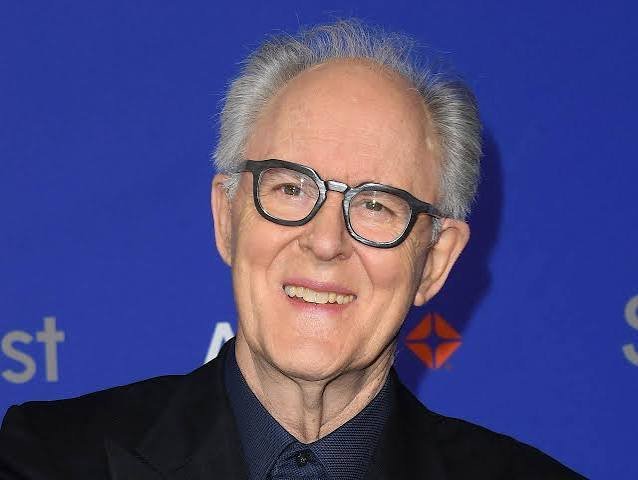
Jean Taynton is primarily known as the first wife of acclaimed American actor John Lithgow, yet surprisingly little reliable information about her has entered the public record. Search results often present precise claims about her birth, childhood, finances, and present circumstances, but most of those details cannot be traced to authoritative sources.
What can be confirmed is meaningful. She worked as a teacher, married Lithgow while he was still completing his education, became the mother of their son Ian, and experienced the unsettled early years of a marriage shaped by an emerging theatrical career.
This biography separates documented facts from online repetition. Rather than filling gaps with assumptions, it examines what trustworthy sources reveal, why Taynton remains a subject of public interest, and how readers can recognize misinformation surrounding private individuals connected to celebrities.
Jean Taynton Quick Facts
| Category | Verified information |
|---|---|
| Full name | Jean Taynton |
| Known for | First wife of actor John Lithgow |
| Profession | Teacher |
| Marriage date | September 10, 1966 |
| Former husband | John Lithgow |
| Divorce | 1980 |
| Child | Ian David Lithgow |
| Son’s occupation | Actor and licensed family therapist |
| Public profile | Highly private |
| Verified birth date | Not publicly established |
| Verified net worth | Not publicly available |
Biographical reference sources identify Taynton as a teacher and record that she married John Lithgow on September 10, 1966. The marriage ended in divorce in 1980, and the couple had one child, Ian Lithgow.
The absence of other verified details is important. It means claims about her age, birthplace, education, current residence, or wealth should not be presented as fact without supporting documentation.
Who Is Jean Taynton?
Jean Taynton is an American former teacher whose name became publicly recognizable because of her marriage to John Lithgow. She was part of Lithgow’s life before he became an internationally known stage, television, and film performer.
Unlike many people associated with prominent entertainers, Taynton did not build a media career from that relationship. There is no substantial record of interviews, public appearances, entertainment projects, memoirs, or verified social media accounts attributed to her.
That distinction defines her biography. She is not a celebrity in the conventional sense; she is a private person whose former marriage became a matter of public record because her husband later achieved fame.
This also explains why credible information about Jean Taynton is limited. Most established biographical sources mention her only when outlining Lithgow’s family history or discussing their son.
Jean Taynton’s Career as a Teacher
Multiple biographical references describe Taynton as a teacher. Encyclopedia.com specifically lists her profession when recording Lithgow’s first marriage, while other profiles repeat the same occupational description.
However, the available authoritative record does not reliably identify:
- The school or institution where she taught
- The subject or grade level she handled
- Her teaching qualifications
- How many years she worked in education
- Whether she continued teaching after her marriage
- Her later professional activities
Some online biographies expand “teacher” into a detailed career narrative without naming an employer, publication, interview, or archival source. Such elaboration may sound plausible, but plausibility is not evidence.
The responsible conclusion is narrower: Jean Taynton worked as a teacher, but the specifics of her educational career have not been widely documented.
How Jean Taynton and John Lithgow’s Early Lives Intersected
John Lithgow was studying at Harvard College during the period leading up to the marriage. He graduated in 1967 with a degree in history and literature and later studied at the London Academy of Music and Dramatic Art after receiving a Fulbright scholarship.
Masterworks Broadway reports that he married Taynton before completing college. The couple therefore began married life before the professional breakthrough that would eventually make Lithgow a major Broadway and screen performer.
This timeline matters because descriptions such as “celebrity marriage” can be misleading. When they married, Lithgow was not yet the established star later associated with 3rd Rock from the Sun, The Crown, Dexter, Shrek, or his award-winning Broadway work.
Their relationship belonged largely to his formative years.
Marriage in 1966
Jean Taynton and John Lithgow married on September 10, 1966. He was still a Harvard student, graduating the following year.
After Harvard, Lithgow pursued advanced dramatic training in London. His early career then developed through theater, with his Broadway breakthrough arriving in The Changing Room. That performance earned him a Tony Award and Drama Desk Award.
For a young family, this period would have coincided with education, travel, auditions, theatrical work, and professional uncertainty. Still, no credible source provides enough firsthand detail to reconstruct Taynton’s personal experiences during those years.
Jean Taynton and John Lithgow’s Son, Ian Lithgow
The most clearly documented part of the couple’s family life is their son, Ian David Lithgow, born in 1972. Major profiles identify him as the child of John Lithgow’s first marriage.
Ian eventually developed two distinct careers: acting and psychotherapy. He attended Harvard University and later earned a master’s degree in clinical psychology, specializing in marriage and family therapy at Antioch University Los Angeles.
His acting work includes stage productions, film appearances, and television roles. He is particularly recognized for playing Leon, a recurring student on the NBC sitcom 3rd Rock from the Sun, in which his father starred as Dick Solomon.
The father and son later appeared in the HBO drama Perry Mason, with Ian portraying the son of John Lithgow’s character.
Although Ian’s public career naturally attracts attention to his parents, he has generally been profiled through his own professional work rather than through extensive discussion of Taynton’s private life.
Why Did Jean Taynton and John Lithgow Divorce?
The marriage ended in 1980, approximately 14 years after it began. The divorce year appears consistently in established biographical references.
Accounts of the separation commonly connect it to Lithgow’s relationship with Norwegian actress Liv Ullmann. That explanation appears in entertainment profiles and in biographical summaries referencing Lithgow’s own public discussion of the period.
Still, care is required when describing the breakdown of any marriage. Public interviews can establish that an affair occurred, but they cannot capture every private factor affecting a long-term relationship.
A responsible formulation is therefore:
The marriage ended after Lithgow became involved with Liv Ullmann, although the complete personal circumstances remain private.
That phrasing communicates the documented event without pretending that outsiders possess a complete account of the couple’s relationship.
What Happened After the Divorce?
John Lithgow married academic Mary Yeager in 1981. They later had two children, Phoebe and Nathan, while Ian remained Lithgow’s eldest child from his marriage to Jean Taynton.
Taynton, by contrast, largely disappeared from public reporting. No authoritative source widely documents a second marriage, a public career change, or ongoing entertainment-industry involvement.
This does not mean nothing happened in her life. It means those events, whatever they may have been, were not established through dependable public reporting.
The distinction is central to ethical biography. A lack of published information is not permission to manufacture a narrative.
Why Is So Little Known About Jean Taynton?
Several factors explain the limited record.
She was not pursuing public fame
Taynton was known as a teacher, not an actor, politician, executive, or media personality. Her connection to entertainment history arose through marriage rather than through a public-facing profession.
The marriage predates modern celebrity coverage
The couple married in 1966, decades before social media, digital entertainment archives, and continuous celebrity reporting. Ordinary family events were not documented online in real time.
She maintained her privacy after divorce
There is no strong indication that Jean Taynton attempted to monetize or publicize her former marriage through interviews, television appearances, or a memoir.
Search demand exceeds available evidence
When readers search for a person, publishers are incentivized to produce complete-looking profiles. When verified material is scarce, weaker websites may fill their pages with estimates and unsupported claims.
That pattern is especially visible in articles assigning Taynton an exact age or net worth without explaining where the information originated.
Common Claims About Jean Taynton That Remain Unverified
Readers should approach several recurring claims cautiously.
Her exact birth date and age
No authoritative biography located for this article establishes Taynton’s complete date of birth. Some websites provide an estimated year, but estimates should not be converted into factual statements.
Her birthplace and nationality details
She is commonly described as American because of her documented life and marriage in the United States. However, precise claims about her birthplace or childhood require stronger sourcing than most biography pages provide.
Her parents and siblings
No dependable public source appears to offer a verified family tree for her. Genealogy search results may include people with similar names, but a matching name alone does not prove identity.
Her education
It is reasonable to infer that a teacher received relevant education or training, but her degrees, institutions, and qualifications should not be invented.
Her net worth
There is no credible public financial disclosure for Jean Taynton. Claims assigning her a six-figure or seven-figure net worth are speculative unless supported by property records, business filings, court records, or direct disclosure.
Her current residence
Publishing an unverified location is both inaccurate and potentially invasive. Unless Taynton has publicly disclosed where she lives, biography publishers should leave this information unstated.
Jean Taynton’s Place in John Lithgow’s Life Story
Taynton’s importance is clearest when Lithgow’s life is viewed chronologically.
She was present before his major professional success. Their marriage covered his final Harvard years, his dramatic training, his entry into professional theater, and the arrival of his first child.
By the time they divorced in 1980, Lithgow’s career had begun gaining serious momentum. His Broadway debut had earned major honors, and he had appeared in films including Bob Fosse’s All That Jazz. His best-known film and television roles were still ahead of him.
This makes Jean Taynton part of Lithgow’s foundational personal history rather than a figure attached to the peak of his celebrity.
Yet her role should not be reduced to supporting someone else’s career. The historical record simply provides too little information to describe her independent life in comparable depth.
A More Accurate Timeline
1966
Taynton and John Lithgow married on September 10 while he was still attending Harvard.
1967
Lithgow graduated from Harvard and subsequently pursued dramatic training in London after receiving a Fulbright scholarship.
1972
The couple welcomed their son, Ian Lithgow. Lithgow’s professional stage career was also developing during this period.
1973
John Lithgow received major recognition for his Broadway debut in The Changing Room, winning both Tony and Drama Desk honors.
Late 1970s
Lithgow expanded into film while continuing his theatrical career. The marriage later encountered serious difficulties.
1980
Taynton and Lithgow divorced.
1981 onward
Lithgow married Mary Yeager and formed a second family. Taynton remained outside the public spotlight.
What Jean Taynton’s Story Teaches Us About Online Biographies
The online treatment of Jean Taynton offers a useful lesson in media literacy.
A polished article is not necessarily a reliable article. Pages can appear authoritative while copying unsupported information from one another, creating a circular chain in which dozens of websites repeat a claim that none can independently prove.
Before accepting a biographical statement, readers should ask:
- Does the article identify its original source?
- Is the source an interview, archive, reputable publication, or official record?
- Are precise numbers presented without documentation?
- Does the writer distinguish confirmed facts from estimates?
- Are different people with similar names being confused?
- Is private information being inferred merely to complete a profile?
Reliable biography is sometimes less dramatic because it acknowledges uncertainty. That restraint is a strength, not a weakness.
Frequently Asked Questions About Jean Taynton
Who is Jean Taynton?
Jean Taynton is a former teacher best known as the first wife of American actor John Lithgow. The couple married in 1966, had one son, Ian Lithgow, and divorced in 1980.
How did Jean Taynton meet John Lithgow?
Authoritative public sources do not provide a detailed, verified account of their first meeting. They married while Lithgow was still studying at Harvard, but claims describing exactly where or how they met should be treated cautiously unless supported by a firsthand source.
What did Jean Taynton do for a living?
She worked as a teacher. Reliable biographical sources consistently identify her occupation, although they do not publicly establish the school, subject, grade level, or length of her teaching career.
Does Jean Taynton have children?
Yes. She and John Lithgow have one son, Ian David Lithgow. Ian became an actor and a therapist and appeared alongside his father in 3rd Rock from the Sun.
What is Jean Taynton’s age and net worth?
Neither her exact age nor her net worth has been reliably established in authoritative public sources. Websites offering precise figures often provide no evidence, so those numbers should be considered estimates or speculation rather than confirmed facts.
Conclusion: Understanding Jean Taynton Through Verified Evidence
Jean Taynton occupies a small but significant place in the documented life of John Lithgow. She was his first wife, a teacher, the mother of his eldest son, and part of his life during the uncertain years before his career reached international prominence.
Beyond those facts, the public record is limited. That limitation should be respected.
The most accurate way to understand her story is not to repeat unsupported birth dates, invented financial estimates, or speculative accounts of her current life. Readers and publishers should prioritize established biographies, firsthand interviews, institutional records, and reputable reporting—and clearly label anything that cannot be verified.














Leave a Reply