
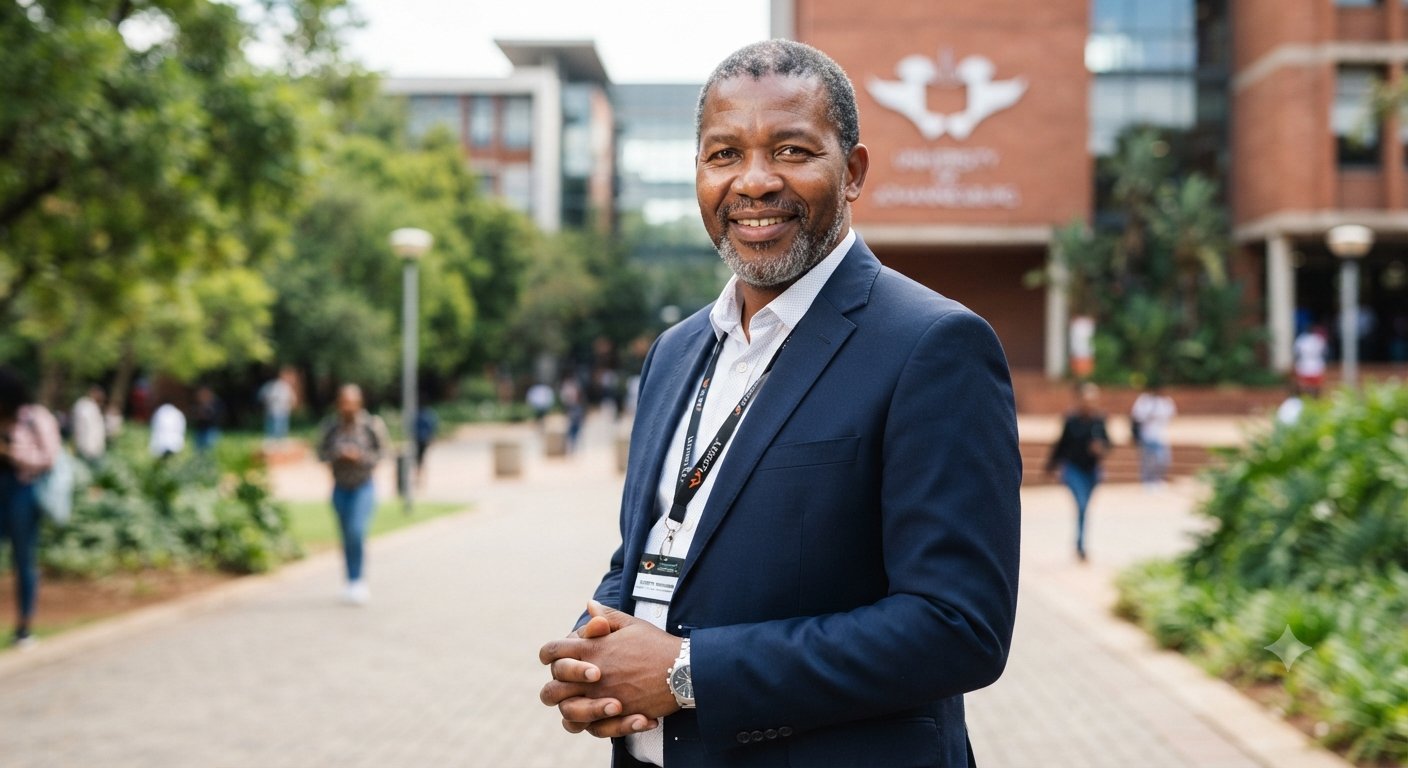
Andrew Shingange is best known publicly as Trevor Noah’s younger maternal half-brother, but that description leaves out the most meaningful part of his story. Although he has never pursued celebrity and has shared little about his adult life, Trevor’s memoir Born a Crime places Andrew inside several defining chapters of the Noah family’s history—first as a child born into a changing South Africa and later as the teenager whose quick actions helped save his mother’s life.
There is also a serious accuracy problem surrounding this topic. Many biography websites publish exact claims about Andrew’s birthday, education, occupation, marriage, children, and net worth without identifying credible sources. A responsible profile must separate what Trevor Noah has documented from what the internet has merely repeated.
Table of Contents
ToggleWho Is Andrew Shingange?
Andrew Shingange is the son of Patricia Nombuyiselo Noah and Ngisaveni Abel Shingange. He is Trevor Noah’s younger half-brother through their shared mother and the older full brother of Isaac Shingange.
Calling Andrew Trevor’s “stepbrother,” as some websites do, is incorrect. Half-brothers share one biological parent, while stepbrothers are related through marriage and do not necessarily share a parent.
Trevor’s memoir identifies Andrew as his baby brother and explains that he was born after Patricia and Abel married. Trevor also writes that he was nine years older than Andrew, which places Andrew’s birth approximately nine years after Trevor’s 1984 birth. The memoir does not reveal a complete birth date, so exact dates circulated online should not be presented as established facts.
The most reliable public snapshot is straightforward:
- Mother: Patricia Nombuyiselo Noah
- Father: Ngisaveni Abel Shingange
- Maternal half-brother: Trevor Noah
- Full brother: Isaac Shingange
- Nationality: South African
- Known publicly for: His connection to Trevor Noah and his actions after Patricia was shot
- Public profile: Highly private, with no clearly verified public-facing career or official biography
Andrew Shingange’s Family Background
To understand Andrew Shingange, readers need to understand the household into which he was born. Trevor Noah grew up during apartheid as the son of a Black Xhosa mother and a White Swiss father at a time when their interracial relationship was prohibited by South African law.
That history became the basis for the title Born a Crime, Trevor’s 2016 memoir about childhood, race, family, language, poverty, and survival. The book was published by Spiegel & Grau, an imprint of Random House, and remains the strongest primary source for understanding Andrew’s role in Trevor’s family story.
Patricia later met Abel, an auto mechanic, and married him. Trevor writes that Andrew was born approximately a year after that marriage.
The family’s early years were shaped by frequent moves, financial pressure, the automotive workshop Patricia helped Abel purchase, and an increasingly unstable domestic environment. In the memoir, Andrew first appears as a baby whom Patricia prepared for church while Trevor was still a child.
Andrew’s position in the family differed significantly from Trevor’s. He was Abel’s first biological son, while Trevor represented Patricia’s life before her marriage to Abel.
Trevor describes Andrew’s birth as particularly significant when the family visited Abel’s relatives in Tzaneen, within the area historically associated with the Gazankulu homeland and Tsonga culture. As Abel’s firstborn son, Andrew carried cultural and familial importance that Trevor did not occupy within his stepfather’s family.
That background matters because Andrew was not simply “Trevor Noah’s brother.” He grew up at the intersection of Patricia’s fiercely independent outlook and Abel’s expectations about authority, fatherhood, masculinity, and family structure.
Growing Up in a Household Marked by Abuse
The most difficult part of Andrew Shingange’s early story is the domestic violence described by Trevor Noah. According to Born a Crime, Abel’s behavior became increasingly abusive, particularly as alcohol use, financial problems, jealousy, and conflict intensified.
Trevor portrays the violence as an escalating pattern rather than an isolated disagreement. Major profiles of Trevor published before the memoir also reported that his mother’s relationship had become abusive and that the situation eventually culminated in a shooting.
Andrew occupied an especially painful position. Abel was his biological father, not merely an abusive stepfather whom he could emotionally reject.
Trevor later reflected that Andrew had to reconcile his love for his mother with his relationship with the man who harmed her. Trevor recognized that this conflict may have made Andrew’s emotional burden even more complicated than his own anger toward Abel.
This distinction gives readers a deeper understanding of Andrew’s role in the memoir. He is not presented as a celebrity relative or a supporting character added for family color.
He represents a child forced to interpret danger inside his own home while maintaining emotional connections with both parents. That is a far more complex story than the simplified profiles appearing across celebrity-biography websites.
The Day Andrew Shingange Helped Save His Mother
The most extensively documented event in Andrew Shingange’s life occurred after Patricia and Abel had separated. In 2009, according to Trevor’s account, Patricia returned from church with family members and found Abel waiting near her home with a gun.
Andrew attempted to intervene. Trevor writes that he stepped in front of his father and asked him to put the gun away, but Abel threatened to shoot Andrew first if he did not move. Andrew then took hold of his much younger brother, Isaac, as the attack escalated.
Patricia moved in front of the family as Abel began firing. She was struck by one bullet and attempted to reach her car, but Abel fired again from behind the vehicle.
The second bullet entered the back of Patricia’s head and exited through the front of her face. Her body collapsed over the steering wheel while Andrew was sitting beside her.
Andrew reacted immediately.
He pulled his injured mother away from the steering wheel, climbed into the driver’s position, put the car into gear, and raced toward Linksfield Hospital. Trevor’s memoir directly identifies Andrew as the brother who took control of the vehicle and transported Patricia for emergency treatment.
This distinction is important because some profiles describe the driver only as Trevor’s unnamed younger brother. A GQ profile published Trevor’s recollection of a 15-year-old brother who had learned to drive only a few months earlier and whose rapid response may have saved Patricia’s life.
Andrew’s Composure During the Emergency
After reaching the hospital, Andrew called Trevor using their mother’s phone. Trevor recalls that Andrew sounded remarkably calm when he explained that Patricia had been shot.
That composure initially caused Trevor to underestimate the seriousness of the injuries. Andrew first said that Patricia had been shot in the leg and then revealed that she had also been shot in the head.
When Trevor arrived, he found Andrew standing alone outside the emergency room with blood on his clothes. Andrew remained composed until he saw his older brother.
At that moment, the emotional restraint disappeared. Trevor says Andrew began crying as the fear and helplessness he had been holding back finally surfaced.
That detail matters. Andrew’s earlier calmness did not mean he was unaffected by the violence.
It suggests that he temporarily suppressed his panic because the emergency required him to drive, communicate with hospital staff, contact Trevor, and remain functional while his mother was being treated.
Patricia Noah’s Survival
Patricia survived injuries that could easily have been fatal. According to Trevor’s account, the bullet passed beneath her brain and narrowly missed her spinal cord, major blood vessels, arteries, and critical nerves.
It eventually struck her cheekbone and exited through her nostril. She was released from the hospital after four days and returned to work shortly afterward.
Medical professionals ultimately treated Patricia and saved her life. Andrew’s contribution was getting her to the hospital quickly after she became unable to drive herself.
His response should not be reduced to a dramatic anecdote. He had confronted an armed parent, attempted to de-escalate the threat, protected his younger brother, witnessed his mother being shot, and then made the decision necessary to get her emergency care.
Why the “Quiet Hero” Description Fits—But Needs Context
Writers often describe Andrew Shingange as a quiet hero. The phrase is understandable because he avoided the spotlight while performing an undeniably courageous act.
Still, the label can oversimplify what Trevor’s memoir reveals. Andrew was a teenager responding to violence caused by his own father.
Heroic action and trauma can exist simultaneously. Praising his response should not erase the emotional burden placed on a child who should never have been required to make those decisions.
A more complete interpretation recognizes three realities:
- Andrew showed extraordinary courage under an immediate threat.
- He carried conflicting family loyalties that Trevor openly acknowledged.
- His privacy is a legitimate boundary, not a mystery the public is entitled to solve.
That final point is especially relevant in celebrity publishing. Andrew did not automatically become a public figure simply because Trevor Noah achieved international fame.
Ethical coverage can document his role in a published family history without inventing a career, calculating a speculative fortune, or assigning unrelated social-media profiles to him.
Andrew Shingange and Trevor Noah’s Relationship
Public sources offer only a limited picture of the adult relationship between Andrew Shingange and Trevor Noah. The memoir is candid about their age difference: Trevor was approximately nine years older and remembered Andrew’s infancy from the detached perspective of an older child occupied with school, friends, games, and neighborhood adventures.
Their different fathers also shaped their experiences. Trevor feared and resented Abel, while Andrew had a direct father-son connection with him.
After Patricia left Abel, the memoir indicates that Andrew and Isaac continued seeing their father for a period. That detail illustrates how family relationships can continue even after separation, violence, and profound betrayal.
During the hospital crisis, however, the bond between the brothers becomes unmistakable. Patricia directed Trevor to leave her bedside and support Andrew because she understood that he needed his older brother.
Outside the emergency room, Trevor embraced Andrew as the younger brother finally released the fear he had been suppressing.
It would be misleading to claim the brothers are constantly together or to describe a specific present-day relationship without direct evidence. What can be said is that Trevor’s writing treats Andrew with empathy and respect, particularly when discussing the moral and emotional conflict created by the shooting.
What Is Known About His Education and Career?
There is no well-sourced public record confirming Andrew Shingange’s school, university education, employer, profession, or business ventures. Some websites describe him as an entrepreneur, while others associate him with media or business activities without showing primary documentation.
Those claims rarely lead to an interview, professional profile, official company record, or statement from Andrew himself. They should therefore not be repeated as fact.
This absence of public information should not be interpreted as failure or suspicious secrecy. Most people do not maintain public biographies, and a private citizen related to a celebrity has no obligation to publish employment details.
Search interest often creates a false expectation that every field in a celebrity-style fact box must contain an answer. In reality, “not publicly confirmed” is more accurate than a fabricated occupation.
Publishers should also avoid treating a namesake’s Facebook, LinkedIn, Instagram, or business profile as evidence. Andrew Shingange is not an exceptionally rare name in South Africa, and matching a profile requires more than identical spelling.
Is Andrew Shingange Married?
Reliable public sources reviewed for this profile do not establish Andrew Shingange’s current marital status or identify a spouse. Claims that he is married, has children, or lives in a particular Johannesburg neighborhood usually appear on low-transparency biography websites.
Those details are not established by Trevor Noah’s memoir or a known direct interview with Andrew. Repeating them creates two problems.
First, the information may be wrong. Second, even accurate details can be intrusive when they concern a private spouse or children who have not chosen public exposure.
The responsible answer is therefore not a guess: his current relationship status is publicly unconfirmed.
What Is Andrew Shingange’s Net Worth?
No credible financial publication has reported Andrew Shingange’s net worth, and there is no verified professional history from which a meaningful estimate could be calculated.
Online figures should be treated as speculation.
Celebrity net-worth websites frequently produce estimates by combining assumed occupations, guessed salaries, social-media claims, and a famous relative’s financial success. That method is particularly unreliable in this case.
Trevor Noah’s wealth does not establish anything about Andrew’s income, assets, debts, investments, or ownership interests. Family connection is not evidence of shared finances.
Unless Andrew voluntarily releases financial information or becomes associated with a documented business transaction, his net worth remains private and unknown.
Why Andrew Shingange Attracts Search Interest
Public curiosity about Andrew has several understandable sources. Trevor Noah’s fame generates interest in his family, while Born a Crime encourages readers to learn more about the people whose lives appear in the narrative.
The hospital story creates an especially powerful question: what happened to the teenager who responded so courageously?
Search engines then amplify that curiosity. Once dozens of websites publish nearly identical profiles, repeated statements begin to appear verified—even when every article traces back to the same unsupported page.
Repetition is not corroboration.
Andrew’s story therefore offers a useful lesson in media literacy. Strong research asks where a claim originated, whether the source had direct access, whether independent documentation supports it, and whether publishing the detail respects the subject’s privacy.
Confirmed Facts Versus Common Internet Claims
The clearest way to evaluate information about Andrew Shingange is to divide it according to evidence quality.
Facts supported by Trevor Noah’s memoir and major profiles
- Andrew is Trevor Noah’s younger maternal half-brother.
- His parents are Patricia Noah and Abel Shingange.
- He is older than his full brother, Isaac.
- Trevor is approximately nine years older than Andrew.
- Andrew was present during the attack on Patricia.
- He attempted to reason with his armed father.
- He took control of the car and drove Patricia to the hospital.
- He has remained largely outside public entertainment media.
Claims not reliably established in strong public sources
- A precise date of birth.
- A confirmed school or university.
- A current occupation or employer.
- A spouse’s identity.
- The number or identities of any children.
- A verified public social-media account.
- A personal net-worth estimate.
This evidence-first distinction is the most valuable information available on the topic. It answers readers’ central questions while avoiding the misinformation that weakens many competing biographies.
What Andrew’s Story Adds to Born a Crime
Andrew Shingange helps readers understand that Born a Crime is not only Trevor Noah’s coming-of-age story. It is also a family narrative about how apartheid’s legacy, poverty, cultural identity, domestic violence, patriarchy, religion, and personal resilience collided inside one household.
Andrew’s experience differs from Trevor’s in a crucial way. Trevor could view Abel primarily as a threatening outsider, but Andrew had to confront the fact that the threatening person was also his biological father.
Trevor explicitly recognizes that this made Andrew’s emotional burden uniquely difficult. After describing the attack, he reflects on how his brother could continue loving both parents when one had attempted to kill the other.
Andrew’s actions also complicate simplistic ideas about bravery. Courage did not arrive as a speech, a carefully prepared plan, or a desire for recognition.
It appeared as practical action: protect, move, drive, call, wait, and hold everything together until help arrived.
Frequently Asked Questions About Andrew Shingange
Is Andrew Shingange Trevor Noah’s biological brother?
Yes. They are maternal half-brothers, meaning they share the same biological mother, Patricia Nombuyiselo Noah, but have different fathers.
Trevor’s father is Robert, while Andrew’s father is Ngisaveni Abel Shingange. Andrew and Isaac are full brothers because they share both parents.
How old is Andrew Shingange?
A precise, reliably sourced birth date is not publicly established. Trevor writes that he was nine years older when Andrew was born, so Andrew was born approximately nine years after Trevor, whose birth date is February 20, 1984.
Exact dates appearing on unsourced biography websites should be treated cautiously unless they can be traced to Andrew, his family, or an authoritative record.
Did Andrew Shingange save Patricia Noah’s life?
Trevor Noah’s memoir says Andrew took control of the car after Patricia was shot in the head and drove her to Linksfield Hospital. Medical professionals treated and ultimately saved Patricia, but Andrew’s rapid response got her to emergency care during a life-threatening crisis.
What does Andrew Shingange do for a living?
His occupation has not been reliably confirmed in reputable public sources. Articles that label him an entrepreneur or assign him another profession generally do not provide direct documentation.
A responsible biography should therefore describe his career as private or publicly unverified.
Where is Andrew Shingange now?
His current residence and daily life are not well documented publicly. He appears to have chosen a life outside celebrity media, and there is no reliable basis for publishing a precise location or detailed personal update.
That privacy should be respected unless Andrew independently chooses to enter public life.
Conclusion: Read Andrew Shingange’s Story With Accuracy and Respect
Andrew Shingange is not notable because of a rumored fortune, a manufactured career title, or a celebrity lifestyle. The verified record is considerably more powerful.
He is Trevor Noah’s younger half-brother, Patricia Noah’s son, Isaac’s older brother, and the teenager who acted decisively during a terrifying family emergency.
The best next step for readers is to consult Born a Crime, especially the final portion dealing with Patricia and Abel, rather than relying on recycled celebrity-biography pages. For publishers, the standard should be equally clear: cite primary material, label uncertainty, correct the half-brother-versus-stepbrother error, and leave unsupported private details out.












Leave a Reply