
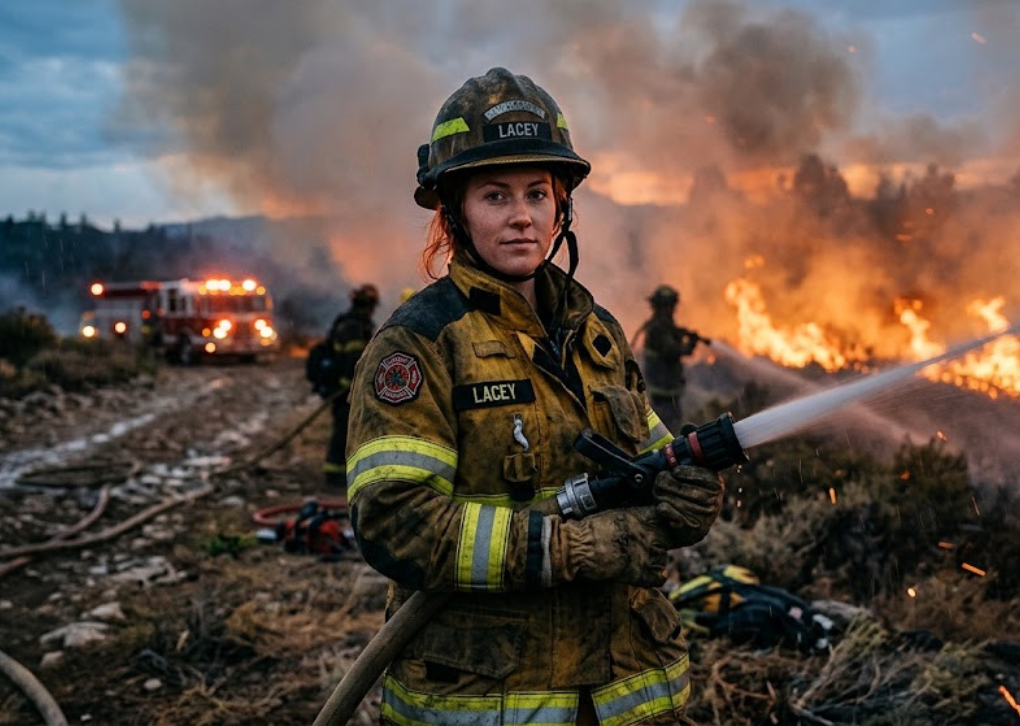
If you searched for Laceyfire.com collective bargaining agreement, you are probably trying to locate or understand the labor contract covering represented firefighters at Lacey Fire District 3 in Thurston County, Washington. The key point is that Lacey firefighters are represented by International Association of Fire Fighters Local 2903, while their employment relationship operates within Washington’s public-sector collective bargaining system.
The agreement matters well beyond union administration. A fire district collective bargaining agreement can affect salary schedules, premium pay, hours, leave, health benefits, grievance rights, working conditions, discipline procedures, and the long-term cost of delivering emergency services.
What Is the Laceyfire.com Collective Bargaining Agreement?
The Laceyfire.com collective bargaining agreement is best understood as the negotiated employment contract between the public fire employer and the exclusive bargaining representative for covered employees. In Lacey’s case, current recruiting material identifies firefighter positions as union-represented and specifically names IAFF Local 2903.
A collective bargaining agreement, frequently shortened to CBA, is not the same thing as a fire district policy manual, job description, civil-service rule, interlocal agreement, or individual offer letter. The CBA establishes negotiated rights and obligations for the bargaining unit, while those other documents can govern separate aspects of district operations.
Who Represents Lacey Firefighters?
The Washington State Council of Fire Fighters identifies Local 2903 Lacey Fire Fighters as an IAFF affiliate serving the Lacey area. Current Lacey Fire District 3 recruitment information likewise identifies firefighter positions as represented by IAFF Local 2903.
That matters because the union serves as the employee-side bargaining representative for matters within the lawful scope of bargaining. Readers searching for the Laceyfire.com collective bargaining agreement should therefore also search terms such as “IAFF Local 2903,” “Lacey Professional Fire Fighters,” “Thurston County Fire Protection District 3,” and “Lacey Fire District 3.”
What Can Be Verified About the Current Lacey Fire Labor Relationship?
Current Lacey Fire District 3 recruitment information provides several useful, independently verifiable clues about compensation and benefits. The district’s Public Safety Testing listing describes the firefighter/EMT position as a union-represented, non-exempt position and identifies Local 2903 as the representing union.
For January 2027 hiring, the same public recruiting material lists a firefighter monthly salary range of approximately $7,966 to $10,622, while another line on the page lists a 2027 Step 1 salary of $7,996. That minor discrepancy demonstrates why a recruitment page should not be treated as a substitute for the executed wage appendix or official salary table contained in the governing agreement.
The listing also references medical, dental, vision and life insurance, HRA/VEBA medical reimbursement, disability insurance, wellness/EAP benefits, paid holidays, sick and annual leave, deferred compensation, and LEOFF 2 retirement. It additionally states that LFD3 does not participate in Social Security for the listed firefighter position.
Why the Exact Signed Contract Still Matters
A recruiting page can summarize compensation, but it usually cannot answer detailed contractual questions. Someone researching the Laceyfire.com collective bargaining agreement may need to determine the precise effective dates, step progression rules, overtime triggers, specialty premiums, callback provisions, vacation accrual, shift trades, grievance deadlines, or arbitration procedures.
Those details should be confirmed from the executed agreement and any accompanying memoranda of understanding, amendments, letters of agreement, or side letters. When an indexed copy cannot be located, requesting the current agreement directly from the public agency is safer than relying on a third-party summary.
What Topics Would You Expect to Find in the Laceyfire.com Collective Bargaining Agreement?
No credible researcher should invent Lacey-specific provisions without reviewing the signed document. Still, firefighter CBAs tend to address a recognizable set of employment issues, so readers evaluating the Laceyfire.com collective bargaining agreement should check the actual contract for the following areas:
- Recognition and bargaining-unit coverage, including which classifications are included or excluded.
- Wages and salary steps, longevity, education incentives, specialty pay, paramedic or technical premiums, and acting pay.
- Hours and schedules, potentially including work cycles, overtime, callback, holdover, shift trades, and other scheduling provisions.
- Leave and benefits, such as vacation, sick leave, holidays, bereavement, family leave, medical coverage, disability benefits, HRA/VEBA, and deferred compensation.
- Seniority, transfers, promotions, and vacancies, where these subjects are covered by the negotiated contract.
- Discipline and due-process protections, including employee representation and procedures for challenging discipline.
- Grievance and arbitration procedures, including deadlines for alleging or resolving contract violations.
- Health, safety, wellness, and equipment provisions relevant to fire and EMS employment.
- Union rights, potentially covering labor-management communication, representation, release time, and dues administration.
- Duration and reopening provisions, establishing the contract term and the process for successor negotiations.
The critical distinction is between a subject being common in firefighter labor agreements and a provision actually appearing in Lacey’s agreement. Many low-quality pages blur that difference; trustworthy labor-contract content should not.
Washington Law Behind the Laceyfire.com Collective Bargaining Agreement
The governing legal framework is essential context. Public employees in Washington bargain under Chapter 41.56 RCW, the Public Employees’ Collective Bargaining Act, and current RCW 41.56.300 states that a public employer has authority to bargain with the exclusive bargaining representative and may not refuse to engage in collective bargaining with that representative.
Washington substantially reorganized Chapter 41.56 in 2025. PERC explains that almost every statute received a new number, meaning older collective bargaining documents and court opinions can use section numbers that differ from those appearing in the current RCW structure.
For example, current provisions dealing with uniformed-personnel interest arbitration now appear in RCW 41.56.501 through RCW 41.56.545. Older materials may reference former RCW numbers such as 41.56.430 or 41.56.440 for closely related provisions.
Firefighters Have a Special Impasse Process
Firefighters fall within Washington’s special framework for uniformed personnel. RCW 41.56.501 explains that Washington policy opposes strikes by uniformed personnel as a way to resolve labor disputes because uninterrupted public-safety service is vital, while providing an alternative dispute-resolution mechanism.
Under current RCW 41.56.511, bargaining involving uniformed personnel must begin at least five months before the employer submits its budget to its legislative body. If the parties have not reached an agreement 60 days after negotiations begin, either party may declare an impasse and submit the dispute to the Public Employment Relations Commission for mediation.
The appointed mediator can work jointly or separately with the parties to encourage settlement but does not have compulsory power during mediation. That distinction is important when interpreting the Laceyfire.com collective bargaining agreement, because mediation and later interest-arbitration procedures differ from ordinary grievance handling.
What Does an Interest Arbitrator Consider?
Washington law gives an interest-arbitration panel specific decision-making factors. These include the public employer’s constitutional and statutory authority, stipulations between the parties, changes in the cost of living, changed circumstances, and other factors traditionally considered when establishing wages, hours, and conditions of employment.
For firefighters and other specified fire-service personnel, Washington law also requires comparison with like employees at public fire departments of similar size on the West Coast. When an adequate number of suitable comparable employers exists within Washington, the statute says other West Coast employers may not be considered.
This comparable-employer rule helps explain why salary surveys, healthcare costs, staffing models, work schedules, and regional compensation data can become highly significant during firefighter negotiations. The compensation figures contained in a Laceyfire.com collective bargaining agreement therefore do not exist in isolation from the broader Washington fire-service labor market.
Public Meetings, Bargaining Strategy, and Transparency
It is easy to assume that every discussion involving a public employer must take place during an open public meeting. Washington collective bargaining law is more nuanced.
RCW 42.30.140 excludes collective bargaining sessions with employee organizations, grievance meetings, discussions about interpreting or applying labor agreements, and certain governing-body discussions concerning bargaining strategy from the normal application of the Open Public Meetings Act.
That does not mean a final Laceyfire.com collective bargaining agreement should simply be treated as secret. Washington’s Attorney General explains that records prepared, used, or retained by local governmental entities in performing government functions generally fall within the Public Records Act, although statutory exemptions and lawful redactions can apply.
Lacey Fire District 3 Has a Documented Bargaining History
There is unusually useful public evidence about Lacey Fire District 3’s historical labor-management relationship. A 2025 Washington State Senate resolution honoring longtime Fire Chief Steve Brooks states that, during his tenure, the district successfully reached terms on five collective bargaining agreements ahead of deadline and without mediation.
That statement does not reveal the clauses in the current contract, but it provides meaningful local context. It shows that collective bargaining has played a documented role in the district’s administration and that negotiated settlements were part of its recent labor-management history.
For someone researching the Laceyfire.com collective bargaining agreement, that local evidence is far more valuable than a generic explanation of what unions do. It also indicates why board minutes, resolutions, budget documents, bargaining records, and archived meeting materials may contain important information even when a current CBA PDF is difficult to locate through a search engine.
How the Laceyfire.com Collective Bargaining Agreement Can Affect Firefighter Compensation
Base salary is only one component of firefighter compensation. A proper analysis of the Laceyfire.com collective bargaining agreement should distinguish regular wages from premium pay, employer-funded insurance, retirement benefits, leave value, overtime, incentives, deferred compensation, and other negotiated economic benefits.
This becomes especially important when comparing Lacey Fire District 3 with agencies such as Olympia, Tumwater, South Bay, or other Washington fire departments. Two agencies can advertise similar monthly base salaries yet offer materially different total compensation because of healthcare contributions, schedule design, longevity pay, specialty premiums, deferred compensation, overtime rules, or leave accrual.
Current Lacey recruiting information already demonstrates that benefits form a significant portion of the employment package. Still, only the governing agreement, wage appendices, benefit documents, and active amendments can establish the controlling terms for represented employees.
Why Labor Costs Matter Beyond Employee Paychecks
Collective bargaining also influences public-service budgeting. A 2026 Olympia intergovernmental agreement regarding Thurston County paramedic services noted that reimbursement costs were expected to rise partly because of increased labor costs, while Thurston County Fire District 3-Lacey was identified as receiving a similar paramedic-services agreement.
That does not mean Olympia’s labor contract governs Lacey. It illustrates a larger point: negotiated compensation at fire agencies can affect regional EMS reimbursement, service agreements, staffing expenses, and public budgets.
A Laceyfire.com collective bargaining agreement therefore has implications not only for represented employees but also for administrators, commissioners, taxpayers, applicants, and agencies that share emergency-service responsibilities.
How to Find the Official Laceyfire.com Collective Bargaining Agreement
If the current agreement is not clearly downloadable from the district website, do not substitute an expired agreement or a contract from another fire agency. Search district board packets, meeting minutes, budget documents, public-records pages, and labor-related agenda items using both “collective bargaining agreement” and “IAFF Local 2903.”
If those searches do not produce the executed document, submit a Washington Public Records Act request seeking the current collective bargaining agreement between Thurston County Fire Protection District 3/Lacey Fire District 3 and IAFF Local 2903, together with all current amendments, MOUs, side letters, and wage schedules.
The Washington Attorney General recommends identifying requested records with enough specificity for an agency to locate them and explains that state and local agencies generally must respond to public-record requests unless an exemption applies.
How to Read the Agreement Efficiently Once You Have It
Start with the contract term and signature pages. Confirm the effective date, expiration date, names of the parties, bargaining-unit definition, and whether later amendments have been formally incorporated.
Next, compare the wage schedule with current hiring information. Then review hours, overtime, premiums, health benefits, leave, discipline, seniority, grievance arbitration, and appendices; these provisions will answer most practical questions behind a Laceyfire.com collective bargaining agreement search.
Finally, identify any MOUs or side letters signed after the primary contract. A later memorandum can change a wage rate, benefit contribution, schedule, specialty assignment, implementation date, or temporary working condition without requiring the parties to rewrite the entire CBA.
Why Searchers Should Be Careful With Outdated RCW Citations
Older Washington fire-labor documents may reference former RCW 41.56 section numbers. The underlying legal concept may remain valid, yet the citation itself can now be outdated because of the 2025 statutory reorganization.
For a current explanation of the Laceyfire.com collective bargaining agreement, publishers should use the present statutory structure and cross-check historical section references before publishing legal information. This is especially important for HR, union, legal, and public-records content, where obsolete statutory citations can undermine otherwise accurate material.
The Difference Between Interest Arbitration and Grievance Arbitration
These concepts are often confused. Interest arbitration helps resolve unresolved issues while establishing the terms of a new labor agreement, whereas grievance arbitration deals with disputes about interpreting or applying an existing agreement.
Washington courts have explicitly recognized this distinction in public-sector firefighter labor cases. The Washington Supreme Court has described interest arbitration as a mechanism for resolving unresolved collective bargaining terms when negotiations and mediation fail, while grievance arbitration interprets an existing contract.
That distinction can materially affect anyone analyzing the Laceyfire.com collective bargaining agreement. A disagreement over what an existing overtime clause means is fundamentally different from an impasse over what the overtime provision should say in the next contract.
Can Lacey Firefighters Strike During Contract Negotiations?
Washington law does not grant public employees the right to strike or refuse to perform official duties under Chapter 41.56. RCW 41.56.041 states that principle directly.
For uniformed personnel such as firefighters, the state has instead created dispute-resolution procedures intended to protect continuity of essential public-safety services. That is why mediation and interest arbitration play such a prominent role in the legal framework surrounding a successor Laceyfire.com collective bargaining agreement.
FAQ About the Laceyfire.com Collective Bargaining Agreement
Is Lacey Fire District 3 unionized?
Yes. Current Lacey Fire District 3 recruiting information identifies firefighter positions as represented by IAFF Local 2903, and the Washington State Council of Fire Fighters lists Local 2903 as the Lacey firefighters’ affiliate.
The precise composition of the bargaining unit should still be verified from the recognition article in the applicable CBA. Supervisory, administrative, confidential, volunteer, or other classifications can be treated differently.
Where can I download the Laceyfire.com collective bargaining agreement?
A current signed Lacey agreement is not consistently surfaced through major public search indexes. The best sources are Lacey Fire District 3’s official records, board materials, or a direct public-records request for the current agreement and all active amendments.
Use both the formal employer name, Thurston County Fire Protection District 3, and IAFF Local 2903 in your request. Precise identification helps an agency locate the correct records.
What does the Lacey Fire firefighter contract cover?
A firefighter CBA commonly addresses wages, working hours, benefits, leave, overtime, grievance procedures, union rights, discipline, and other conditions of employment. The Laceyfire.com collective bargaining agreement itself should be consulted before attributing any specific provision to Lacey Fire District 3.
Do not assume that a contract negotiated by Local 2903 with another employer automatically governs Lacey. For example, South Bay Fire District 8 also has a separate agreement involving IAFF Local 2903, demonstrating that the same local can bargain distinct contracts with different fire districts.
Can Lacey firefighters strike if negotiations fail?
Washington’s public employee collective bargaining statute does not grant public employees a right to strike, and its uniformed-personnel provisions emphasize continuity of vital public-safety services. Firefighter disputes can instead proceed through statutory mediation and, where applicable, interest arbitration.
That framework is central to understanding how a successor Laceyfire.com collective bargaining agreement may ultimately be resolved when direct negotiations do not produce settlement.
How can I verify whether a Lacey firefighter salary figure is current?
Check the effective wage schedule in the signed CBA or latest amendment first, then compare it with active district recruitment material and board-approved records. Job advertisements are useful evidence but should not automatically be treated as the controlling labor agreement.
Lacey’s current recruiting material, for example, displays a monthly pay range while separately stating a Step 1 salary that differs slightly from the range’s low figure. That illustrates why researchers should verify compensation against the executed wage schedule.
Final Takeaway
The Laceyfire.com collective bargaining agreement is more than a firefighter pay document. It sits at the intersection of Lacey Fire District 3 operations, IAFF Local 2903 representation, Washington public-sector labor law, employee benefits, grievance rights, interest arbitration, workforce retention, and public-safety budgeting.
For anyone researching the Laceyfire.com collective bargaining agreement, the next step is simple: obtain the signed current agreement together with every active MOU, side letter, amendment, and wage appendix, then verify those provisions against current Washington law. That approach gives firefighters, applicants, residents, HR professionals, and researchers a substantially more reliable answer than copying an outdated contract summary or relying exclusively on a recruitment page.







Leave a Reply