
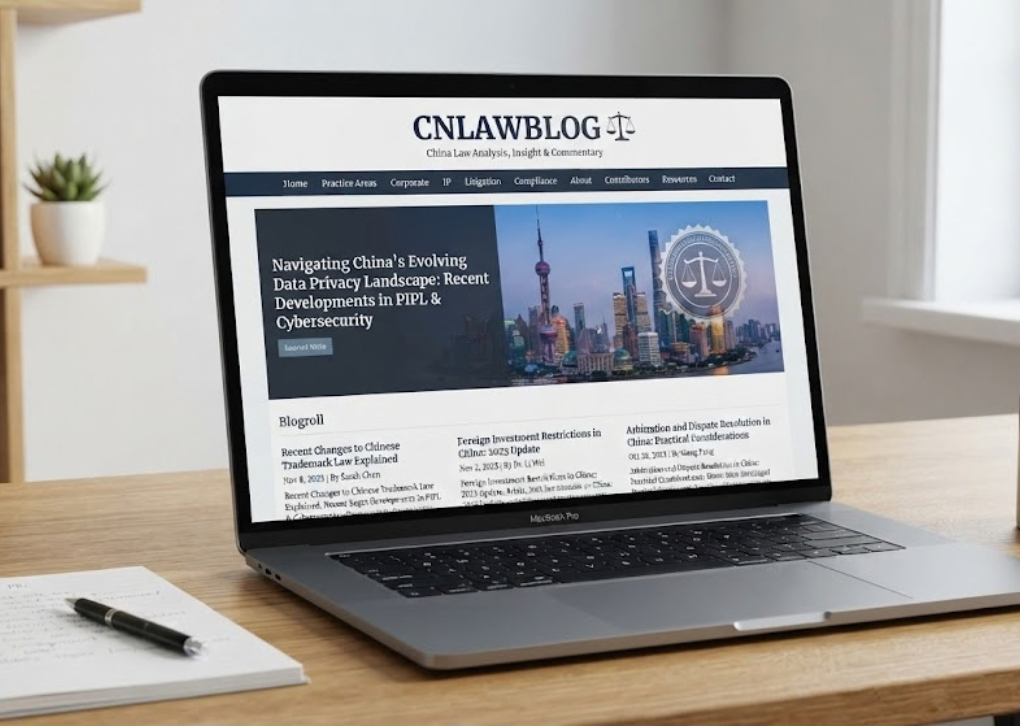
Finding reliable legal information online can be surprisingly difficult. Laws vary between jurisdictions, regulations change, and even a well-written article may omit details that are essential to understanding a particular legal issue. Cnlawblog.com is a domain that readers may encounter while searching for legal commentary, law-related articles, or information about legal rights and responsibilities.
Before relying on any legal website, however, it is important to understand what the platform actually offers, who produces its content, and whether its information is supported by authoritative sources. These considerations become particularly important when researching subjects such as business regulations, employment disputes, intellectual property, contractual obligations, and civil litigation.
This guide examines Cnlawblog.com from a reader’s perspective, explains how to assess the reliability of online legal content, and explores practical research methods that can help individuals and businesses make better-informed decisions.
Verification note: The website’s current ownership, editorial team, publication history, article categories, and operational status have not been independently verified for this article. Consequently, the discussion distinguishes general legal-research guidance from website-specific information that requires direct confirmation.
What Is Cnlawblog.com?
Cnlawblog.com is a domain whose name suggests a connection with legal blogging or law-related information. However, a domain name alone does not establish the nature of a website, its geographical focus, its professional affiliations, or the qualifications of its contributors.
Readers researching the platform should begin by examining its homepage, About page, article archive, author biographies, and contact information. These sections can help establish whether the website operates as an independent legal publication, a professional law firm’s blog, an educational resource, or another type of online platform.
The distinction matters because different publishers serve different purposes. A law firm’s blog may explain legal developments relevant to its clients, while an independent publication may focus on commentary, legislative developments, or general legal education.
Understanding the Purpose of a Legal Blog
Legal blogs typically aim to make complicated legal subjects easier to understand. They may explain court decisions, discuss changes in legislation, explore regulatory developments, or provide practical information about common legal procedures.
The most useful publications do more than summarize laws. They explain the circumstances in which a rule applies, identify relevant exceptions, and direct readers toward original legislation, judicial decisions, or government guidance.
When evaluating Cnlawblog.com, readers should determine whether its published material fulfills these educational purposes and whether the information is appropriate for their particular research needs.
Why People Search for Cnlawblog.com
People searching for Cnlawblog.com may have several different intentions. Some may want to locate a particular article, while others may be investigating the website’s credibility, searching for its contact information, or determining whether it covers a specific legal subject.
Understanding these intentions helps readers find relevant information without wasting time browsing unrelated pages.
1. Finding Legal Information
Legal terminology can be intimidating, especially for individuals who have no formal legal education. Accessible articles can help explain unfamiliar concepts and introduce readers to the basic principles behind a legal issue.
For example, someone researching a contract dispute might initially need to understand the difference between a breach of contract, a contractual remedy, and a limitation-of-liability clause.
An introductory article can provide useful context, but readers should verify the applicable law before making decisions based on its explanation.
2. Researching Legal Developments
Legal professionals, students, and business owners frequently use online publications to identify developments that may deserve closer examination.
These developments can include legislative amendments, regulatory announcements, important court judgments, and changes in administrative procedures.
A legal blog can serve as an effective discovery tool when its articles link to the underlying legal authorities and clearly identify the relevant dates.
3. Checking a Website’s Credibility
Some visitors are primarily interested in determining whether a legal website is trustworthy. They may want to know who owns the domain, whether its authors have appropriate qualifications, and whether its content is regularly reviewed.
This type of investigation is especially important when an article discusses financial obligations, legal deadlines, potential penalties, or decisions that could affect a person’s rights.
4. Exploring Legal Research Resources
Students and researchers may also encounter legal websites while collecting background information for assignments, academic papers, or professional reports.
Secondary sources can help identify useful terminology and relevant legal questions. Nevertheless, original statutes, regulations, and judicial decisions should remain central to research that requires authoritative legal support.
The Main Content Categories on Cnlawblog.com
Although its name emphasizes law, the publication describes a much broader editorial scope. According to its own description and independent reviews published in 2026, it covers legal topics alongside technology, business, finance, education, health, real estate, lifestyle, and other general-interest subjects.
This wider coverage means visitors should pay attention to the category and author of each article rather than assuming that everything on the website is written or reviewed by a legal professional.
Law and Legal Education
The publication’s reported legal categories include civil law, corporate law, criminal law, family law, accident law, and personal injury law. These areas involve different legal principles, procedural requirements, and standards of evidence.
For example, a personal injury article may discuss compensation and negligence, while a corporate law article may explore business obligations or contractual relationships. The usefulness of either article depends on its accuracy, jurisdiction, and supporting evidence.

Business and Finance
The website also publishes material related to business and financial subjects. Such content may appeal to entrepreneurs, small-business owners, and readers interested in understanding commercial or financial concepts.
Financial information deserves particular scrutiny because product terms, interest rates, tax rules, and regulatory requirements can change. Readers should compare significant claims against official regulators, financial institutions, or qualified advisers before acting.
Technology and Digital Topics
Technology is another subject within the publication’s broader editorial coverage. This category can be relevant to readers interested in digital services, software, artificial intelligence, and practical technology explanations.
Technical articles are most useful when they distinguish between general descriptions and verified product specifications. Publication dates are also important because software features, cybersecurity recommendations, and digital services can change rapidly.
Education, Health, and Lifestyle
The site’s reported subject range extends into education, health, lifestyle, and other practical topics. This broader editorial approach makes it possible for readers with different interests to encounter the publication.
However, the expertise required to explain a legal procedure is different from that required to evaluate a medical treatment or financial product. Every article should therefore be assessed according to the standards appropriate to its subject.
Is Cnlawblog.com the Same as China Law Blog?
One of the most important distinctions for readers is that Cnlawblog.com and China Law Blog are separate publications. Similar names have led some third-party articles to confuse the two.
China Law Blog is associated with the law firm Harris Sliwoski LLP and focuses on matters involving Chinese law, international trade, manufacturing, contracts, intellectual property, and cross-border business.
Cnlawblog.com, by contrast, describes itself as an independent, multi-category publication. Its name should not be interpreted as proof that it specializes exclusively in Chinese law or is affiliated with the law firm.
| Feature | Cnlawblog.com | China Law Blog |
|---|---|---|
| Publication type | Independent digital publication | Law-firm publication |
| Editorial focus | Law and general-interest subjects | China-related legal and business matters |
| Subject coverage | Multiple categories | Specialized legal and commercial topics |
| Publisher | Independent publication | Harris Sliwoski LLP |
| Primary purpose | General information | Legal and business commentary |
Readers researching Chinese manufacturing contracts or cross-border commercial disputes should pay particular attention to the publication’s identity and the professional qualifications of the author.
The exact website address is more reliable than a similar-sounding brand name when distinguishing between these publications.
How to Evaluate the Credibility of Cnlawblog.com
Credibility is not established by professional-looking web design, a memorable domain, or a large collection of articles. It depends on the quality of the information, the expertise behind it, and the transparency of the editorial process.
The publication has described its editorial approach as involving source review, editorial checks, corrections, and content updates. These are useful stated practices, but their implementation should be assessed by examining individual articles.
Check the Author’s Qualifications
Start by identifying who wrote the article. A named author provides a degree of accountability, but a byline alone does not establish professional expertise.
For legal content, relevant qualifications may include legal education, professional licensing, academic research, or documented experience in the subject being discussed.
An article covering criminal procedure, for example, should ideally be written or reviewed by someone familiar with the applicable legal system.
Examine the Supporting Sources
Reliable legal explanations should identify the authorities supporting important claims. These may include statutes, regulations, judicial decisions, government publications, or recognized academic materials.
Be cautious when an article makes definitive statements about legal rights or penalties without identifying the applicable jurisdiction or relevant law.
A link to another general-interest blog may provide additional background, but it is not necessarily authoritative evidence for a legal claim.
Look for Publication and Update Dates
Legal information can become outdated when legislation changes or courts issue new interpretations. A publication date helps readers understand when an article was written, while an update date may indicate that its content has been revisited.
An updated timestamp does not automatically mean that every legal statement has been rechecked. For important matters, readers should verify the current legal position independently.
Review Editorial and Commercial Transparency
An editorial policy can explain how a publication selects topics, reviews submissions, handles corrections, and distinguishes editorial content from advertising.
Cnlawblog.com has also been described as accepting guest contributions. Because contributed content can vary in quality, readers should check author attribution, source quality, and any relevant commercial disclosures.
How to Use Cnlawblog.com for Effective Research
A structured research process helps readers gain useful information while reducing the risk of relying on incomplete or outdated material.
The following approach is particularly valuable when a subject involves legal obligations, financial consequences, or important personal decisions.
Step 1: Define Your Research Question
Begin with a specific question rather than a broad topic. For example, researching employment law is less focused than investigating the legal requirements for terminating an employment contract in a particular jurisdiction.
A clearly defined question makes it easier to identify relevant articles and recognize when a source does not address the issue you actually need to resolve.
Step 2: Find the Most Relevant Article
Browse the appropriate category or use a search engine to locate pages on the subject. Read the title, introduction, headings, and publication date before deciding whether the article deserves closer attention.
An effective search should prioritize relevance over the number of results returned.
Step 3: Identify the Applicable Jurisdiction
Always establish which country’s or region’s laws are being discussed. Even neighboring jurisdictions can have substantially different rules governing employment, property, consumer protection, and business operations.
For example, a discussion of United States employment law may not apply to a worker in Pakistan, the United Kingdom, or Australia. Even within the United States, state law can create significant differences.
Step 4: Verify the Original Legal Authority
When an article mentions legislation, regulations, or a court judgment, locate the original source whenever possible.
Official government websites, court databases, and regulatory publications can help confirm the wording and current status of the relevant rule.
For international research, useful starting points include
,
, and the
. Each resource serves a different legal system, so choose the one relevant to your question.
Step 5: Separate General Information From Professional Advice
A general article may explain the meaning of a legal concept without accounting for the circumstances of an individual case.
For example, a discussion of contractual remedies cannot determine the outcome of a specific dispute without examining the agreement, applicable law, relevant evidence, and procedural requirements.
Where the consequences are significant, consult an appropriately qualified professional before taking action.
Advantages and Limitations of Cnlawblog.com
Understanding a publication’s strengths and limitations helps readers use it for the right purpose. The following comparison identifies the potential benefits of its publishing model alongside considerations that deserve attention.
| Potential advantages | Important limitations |
|---|---|
| Covers multiple subject areas | Not every article has the same level of expertise |
| Offers introductory information | General explanations may omit exceptions |
| Provides access to different topics | Readers must confirm the relevant jurisdiction |
| Can help identify research questions | Articles are not substitutes for primary sources |
| Publishes general-interest content | Time-sensitive information may become outdated |
The publication’s broad subject coverage may be convenient for readers who want introductory information about several topics in one place. Its usefulness for specialized research, however, depends on the quality and relevance of the individual article.
For important legal, medical, or financial questions, the appropriate approach is to combine accessible background reading with authoritative sources and professional guidance when necessary.
Who Can Benefit From Reading Cnlawblog.com?
Different readers can use the publication for different purposes. Its general-interest format means that its potential audience extends beyond people specifically searching for legal information.
Students and researchers may find introductory articles useful for identifying concepts, understanding terminology, and developing more focused research questions. Academic assignments should still rely on the primary and scholarly sources required by the institution.
Entrepreneurs and business owners may use business and legal articles to become familiar with commercial issues before investigating their obligations in greater detail. Topics involving contracts, taxes, employment, and regulatory compliance require particular care.
General readers may be interested in the publication’s technology, education, lifestyle, and other practical subjects. They should assess the accuracy and relevance of individual articles rather than assuming that all categories follow identical editorial standards.
Legal professionals may encounter articles while exploring public discussions or identifying subjects that warrant further investigation. Professional legal research, however, requires authoritative sources and jurisdiction-specific analysis.
Common Mistakes to Avoid When Reading Online Legal Content
One of the biggest mistakes readers make is treating an accessible explanation as a complete statement of the law. Even accurate summaries may leave out exceptions, procedural requirements, or factual circumstances that change the legal position.
Another common problem is relying on an article without checking its publication date. Legal rules can change, and an older explanation may no longer reflect the applicable legislation or judicial interpretation.
Readers should also avoid assuming that similar website names indicate a shared publisher or professional affiliation. This is particularly relevant when researching Cnlawblog.com because of its similarity to other legal publications.
Finally, never assume that a confident writing style guarantees accuracy. An article’s claims should be evaluated through its evidence, sources, authorship, and relevance to the question being researched.
Frequently Asked Questions About Cnlawblog.com
1. What is Cnlawblog.com, and what type of content does it publish?
Cnlawblog.com describes itself as an independent digital publication that began with a legal focus and subsequently expanded into other subjects. Its reported categories include law, technology, business, finance, education, health, real estate, lifestyle, and gaming.
The publication says it was founded in August 2018. Its broader editorial scope means that it should be understood as a multi-topic information website rather than a publication devoted exclusively to legal matters.
2. Is Cnlawblog.com a legitimate and trustworthy website?
The domain is associated with an established online publication that has a publicly described editorial model and a history of publishing articles. However, the existence of a website and its stated editorial standards do not independently establish the accuracy of every article.
Readers should evaluate the author, supporting sources, publication date, jurisdiction, and any commercial disclosures before relying on particular information. Claims involving legal rights, financial obligations, or health should receive additional scrutiny.
3. Is Cnlawblog.com a law firm or an official government website?
No. The publication describes itself as an independent information platform rather than a law firm, court, government department, or official legal database.
Its articles may provide educational background, but they do not establish an attorney-client relationship or replace legal advice tailored to an individual’s circumstances. Readers facing a dispute or an important legal decision should consult the appropriate legal authorities and a qualified professional when necessary.
4. Does Cnlawblog.com specialize in Chinese law?
The website is not exclusively dedicated to Chinese law. Although its name may create that impression, its reported editorial coverage includes several legal categories and numerous non-legal subjects.
It is also separate from China Law Blog, the publication associated with Harris Sliwoski LLP. Readers looking specifically for Chinese business law, international trade, or cross-border legal matters should confirm that they are consulting the intended publication and an appropriately qualified source.
5. Can I use Cnlawblog.com for academic research or professional legal decisions?
The website may be useful as a starting point for background reading, terminology, and identifying questions that require further research. Whether a particular article is suitable for academic citation depends on its authorship, supporting evidence, relevance, and the requirements of the institution.
For professional legal decisions, readers should consult current legislation, official regulations, relevant judicial decisions, and qualified legal advisers where appropriate. General online articles should support the research process rather than serve as the sole basis for consequential decisions.
Conclusion: How to Get the Most From Cnlawblog.com
Cnlawblog.com is an independent digital publication whose subject coverage extends beyond the legal focus suggested by its name. Its broader range of articles may be useful for readers seeking introductory information about law, business, technology, finance, education, and other practical topics.
The key to using the website effectively is to evaluate each article individually. Check who wrote it, when it was published, which jurisdiction it discusses, and whether its important claims are supported by appropriate sources.
Start by visiting
, selecting the category relevant to your question, and reviewing the article’s sources and author information. For any decision involving significant legal, financial, or personal consequences, verify the information against current authoritative materials and obtain professional advice where appropriate.
That approach allows readers to benefit from accessible online information while maintaining the accuracy, context, and independent judgment that serious research requires.












Leave a Reply