
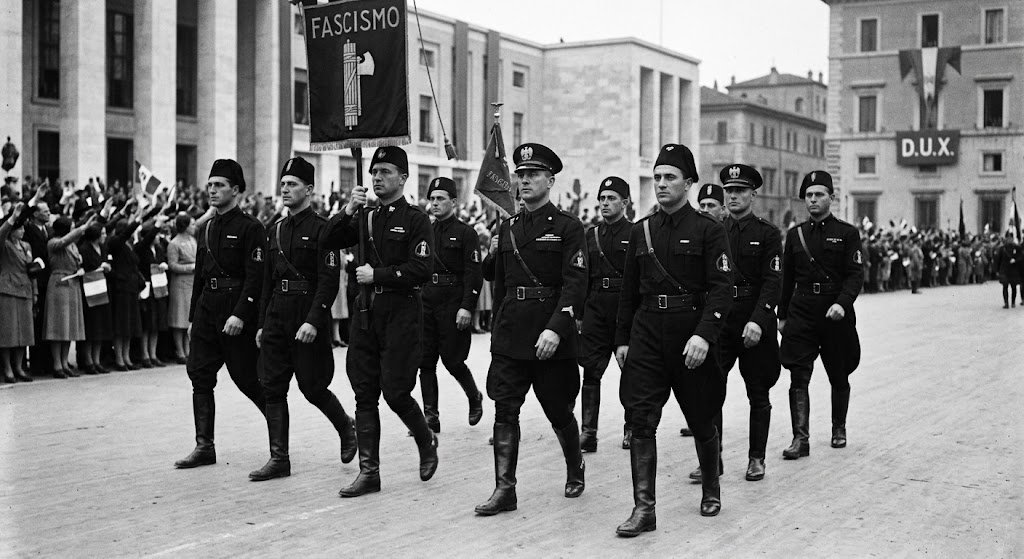
The term Fascisterne translates from Danish as “the fascists” and refers to people, groups, or movements connected with fascist ideology. The word is often used when discussing the political movements that emerged in Europe during the early 20th century, especially those connected to Benito Mussolini’s Italy, Adolf Hitler’s Germany, and similar authoritarian movements across Europe.
Understanding Fascisterne requires more than simply looking at a political label. It requires examining the social conditions, economic struggles, propaganda techniques, and political strategies that allowed fascist movements to gain influence. These movements reshaped nations, caused enormous human suffering, and changed the course of world history.
The history of Fascisterne remains important because it reveals how democratic societies can become vulnerable when fear, nationalism, and anger are manipulated for political power.
Table of Contents
ToggleWhat Does Fascisterne Mean?
The word Fascisterne comes from Danish and literally means “the fascists.” It is the definite plural form of the word fascist, describing multiple individuals associated with fascism.
The term does not describe a separate ideology itself. Instead:
- Fascism is the political ideology.
- Fascist describes a person who supports that ideology.
- Fascisterne refers collectively to fascists as a group.
Historically, the term is most commonly connected with political groups that existed between World War I and World War II. These groups promoted ideas such as:
- Extreme nationalism
- Strong authoritarian leadership
- Opposition to liberal democracy
- Military expansion
- Suppression of political opponents
- State control over society
Although fascist movements differed from country to country, they shared many common characteristics.
The Origins of Fascisterne and the Birth of Fascism
Modern fascism developed in Italy after the First World War. The war left many European countries struggling with economic problems, political instability, and social division.
Italy experienced disappointment after the war because many citizens believed the country had not received enough benefits despite being on the winning side. Rising unemployment, inflation, and fear of communist revolution created an environment where extremist movements could attract support.
This situation allowed Benito Mussolini to build the first major fascist movement.
Mussolini founded the Fasci Italiani di Combattimento in 1919, which later became the National Fascist Party. His movement promised national revival, social order, and the restoration of Italian greatness.
The symbol of fascism came from the ancient Roman fasces, a bundle of rods representing authority and unity. Mussolini used this imagery to communicate the idea that individuals were stronger when completely united under the state.
Fascisterne and the Core Beliefs of Fascist Ideology
To understand who the Fascisterne were, it is essential to understand the ideas that shaped their movements.
1. Extreme Nationalism
One of the strongest elements of fascist ideology was the belief that the nation was more important than the individual.
Fascist leaders promoted the idea that citizens should sacrifice personal interests for national goals. Loyalty to the state became a central expectation.
This often created a society where criticism of government leaders was viewed as betrayal.
2. The Cult of Leadership
Fascist movements usually centered around a powerful leader.
Mussolini presented himself as Il Duce, meaning “The Leader.” Hitler later developed a similar image through the concept of the Führer.
These leaders were portrayed as exceptional figures who alone could restore national strength.
Propaganda played a major role in creating these personalities.
3. Rejection of Democracy
The Fascisterne rejected democratic systems because they believed political disagreements weakened national unity.
They promoted:
- One-party government
- Censorship
- Control of media
- Elimination of opposition parties
Independent institutions were often weakened because fascist leaders wanted complete control over political life.
4. Militarism and Violence
Many fascist movements glorified military strength.
Violence was often presented as a legitimate tool for achieving political goals. Paramilitary groups were used to intimidate opponents and create fear.
In Italy, Mussolini’s Blackshirts played an important role in attacking political opponents and helping the fascists gain power.
Fascisterne in Italy: Mussolini’s Rise to Power
Italy became the first country where fascists successfully gained national control.
In 1922, Mussolini and his supporters organized the March on Rome, a political demonstration backed by fascist paramilitary forces. Shortly afterward, Mussolini became prime minister.
Over time, he transformed Italy from a constitutional monarchy into a dictatorship.
The Fascisterne under Mussolini introduced:
- Government censorship
- Political repression
- State-controlled propaganda
- Restrictions on freedom of expression
- Expansionist military policies
Mussolini’s government became a model that influenced other authoritarian movements across Europe.
Fascisterne and Nazi Germany: Similarities and Differences
Many people associate fascism primarily with Nazi Germany. While Nazism shared important characteristics with Italian fascism, there were also significant differences.
Both movements promoted:
- Authoritarian leadership
- Extreme nationalism
- Propaganda
- Military expansion
- Suppression of opposition
However, Nazi ideology placed racial theories and antisemitism at the center of its worldview.
Adolf Hitler’s government created a system based on racial persecution, which led to the Holocaust and the murder of millions of people.
Understanding these differences is important because not every fascist movement was identical.
Fascisterne in Denmark and Scandinavia
The word Fascisterne is particularly relevant in Danish historical discussions because Denmark had its own fascist organizations during the 20th century.
The most notable group was the National Socialist Workers’ Party of Denmark (DNSAP), founded in 1930.
The party was inspired by German Nazism and attempted to introduce similar political ideas in Denmark. However, it remained a minority movement and never achieved significant democratic support.
During the German occupation of Denmark during World War II, some Danish fascists collaborated with Nazi Germany.
Their activities included:
- Supporting German occupation policies
- Joining German military units
- Promoting Nazi-inspired ideas
However, most Danish citizens rejected fascist ideology, and resistance movements developed throughout the occupation period.
How Fascisterne Used Propaganda to Gain Support
One of the most powerful tools used by fascist movements was propaganda.
Fascist leaders understood that controlling information could influence public opinion.
They used:
- Newspapers
- Radio broadcasts
- Public rallies
- Political symbols
- National ceremonies
- Posters and films
Propaganda created a simple narrative:
- The nation was suffering.
- Enemies were responsible.
- A strong leader could solve everything.
This emotional approach helped fascist movements attract followers during periods of uncertainty.
The Fall of Fascisterne After World War II
The defeat of Germany, Italy, and their allies in World War II marked the collapse of major fascist governments.
Mussolini was captured and executed in 1945.
Hitler died as Germany collapsed.
After the war:
- Fascist organizations were banned.
- Leaders were prosecuted.
- Propaganda systems were dismantled.
- Societies attempted to rebuild democratic institutions.
The Nuremberg Trials exposed the crimes committed by Nazi leaders and established important principles regarding crimes against humanity.
Why the History of Fascisterne Still Matters Today
The study of Fascisterne is not only about the past.
It provides lessons about how political extremism develops.
History shows that authoritarian movements often grow during periods of:
- Economic crisis
- Social division
- Public fear
- Political frustration
Fascist movements often present themselves as solutions to national problems. They promise stability and greatness, but frequently achieve control by reducing freedoms.
Important lessons include:
- Protecting democratic institutions
- Supporting independent journalism
- Encouraging critical thinking
- Defending human rights
- Recognizing political manipulation
Common Misunderstandings About Fascisterne
Are Fascisterne the Same as Nazis?
Not exactly.
Nazism is a specific form of fascism that developed in Germany. While both ideologies share authoritarian characteristics, Nazi ideology placed a stronger emphasis on racial hierarchy and antisemitism.
Is Fascism Simply Strong Leadership?
No.
Strong leadership exists in many political systems. Fascism specifically involves authoritarian control, suppression of opposition, extreme nationalism, and rejection of democratic pluralism.
Why Is the Word Fascist Still Used Today?
Today, the word is sometimes used in political debates. However, historians emphasize that it should be used carefully and accurately.
A historical understanding of Fascisterne helps separate genuine analysis from casual political insults.
Frequently Asked Questions About Fascisterne
1. What does Fascisterne mean?
Fascisterne is a Danish word meaning “the fascists.” It refers to people or groups connected with fascist political movements.
2. Where did fascism begin?
Modern fascism began in Italy after World War I under Benito Mussolini. His movement became the first major fascist government in history.
3. Who were the main Fascisterne in Europe?
The most well-known fascist leaders were Benito Mussolini in Italy and Adolf Hitler in Germany. Other fascist-inspired groups appeared throughout Europe during the 1920s and 1930s.
4. What ideas did Fascisterne support?
Fascist movements generally supported authoritarian leadership, extreme nationalism, militarism, propaganda, and suppression of political opposition.
5. Why is learning about Fascisterne important?
Studying Fascisterne helps modern societies understand how extremist movements gain power and why protecting democracy, human rights, and freedom of expression remains essential.
Conclusion: Understanding Fascisterne as a Lesson From History
The story of Fascisterne represents one of the most significant political developments of the modern era. These movements grew during times of uncertainty by using nationalism, fear, propaganda, and promises of national renewal.
Their rise changed Europe forever and resulted in devastating consequences during World War II.
Learning about Fascisterne is not simply about remembering historical events. It is about recognizing warning signs, protecting democratic values, and understanding how societies can prevent destructive ideologies from gaining control.
The best way to approach this history is through education, critical thinking, and a commitment to human dignity. History provides the evidence. It is up to each generation to learn from it.







Leave a Reply