
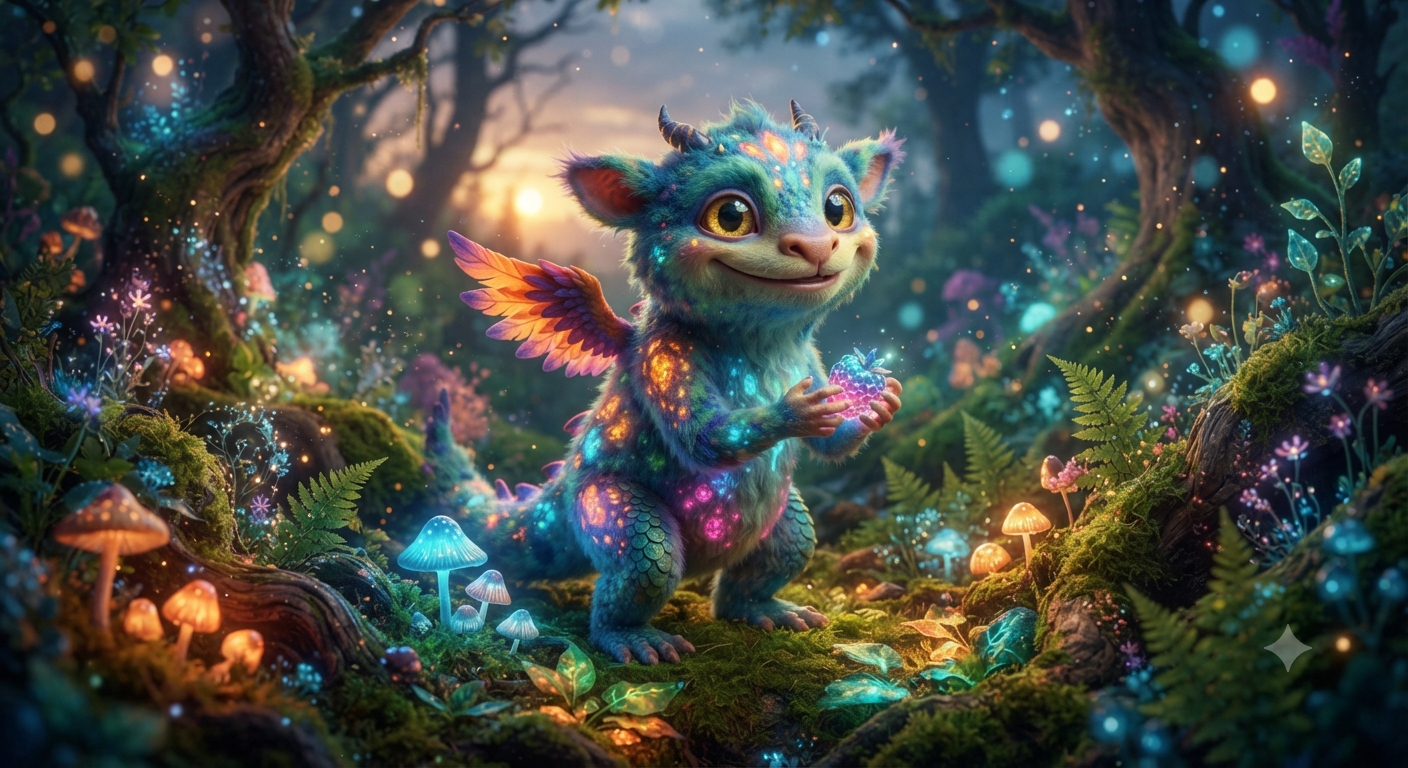
Zimblefronk is an unusual internet term with no universally accepted definition, documented inventor, or established history. Search results may describe it as a learning method, creative philosophy, meme, fictional word, or cultural trend, but those descriptions conflict and are rarely supported by primary evidence.
The most accurate answer is simpler: it appears to be a made-up, context-dependent word whose meaning changes according to the person using it.
That does not make the term useless. Invented words can become memorable character names, private jokes, brand concepts, creative prompts, or genuine slang. The key is separating playful interpretation from claims that can actually be verified.
What Is Zimblefronk?
At the moment, Zimblefronk is best categorized as a nonce word: a word invented for a specific occasion, rather than one that has entered general use.
According to Merriam-Webster, a nonce word is a word coined on a particular occasion and not likely to be repeated, while Cambridge defines it as a word invented for a particular purpose.
I couldn’t find an entry for the word in any of the sources I checked, though searching various dictionaries turned up similar-sounding words like “Zimbel,” “zimb” and “zimbalon.” The lack of a formal definition doesn’t necessarily mean that the word doesn’t exist, however; it just means that no dictionary has officially recorded it yet.
A useful working definition might be something like this:
A whimsical word used to describe something weird and wonderful, chaotic and fanciful, unreal and ill-defined.
It’s a bit of an unofficial definition, but hopefully you’ll find it useful all the same.
Is Zimblefronk a Real Word?
Yes and no.
It is “real” in the basic sense that people have typed, published, shared, and searched for it. A public X post from 2025, for example, used the expression in the phrase “the railway cat,” apparently as a humorous or fictional label. A later Reddit discussion treated it as the sort of human-sounding nonsense that bots might invent.
It is not established in the stronger linguistic sense. There is no agreed spelling history, stable meaning, recognized etymology, standard pronunciation, or body of well-documented usage comparable to an ordinary dictionary word.
This distinction matters.
Language is not limited to formal dictionaries, but repeated publication alone does not turn a vague string into a proven movement, technology, educational framework, or philosophy.
Where Did Zimblefronk Come From?
The honest answer is that its origin is unknown.
Public social-media usage existed before the large cluster of explanatory articles that appeared during 2026. That should not be presented as proof of the first-ever use, because search engines do not index every private message, deleted post, niche forum, game server, or spoken conversation.
By February 2026, websites had begun attaching elaborate stories to the word. One article claimed it started in Reddit communities in early 2024, went viral on TikTok, attracted mainstream media attention, and eventually became a philosophy.
The page did not identify the original posts, creators, mainstream reports, datasets, or brands needed to verify that timeline.
Another article presented the term as a technology-supported educational approach. It supplied supposed examples involving schools and corporate training programs without naming the schools, companies, programs, researchers, or outcome data.
A June 2026 page made still more claims involving an indie film, music acts, fashion designers, and social-media trends. Once again, it did not name verifiable examples.
The contradiction is revealing. When one source calls the same undefined expression an education platform and another calls it a creative life philosophy, the safest conclusion is not that both are true.
It is that publishers are filling an information vacuum with imaginative content.
Why the Word Sounds Believable
Zimblefronk feels word-like because its sound pattern resembles familiar English and European-style constructions. It begins with the crisp “zim” sound, moves through the softer “ble,” and ends with the comic, heavy “fronk.”
The result sounds as though it could belong to a fantasy creature, eccentric surname, machine, village, game item, or cartoon insult.
That interpretation is based on sound and association, not proven etymology. There is no credible evidence that “zimble” and “fronk” were intentionally blended from specific source words.
The structure also makes the expression useful. It is distinctive, easy to recognize, and semantically empty enough to absorb a meaning supplied by context.
Writers often value precisely that combination when naming fictional characters or imaginary objects.
Possible Meanings of Zimblefronk
Because no fixed definition exists, meaning should be inferred from the sentence, community, or creative work where it appears. Several uses are plausible.
1. A fictional creature or character
The term has the rhythm of a fantasy name. It could describe a mischievous forest animal, alien engineer, railway cat, comic villain, or children’s-book companion.
Example: “The Zimblefronk hid every silver spoon before sunrise.”
Here, readers learn the concept through behavior rather than a dictionary explanation.
2. A strange object or improvised device
It can function as a placeholder for a gadget whose proper name is unknown or intentionally absurd.
Example: “Pass me the little brass zimblefronk beside the toolbox.”
The sentence suggests a physical object, even though the object remains undefined.
3. A chaotic but amusing situation
Some online articles associate the expression with playful disorder, creative experimentation, or unexpected events. That meaning is possible as a creative convention, but it should not be represented as established slang.
Example: “The rehearsal turned into complete zimblefronk after the lights failed.”
4. An inside joke or community signal
Small groups frequently create private vocabulary. Friends, gaming communities, classrooms, or creative teams could assign the word a precise local meaning that outsiders would not understand.
Example: “No spoilers in the group chat—remember the zimblefronk rule.”
5. A brand, project, or username
Its uniqueness makes it attractive as a naming seed. A developer might use it for a prototype, an artist for a character collection, or a creator for an online handle.
Before commercial use, however, availability and legal clearance should be checked rather than assumed.
How to Pronounce Zimblefronk
There is no standardized pronunciation because there is no authoritative dictionary entry or identified creator who has supplied one.
The most natural English reading is likely:
ZIM-buhl-fronk
A possible phonetic rendering is:
/ˈzɪm.bəl.frɒŋk/ or /ˈzɪm.bəl.frɑːŋk/
The final vowel may change according to accent. British speakers may lean toward the sound in “lot,” while many American speakers may use a broader “ah” sound.
This suggested pronunciation follows the spelling. A creator is free to choose something different but should publish the preferred pronunciation if the term becomes part of a story, game, product, or brand.
What Zimblefronk Is Not Proven to Be
Readers should be cautious when pages present confident claims without names, documents, dates, or primary sources.
Current public evidence does not establish the term as:
- A recognized educational model
- An officially documented learning platform
- A psychological treatment or method
- A documented Gen Z movement
- A widely measured TikTok trend
- A formal business methodology
- A historical word with a known etymology
- A philosophy used by millions of people
- A validated creativity technique
- An established piece of mainstream slang
This does not prove nobody has ever used it in one of these ways. It means broad claims require evidence that currently available articles do not provide.
One page even asserted that artists using a supposed method achieved “300% more creative output.” Yet it supplied no study, sample, measurement method, research organization, or source.
The same article presented age-group claims and a multi-year viral timeline without supporting data.
Reliable reporting should label such statements as unverified, not repeat them as facts.
How to Verify Claims About Zimblefronk
A disciplined verification process prevents a curiosity-driven search from becoming a chain of invented facts.
Check for a primary source
Look for the creator’s original post, official website, published book, game page, film credit, product documentation, research paper, or dated announcement.
A blog repeating another blog is not independent confirmation.
Demand specific names
Claims about schools, companies, bands, designers, therapists, exhibitions, or media coverage should identify those entities.
Anonymous examples cannot be meaningfully checked.
Examine dates and archives
A source claiming the term existed in 2024 should link to material published in 2024 or an archive showing that the older page existed.
A 2026 article merely stating an earlier date is not proof.
Separate search visibility from cultural popularity
A cluster of SEO articles can make a keyword appear widespread even when genuine public usage is limited.
These are four different measurements:
- Search-result visibility
- Social-media popularity
- Dictionary acceptance
- Real-world adoption
Ranking pages do not automatically prove that a cultural phenomenon exists.
Watch for fabricated precision
Unsupported percentages, user counts, demographic ranges, performance improvements, and trend timelines are warning signs.
Precision is not evidence. A false claim does not become more credible because it includes a percentage sign.
Compare independent sources
Real developments are usually supported by multiple sources that provide different evidence. Suspicious content often repeats the same vague ideas, examples, and claims without introducing original documentation.
Ask one simple question: Can this statement be traced back to something concrete?
How Writers Can Use Zimblefronk Creatively
Invented language can be powerful when the writer owns the creative choice and explains it clearly.
First, define the expression at its first important appearance. A fantasy story might say:
“A zimblefronk is a clockwork animal that collects forgotten names.”
The reader immediately understands enough to continue.
Second, communicate meaning through action. Instead of repeatedly explaining that a creature is mischievous, show it stealing keys, rearranging signs, or imitating the mayor’s voice.
Third, stay consistent. If Zimblefronk is a creature in chapter one, do not quietly turn it into a philosophy in chapter five unless that change is part of the plot.
The term could work particularly well in:
- Fantasy and science-fiction stories
- Children’s books
- Tabletop or video games
- Comedy sketches
- Animated projects
- Fictional languages
- Puzzle games
- Character merchandise
- Creative writing exercises
- Community inside jokes
Its lack of established meaning gives the creator room to develop an original identity.
How Brands Can Use the Name Responsibly
The term is memorable, but memorability alone does not make a name commercially suitable.
A brand considering Zimblefronk should begin by defining what it represents. Is it a playful game studio, experimental design tool, children’s character, creative agency, novelty product, or entertainment channel?
The positioning must be specific.
Businesses should also avoid inventing a fake backstory. There is no need to claim ancient linguistic roots, scientific validation, viral adoption, or cultural ownership.
Mystery can be appealing without manufactured history.
Before launching a commercial project, complete basic naming checks:
- Search trademark databases in relevant markets
- Check domain-name availability
- Review social-media handle availability
- Investigate similar product and company names
- Test pronunciation with target users
- Check translations and unintended meanings
- Review app stores and online marketplaces
- Document when and how the name was created
- Consult a qualified trademark professional when necessary
These steps matter because a seemingly unused word can still resemble an existing trademark, surname, product, slang term, or offensive expression in another language.
The SEO Story Behind the Keyword
The search intent around the term is primarily informational and curiosity-driven.
People encounter an unfamiliar expression and immediately ask:
- What does it mean?
- Is it a real word?
- Is it internet slang?
- Did it come from TikTok?
- Is it a company or platform?
- Is it a fictional character?
- Is it a misspelling?
- Why are websites discussing it?
The mystery itself creates clicks.
Several publishers have responded by offering elaborate explanations, but the quality varies sharply. Some acknowledge that it is undefined or fictional, while others construct unsupported narratives around education, psychology, business, folklore, and viral culture.
This creates a useful lesson for readers and content creators: search rankings do not guarantee factual reliability.
A page can rank because it matches the keyword, answers common questions, and uses relevant headings. Those qualities do not prove its origin story, statistics, or examples are true.
A genuinely useful article should document what can be observed, identify what remains unknown, and clearly label interpretation as interpretation.
Could Zimblefronk Become an Established Word?
It could, although most coined expressions never achieve broad adoption.
A nonce word becomes more durable when:
- Many people begin using it independently
- Its meaning becomes relatively stable
- Recognizable communities adopt it
- People understand it without an explanation
- Authentic examples appear across different sources
- Its use continues over an extended period
- Dictionaries and linguistic researchers begin documenting it
Dictionary inclusion usually follows sustained usage. It does not create that usage from nothing.
The term already has one advantage: memorability. It is unusual without being impossible to pronounce.
Its weakness is semantic instability. Current pages assign so many incompatible meanings that readers cannot reliably predict what a speaker intends.
For the expression to mature into recognizable slang or an established name, users would need to converge on a narrower definition.
Practical Examples in Different Contexts
The easiest way to understand an invented word is to observe how context changes its function.
As a noun
“The mechanic removed a broken zimblefronk from the engine.”
Here, it refers to an object or component.
As a character name
“Zimblefronk guarded the bridge but accepted payment in blueberry pies.”
The capital letter and action establish it as a proper name.
As a description of disorder
“The wedding schedule became pure zimblefronk when the storm arrived.”
The surrounding sentence suggests confusion or chaos.
As an internal project label
“We will use Project Zimblefronk for the experimental interface.”
It becomes a temporary codename.
As a verb
“We zimblefronked the original design until it became something completely new.”
This is an intentionally playful grammatical invention, not an established verb form.
These examples demonstrate an important principle: context creates temporary meaning when dictionary meaning is absent.
Frequently Asked Questions
What does Zimblefronk mean?
It has no authoritative, universally accepted meaning. The safest definition is a whimsical invented term whose meaning depends on context.
It may describe a fictional creature, strange object, chaotic event, inside joke, project, username, or brand concept.
Is Zimblefronk a TikTok trend?
Some blogs claim it became popular on TikTok, but the reviewed pages did not provide original videos, creator names, hashtag analytics, archived trend data, or reliable platform statistics demonstrating a major trend.
The TikTok narrative should be treated as unverified unless primary evidence is produced.
Is Zimblefronk an educational method?
There is an article describing it as an interactive learning approach, but that page does not identify an official platform, developer, curriculum, school district, study, or documented implementation.
There is therefore insufficient evidence to call it a recognized educational method.
Who invented Zimblefronk?
No verified inventor has been identified. Public social-media usage existed in 2025, but an indexed post is not necessarily the first use or proof of authorship.
Earlier private, deleted, spoken, or unindexed usage may exist.
Can I use Zimblefronk for a story or brand?
You can use it as a creative starting point, provided you define your intended meaning.
For commercial use, complete appropriate domain, trademark, linguistic, marketplace, and social-handle checks. Avoid presenting speculative internet stories as the name’s factual history.
Conclusion: Treat the Mystery Honestly
The term is interesting because it sits between nonsense and possibility. It looks pronounceable, memorable, and meaningful, yet no stable public definition has emerged.
That blank space invites creativity. It also invites misinformation.
Use the word freely in fiction, games, brainstorming, humor, experimental projects, or private community language. Define what you mean, remain consistent, and investigate commercial naming risks before building a brand around it.
Most importantly, do not repeat claims about viral origins, educational success, psychological benefits, or mass adoption unless those claims are backed by identifiable primary evidence.
The smartest next step is simple: decide what the term means in your own context, write that definition down in one sentence, and make every later use support it.











Leave a Reply