
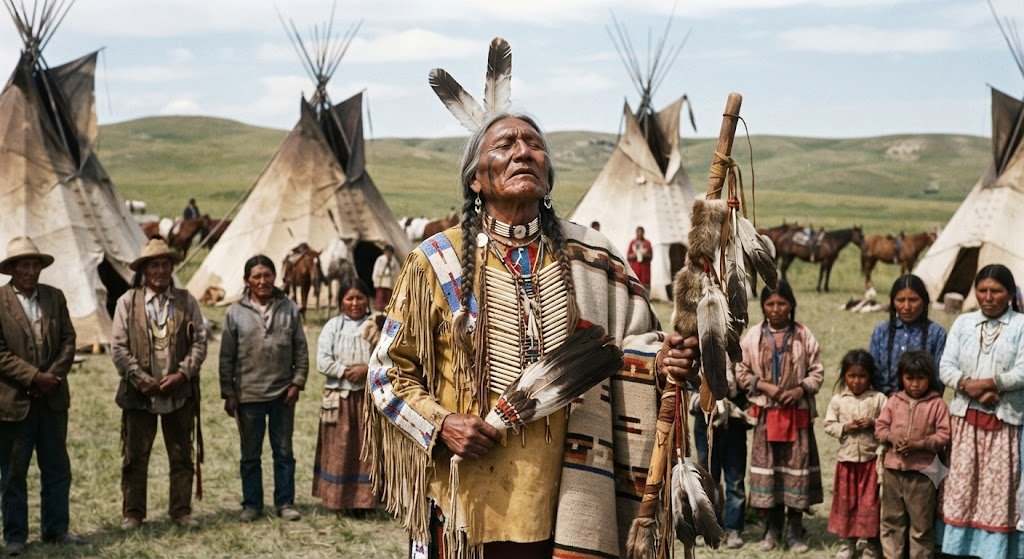
Pyahhunkad is an unusual term appearing across a small cluster of web pages, usually described as a cultural practice, personal-growth philosophy, digital-age expression, or symbolic framework. The problem is that these descriptions do not agree with one another, and none of the pages reviewed provides verifiable historical documents, named communities, linguistic records, academic research, or primary-source testimony to support a fixed definition.
That does not make the word meaningless. It does mean readers should separate documented fact from creative interpretation. This guide examines the available evidence, compares the competing explanations, identifies warning signs in existing coverage, and offers a responsible way to understand an emerging or possibly invented online term.
What Is Pyahhunkad?
At present, there is no authoritative, universally accepted definition of Pyahhunkad. Exact-match web searches mainly surface recently published articles that assign different meanings to the word rather than independent sources documenting an established concept.
One article treats the term as an open-ended product of digital language, potentially usable as a meme, username, brand identity, or creative label. Another presents it as an ancient communal framework connected with ceremonies, seasonal gatherings, Indigenous traditions, balance, and resilience. A third describes it as a personal-transformation method combining mindfulness, reflection, and practical action.
These explanations are not minor variations of the same definition. They are fundamentally different origin stories. That inconsistency is the most important fact a reader should know.
A cautious working definition is therefore:
Pyahhunkad is an unverified, web-emergent term whose meaning is currently being created through online interpretation rather than established through reliable historical or linguistic evidence.
This definition may change if credible primary sources appear. Until then, claims of ancient origin, ceremonial use, Indigenous ownership, or proven psychological benefits should be treated as unconfirmed.
Why the Meaning of Pyahhunkad Is Unclear
Words usually gain stable meaning through repeated use inside a recognizable language community. Dictionaries, books, newspapers, oral histories, academic publications, government records, or long-standing cultural institutions may then document that use.
The online footprint of Pyahhunkad follows a different pattern. The visible pages are recent, thinly sourced, and often written in a broad explanatory style. They describe supposed history and symbolism but generally do not identify the language, country, tribe, archive, elder, scholar, historical text, archaeological record, or community from which the concept allegedly comes.
That absence matters. A genuine cultural tradition can be poorly documented online, especially when it belongs to a marginalized or oral community. However, responsible writers should still name the people, place, language, or evidence base involved—or clearly state that the origin is uncertain.
Competing Interpretations Found Online
The main interpretations currently fall into four categories:
- A digital neologism: a newly coined expression with no fixed definition.
- A symbolic identity term: a word associated with creativity, individuality, mystery, or belonging.
- A cultural or ceremonial framework: an alleged tradition involving community, heritage, seasonal rituals, and collective resilience.
- A self-development method: an alleged philosophy involving mindfulness, transformation, and personal empowerment.
The digital-neologism explanation is the most cautious because it acknowledges uncertainty. The cultural and historical explanations make much stronger claims, yet the pages presenting them do not show strong primary evidence in the available search results.
Does Pyahhunkad Have Ancient or Indigenous Origins?
There is currently not enough reliable evidence to say that Pyahhunkad is an ancient or Indigenous tradition. Some web pages use language associated with Indigenous life, ancestral wisdom, colonization, seasonal ceremonies, drums, herbs, storytelling, and communal governance, but those descriptions are not accompanied by identifiable source communities or historical citations.
This is more than a technical sourcing issue. Assigning an invented term to unnamed Indigenous cultures can flatten many distinct peoples into a vague aesthetic. It may also create false cultural authority by borrowing the language of heritage without demonstrating an actual relationship to the community being described.
A credible claim of cultural origin should answer specific questions:
- Which people or community use the term?
- In which language is it found?
- How is it spelled in that language’s script?
- Who documented it, and when?
- Are there named practitioners, elders, historians, or institutions?
- Can the practice be traced through independent sources?
- Do community members describe it in the same way?
When those questions cannot be answered, the safest description is unverified origin. Writers should not upgrade speculation into history merely because several websites repeat similar wording.
A Linguistic Analysis of the Word
Some existing coverage tries to divide Pyahhunkad into smaller sound units and assign possible meanings to each. One article suggests that “pya” might evoke love, “hunk” might suggest strength or attractiveness, and “kad” might provide a sense of weight or grounding. Importantly, that article frames the breakdown as speculation rather than established etymology.
This kind of sound-based interpretation can be creative, but it is not the same as linguistic evidence. Real etymology requires documented historical forms, sound changes, related words, language-family connections, and dated usage.
There are several reasons the word feels memorable:
- It contains recognizable-looking fragments.
- It has a rhythmic, multi-syllable shape.
- Its spelling is unusual enough to trigger curiosity.
- It resembles a name, slogan, invented philosophy, or fictional place.
- Its ambiguity invites readers to supply their own meaning.
Those qualities may explain why content publishers are attracted to it. A rare term offers low direct competition and allows a writer to construct an expansive explanation. Yet low competition does not prove that the subject itself has an established history.
Possible Spelling Variants
Searchers may encounter or try forms such as Pyah Hunkad, Pyah-hunkad, Pya Hunkad, or Pyahunkad. These variants should not be treated as separate traditions unless evidence shows that they have distinct origins.
For SEO and editorial clarity, a page can mention plausible variants once, then use one consistent spelling. Repeating every variation unnaturally would reduce readability and could look like keyword stuffing.
How Pyahhunkad Spreads Through Digital Culture
An undefined word can spread because uncertainty itself creates demand. Someone sees the term in a title, social post, recommendation feed, domain, username, or search suggestion and asks, “What does that mean?” Publishers then create explanatory pages, which make the word appear more established than it was before.
This creates a feedback loop:
- A rare or invented keyword appears online.
- Curiosity generates searches.
- Websites publish definitions.
- Later writers use those pages as apparent evidence.
- Repetition creates an illusion of consensus.
That process does not require deliberate deception. It can happen through ordinary content production, automated topic discovery, generative writing tools, or writers paraphrasing one another without tracing the original source.
Google advises publishers to create helpful, reliable, people-first material, disclose relevant authorship or production context, and add original value rather than producing pages mainly to capture search traffic. Google also warns that large-scale generative content without meaningful user value may violate its scaled-content-abuse policy.
For a topic like Pyahhunkad, genuine information gain comes from exposing uncertainty, comparing claims, showing the research method, and resisting the temptation to invent a confident backstory.
Practical Uses of Pyahhunkad as a Modern Coined Term
Even without a verified traditional meaning, the word can still be used creatively. New words often acquire meaning after communities begin using them consistently.
Possible modern applications include:
- A fictional concept in a novel, game, film, or world-building project.
- A username or creator identity built around mystery or originality.
- A brand name for art, fashion, media, or experimental design.
- A community-created value system with openly defined principles.
- A campaign tag for a creative challenge or collaborative project.
- A placeholder term used to study how online language develops.
The key is transparency. A creator should say, “We are defining this term as…” rather than claiming that the definition comes from an ancient culture unless that claim can be proved.
Before adopting Pyahhunkad commercially, conduct trademark, domain, social-handle, and marketplace checks in the countries where the brand will operate. Also evaluate pronunciation, spelling difficulty, unintended meanings in other languages, and whether users can remember the term after hearing it once.
How to Define It Responsibly
A modern creator could establish a clear definition using a simple framework:
- State the purpose. Explain why the word is needed.
- Define its boundaries. Clarify what it does and does not mean.
- Document the origin. Name the creator, date, and context.
- Invite community input. Allow usage to evolve transparently.
- Avoid borrowed authority. Do not attach false ethnic, spiritual, or historical credentials.
- Publish examples. Show the word in real sentences and situations.
This approach turns ambiguity into an honest creative project rather than a fabricated historical claim.
How to Verify Claims About Pyahhunkad
Readers should use a repeatable verification process instead of relying on the first polished article they find.
Start by checking whether the page names its sources. Strong evidence may include digitized books, academic papers, museum collections, language dictionaries, archival documents, recorded interviews, or official community organizations.
Next, search the exact term in quotation marks and compare publication dates. When every result is recent and the pages repeat broad claims without independent documentation, the term may be a modern content phenomenon rather than an old tradition.
Then examine whether the sources are truly independent. Ten websites that repeat one unsupported article do not provide ten separate pieces of evidence.
Use this credibility checklist:
- Specific origin: Is a real location, language, or community named?
- Primary evidence: Are original records or first-hand accounts linked?
- Independent confirmation: Do unrelated credible sources agree?
- Author expertise: Does the writer have relevant linguistic, historical, or cultural qualifications?
- Method transparency: Does the page explain how its conclusions were reached?
- Uncertainty labels: Are theories clearly separated from facts?
- Update history: Has the article been corrected as new evidence emerged?
Google’s guidance similarly emphasizes clear authorship, evidence of how content was produced, and a people-first reason for publishing. It also recommends unique, well-organized content rather than rehashing what other pages already say.
Common Misconceptions and Red Flags
The first misconception is that ranking in search results proves legitimacy. Search visibility shows that a page has been indexed and surfaced; it does not independently authenticate every claim on that page.
The second misconception is that repeated detail equals evidence. A long article can contain ceremonies, symbols, values, and historical events that sound coherent while still lacking documentation.
The third is that an unfamiliar word must have a hidden ancient meaning. It may instead be a typo, fabricated keyword, fictional term, username, automated phrase, transliteration error, or newly coined expression.
Watch for these red flags:
- No named language or culture.
- No dated examples of historical usage.
- No quotations from identifiable practitioners.
- Sweeping references to “ancient wisdom.”
- Symbolic claims presented without sources.
- Benefits described without evidence.
- Multiple sites publishing near-identical narratives.
- Confident conclusions built entirely from phonetic guesswork.
None of these signs proves that Pyahhunkad is fake. Together, however, they justify a high level of caution.
Frequently Asked Questions About Pyahhunkad
1. What Does Pyahhunkad Mean?
There is no verified universal meaning at present. Online pages variously describe it as a digital-age expression, cultural framework, ceremonial tradition, or personal-growth philosophy, but these interpretations conflict and lack a shared primary evidence base.
The most defensible answer is that it is an emerging or possibly invented online term whose definition remains unsettled.
2. Is Pyahhunkad a Real Cultural Tradition?
No reliable evidence reviewed for this article establishes it as a documented cultural tradition. Claims connecting it with Indigenous ceremonies, ancestral practices, or historical community life should remain labeled as unverified unless named communities and primary sources can be produced.
3. Where Did Pyahhunkad Originate?
Its exact origin is unknown. The currently visible search footprint consists mainly of recent explanatory web content, and the available pages do not establish an original creator, language, geographic location, or dated first usage.
4. Can Pyahhunkad Be Used as a Brand Name?
Potentially, yes. Its unusual spelling may make it distinctive, but distinctiveness alone is not enough for a strong brand.
Before using it, verify trademarks, domains, social handles, pronunciation, audience comprehension, and possible meanings across target markets. Define the brand story honestly rather than relying on unsupported historical claims.
5. Why Are There So Many Different Explanations?
Because the term lacks a stable, documented definition, writers can project different ideas onto it. Once several pages exist, later publishers may treat earlier speculation as source material, producing an expanding but unreliable body of content.
Conclusion: Treat the Mystery as a Research Question
Pyahhunkad is interesting precisely because its status is unresolved. It may be a newly coined expression, a synthetic keyword, a fictional concept, or a term whose authentic source has not yet been documented online.
The responsible next step is not to repeat the most dramatic story. It is to preserve the distinction between evidence and imagination.
Readers should look for dated primary sources, named communities, linguistic documentation, and independent confirmation. Publishers should update their pages when stronger evidence appears, disclose uncertainty clearly, and avoid presenting invented cultural history as fact.
Until credible documentation emerges, use Pyahhunkad as an open modern term—not as a proven ancient tradition. That position is more accurate, more ethical, and ultimately more valuable to readers.













Leave a Reply