
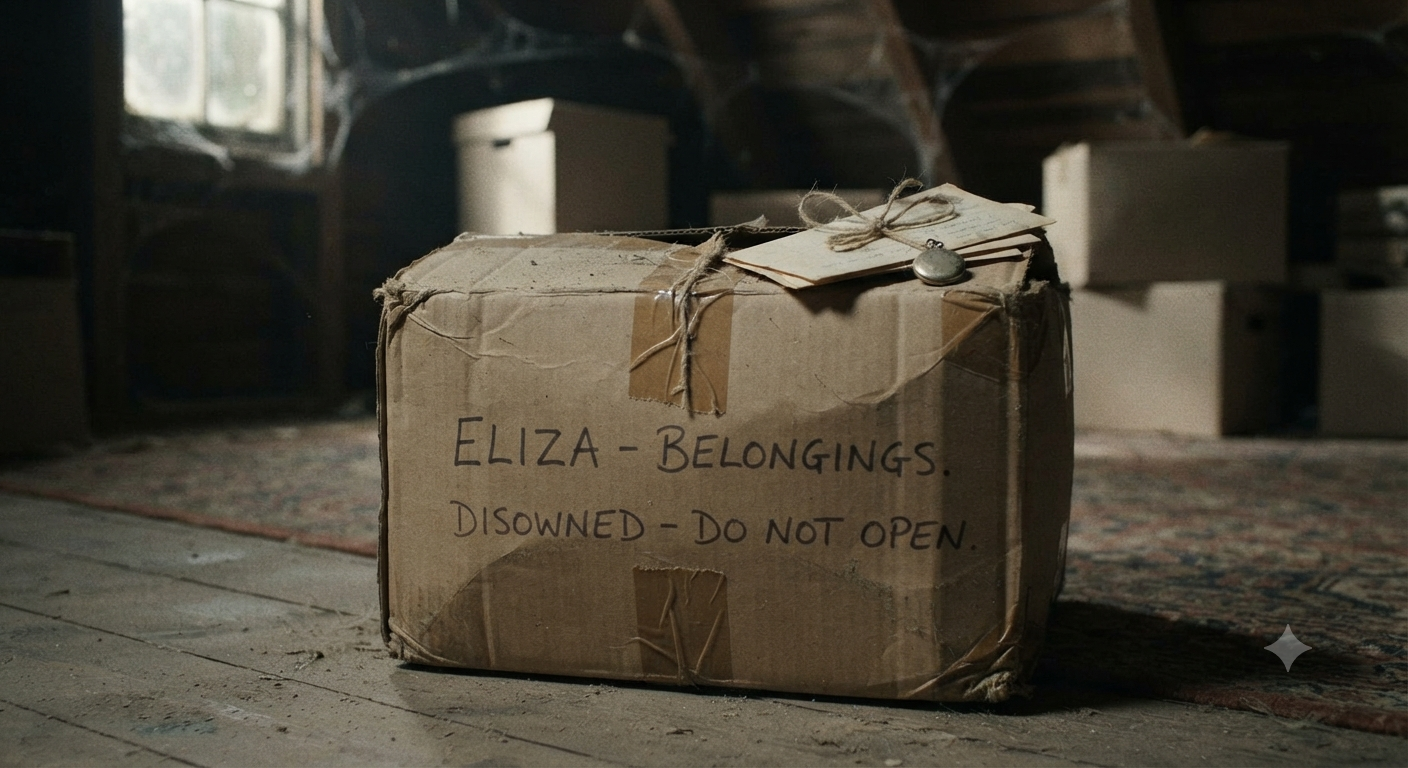
Blood and bones of disowned daughter is a revenge-driven vertical drama about Natalie Parsons Novak, a once-loved daughter who is framed, rejected, and sent to a brutal reform school. The official title is Blood and Bones of the Disowned Daughter, and its story blends family betrayal, a false-heiress scheme, forced marriage, hidden parentage, romance, and hard-earned justice.
Unlike a traditional television series, the production uses short, fast-moving episodes built around cliff-hangers. GoodShort lists the completed English-language drama as a 64-episode romance with “Family,” “Heiress,” and “Regret” tags, while IMDb categorizes it as a 2025 TV mini-series.
What Is Blood and Bones of Disowned Daughter About?
At its core, Blood and bones of disowned daughter asks a painful question: what happens when the people who raised you decide that blood matters more than love? Natalie begins as the cherished daughter of the Parson family, but her place in the household collapses when Monica is presented as the biological heiress.
Monica does not simply take Natalie’s status. She manipulates the family’s fear and grief, frames Natalie for their grandmother’s apparent murder, and helps turn the Parsons against the girl they once loved. Natalie is then cast out and sent to a reform school where humiliation, violence, and isolation reshape her personality.
Two years later, Natalie returns quieter, colder, and far less willing to beg for affection. Her family pushes her into a marriage with Damien Novak, a man they dismiss as an alcoholic playboy, but that marriage becomes the unexpected doorway to protection, dignity, and a different kind of family.
Quick Facts About the Drama
Readers searching for Blood and bones of disowned daughter usually want the basic viewing details first. This quick reference makes Blood and bones of disowned daughter easier to identify across search results and streaming listings:
- Official title: Blood and Bones of the Disowned Daughter
- Format: English-language vertical romance drama
- Platform: GoodShort
- Total episodes: 64
- Lead actress: Rosa Singerman as Natalie Parsons Novak
- Lead actor: Ben Ubiñas as Damien Novak
- Major supporting characters: Monica Parsons, Robert Parsons, Pauline Parsons, Morris Parsons, Katherine Parsons, and Arthur Novak
- Director credited for Episode 1: Assia Qianhang Shao
- Recognition: Silver winner in the General Drama category at the 47th Annual Telly Awards in 2026
GoodShort confirms the 64-episode total, IMDb credits Rosa Singerman and Ben Ubiñas as the leads, and Plex lists a 13-person cast. GoodShort’s official social channels later announced the production’s Silver Telly recognition.
Full Plot Summary of Blood and Bones of Disowned Daughter
Natalie’s Fall From Cherished Child to Outcast
The first emotional engine of Blood and bones of disowned daughter is the speed with which family love becomes conditional. Natalie has not changed, yet the discovery of Monica’s identity causes the Parsons to reinterpret everything Natalie does as selfish, deceptive, or dangerous.
That reversal is more disturbing than ordinary sibling rivalry. Natalie loses her name, her security, and the presumption of innocence all at once. When Monica connects her to the grandmother’s fall, the family accepts the accusation because it fits the new story they have chosen to believe.
Natalie’s tragedy is therefore not only that she is falsely accused. It is that the people closest to her stop asking whether the accusation makes sense. The drama repeatedly uses this failure of trust to explain why later apologies cannot repair the damage easily.
The Reform School Changes Natalie
The reform-school storyline gives Blood and bones of disowned daughter its darkest edge. IMDb’s episode listing describes Natalie facing constant bullying there, while GoodShort’s own synopsis calls the institution hellish and states that she remains inside it for two years.
The school functions as more than a cruel location. It represents the physical consequence of her family’s decision: once they label Natalie guilty, other people feel permitted to abuse her. Her later emotional distance is not presented as sudden arrogance; it is a survival response built through repeated betrayal.
When Natalie returns, she no longer wastes energy pleading with people committed to misunderstanding her. That change powers the revenge arc. She watches, remembers, and waits for facts to expose the lies.
Monica’s Power Depends on a Manufactured Story
Monica manages to serve well as an “antagonist,” as she is able to resonate with the dark desires of the Parson family to blame someone for taking away their “biological” daughter. Thus, she offers them the satisfaction of having a villain to blame, as she sees herself as the parent who Natalie should have replaced if she intended to stay in the family home.
In Blood and bones of disowned daughter , Monica is able to utilize her position in the family to gain power by presenting her accusations as facts, proving others’ words as symptoms of delusions, and framing herself as the wronged party who needs to be defended. Hence, this makes the conflict more interesting, as it is not simply a case of “real” versus “false” daughter, but rather an ideological fight about which side is right despite having no factual basis. The reason for Monica’s success is the family’s willingness to accept her interpretation of events that protects their pride.
The Forced Marriage Becomes an Unexpected Escape
The Parsons arrange Natalie’s marriage to Damien Novak believing they are sending her toward another humiliation. Damien is described publicly as a reckless, alcohol-dependent playboy, and Natalie is treated as a disposable bride who can serve the family’s financial or social interests.
Yet Blood and bones of disowned daughter flips that expectation. Damien is not merely the failure others assume him to be, and the Novak household offers Natalie something the Parsons withheld: acceptance without constant tests of worth.
GoodShort’s character material describes Damien as a wounded man hiding behind a playboy image. His connection with Natalie develops because he recognizes strength beneath her silence, while she gradually discovers that support does not always come from the people who share her childhood.
Blood and Bones of Disowned Daughter Cast and Characters
Rosa Singerman as Natalie Parsons Novak
Rosa Singerman plays Natalie, the emotional center of Blood and bones of disowned daughter. IMDb and Plex both identify her character as Natalie Parsons Novak, a name that reflects the heroine’s movement from one family identity to another.
Natalie works because the performance does not rely only on loud confrontation. Much of her power comes from restraint: a fixed stare, a delayed answer, or the refusal to defend herself to people who have already judged her.
Ben Ubiñas as Damien Novak
Ben Ubiñas plays Damien Novak, Natalie’s arranged husband and eventual ally. The character initially appears to fit the disreputable-playboy stereotype, but his role gradually becomes a counterpoint to the Parsons’ shallow judgments.
Damien’s importance is not that he “rescues” Natalie. He gives her room to act, believes what he observes, and stands beside her while hidden facts emerge. Their romance is most effective when treated as a partnership between two people underestimated by their families.
Faith Orta as Monica Parsons
Plex lists Faith Orta as Monica Parsons, the biological heiress whose return destroys Natalie’s former position. Monica is the principal architect of the false narrative surrounding the grandmother and Natalie’s supposed jealousy.
Her role also exposes the weakness of the Parson household. A manipulator can only dominate a family when that family rewards convenient lies, ignores contradictions, and mistakes shared blood for moral character.
The Supporting Families
Joey Heyworth is credited as Robert Parsons, Charlie Blackwood as Pauline Parsons, Stephen Brown as Morris Parsons, Jacqi Bowe as Katherine Parsons, and Alejandro Domingo as Arthur Novak. Plex also lists Elaine Auburn, Alexa Fung, Kev Rodriguez, Charlotte Bjornbak, and Maëva Karen among the supporting cast.
These characters create the two-family structure that defines Blood and bones of disowned daughter. The Parsons represent inherited belonging that becomes conditional, while the Novaks increasingly represent chosen belonging based on conduct.
Blood and Bones of Disowned Daughter Ending Explained
Spoiler warning: This section discusses the final resolution.
The ending of Blood and bones of disowned daughter completes Natalie’s journey by separating truth from reconciliation. The grandmother eventually regains the ability to reveal what happened, clearing Natalie of the accusation that destroyed her life.
A detailed viewer recap of the completed story reports that Monica’s biological mother is a maid in the Parson household who helped her scheme. The same recap states that the Parsons finally apologize and beg Natalie to return, but she leaves with the Novak family while preserving affection for the grandparents who matter to her.
GoodShort’s publicly indexed Episode 64 page confirms that the series is complete but does not provide a full written transcript of the finale. These scene-level ending details should therefore be understood as a viewer-supplied recap rather than an official episode synopsis.
That distinction matters. Natalie receives vindication, but the drama does not suggest that an apology erases two years of abuse. Her victory is not simply exposing Monica; it is choosing a future in which the Parsons no longer control her sense of value.
The final emotional message is clear: forgiveness, contact, and reconciliation are different choices. Natalie can acknowledge the family’s regret without returning to the same household structure that failed her.
Why the Title Matters
The phrase Blood and bones of disowned daughter sounds intentionally harsh because the story is about competing definitions of family. “Blood” points to biological lineage, inheritance, and the Parsons’ obsession with the true heiress.
“Bones” suggests what remains after comfort, status, and protection have been stripped away. Natalie is reduced to her most basic strength, then rebuilds herself without the approval she once depended on.
The title also carries an accusation. A daughter can share a family’s history, memories, and emotional life yet still be treated as disposable when biology becomes more important than character. That is the central tension of Blood and bones of disowned daughter.
Why the Drama Connects With Viewers
It Delivers Fast Emotional Reversals
Vertical dramas are designed for momentum, and Blood and bones of disowned daughter uses nearly every episode to introduce a fresh insult, revelation, confrontation, or reversal. GoodShort lists all 64 installments, allowing the story to stretch a feature-length melodrama across bite-sized cliff-hangers.
This structure can feel exaggerated, but exaggeration is part of the appeal. Viewers are not waiting for quiet realism; they are waiting for the emotional balance to shift.
It Turns Family Regret Into Consequence
Many revenge dramas end once the villains admit they were wrong. This story goes further by asking whether regret deserves access.
The Parsons’ suffering matters because it arrives after they can no longer control Natalie. Their apologies have emotional weight, but Natalie’s independence prevents those apologies from becoming another demand placed on her.
It Uses Romance as Recognition
The romance in Blood and bones of disowned daughter works best as recognition rather than fantasy. Damien and Natalie are both misread by others, and their bond grows from seeing through those false labels.
That gives the relationship a stronger purpose than simple attraction. Damien’s household becomes evidence that family can be created through respect, consistency, and protection.
It Satisfies the Wronged-Heroine Fantasy
The series belongs to a popular microdrama pattern: a woman is degraded, disappears or changes, and returns with greater power. The pleasure comes from watching people who dismissed her slowly realize that they misunderstood both her innocence and her value.
What distinguishes this version is the emotional cost. Natalie does not return untouched. Her calmness carries grief, and her revenge is inseparable from the childhood and trust she cannot recover.
Themes That Give the Story More Depth
Biological Family Versus Chosen Family
The Parsons believe biology automatically gives Monica a stronger claim to love, protection, and inheritance. Their mistake is assuming that biological truth can cancel the genuine relationship they had already built with Natalie.
The Novak family represents a different model. Acceptance grows through behavior rather than DNA, showing Natalie that a family can be chosen and strengthened through loyalty.
The Damage Caused by Conditional Love
Natalie is cherished only while the Parsons believe she belongs to them biologically. Once that assumption changes, their love rapidly becomes suspicion.
This reveals that their affection was tied to status and identity rather than Natalie’s character. Blood and bones of disowned daughter uses that emotional betrayal to make the later apology scenes more complicated.
The Difference Between Justice and Revenge
Natalie’s return is framed as revenge, but much of what she seeks is closer to accountability. She wants the truth revealed, the guilty exposed, and the people who harmed her forced to recognize what they did.
Revenge alone would require Natalie to remain emotionally connected to the Parsons. Justice allows her to leave after the truth emerges.
Trauma and Emotional Withdrawal
Natalie’s cold behavior after reform school is not a simple personality change. It reflects what can happen when someone learns that vulnerability will be punished or manipulated.
The series dramatizes this idea through silence, detachment, and controlled confrontation. Natalie stops giving her family emotional reactions they can use against her.
The Danger of Family Groupthink
Monica’s plan works because each family member follows the others. Once one person treats Natalie as guilty, the rest interpret her fear, anger, and confusion through that assumption.
No one wants to be the first to question the family’s shared judgment. That collective failure becomes as damaging as Monica’s original deception.
Production, Release, and Recognition
GoodShort’s indexed listing dates the drama to September 2025 and presents it as an English romance playlet. IMDb also lists the production as a 2025 TV mini-series, and its Episode 1 page credits Assia Qianhang Shao as director.
The show later received a Silver award in the General Drama category at the 47th Annual Telly Awards in 2026, according to official GoodShort announcements. That recognition helps explain why Blood and bones of disowned daughter continued circulating beyond its initial short-drama audience.
Where to Watch Blood and Bones of Disowned Daughter
The official place to watch Blood and bones of disowned daughter is GoodShort, where the platform lists Episodes 1 through 64. Availability, free-episode limits, coins, subscriptions, and regional access can change, so viewers should check the current terms shown inside the official app or website.
Avoid unofficial “full movie” uploads that request unusual downloads, browser extensions, or personal information. They may be unauthorized, incomplete, removed without notice, or unsafe.
Is the Series Worth Watching?
Blood and bones of disowned daughter is a strong match for viewers who enjoy revenge melodramas, false-heiress plots, family regret, arranged marriage, hidden identities, and a heroine who stops asking to be believed. It is less suitable for viewers who dislike heightened conflict, repeated misunderstandings, or deliberately exaggerated villains.
The drama also contains potentially upsetting themes, including family rejection, false criminal accusations, institutional bullying, coercion, psychological abuse, and references to murder. Those elements are central to Natalie’s transformation rather than incidental background.
Frequently Asked Questions
How Many Episodes Are in Blood and Bones of the Disowned Daughter?
GoodShort lists 64 completed episodes, with Episode 64 marked as the final available installment. The short format means individual episodes are much briefer than standard television episodes.
Who Plays Natalie in Blood and Bones of the Disowned Daughter?
Rosa Singerman plays Natalie Parsons Novak. IMDb and Plex both credit her in the lead role, opposite Ben Ubiñas as Damien Novak.
Why Was Natalie Sent to Reform School?
Natalie was framed in connection with her grandmother’s fall and presumed death after Monica entered the family as the biological heiress. The Parsons believed Monica’s account and sent Natalie away, where she endured two years of abuse and bullying.
Does Natalie Forgive the Parson Family at the End?
The finale gives Natalie vindication and forces the Parsons to confront their wrongdoing, but she does not simply resume her old place in the household. A viewer recap reports that she chooses the Novak family while retaining a relationship with the grandparents she still loves.
Is Blood and Bones of the Disowned Daughter Based on a True Story?
The title is presented by GoodShort as a scripted romance playlet and by IMDb as a TV mini-series. No official listing reviewed for this guide identifies it as a true story or documentary.
Conclusion
Blood and bones of disowned daughter succeeds because Natalie’s greatest victory is not revenge alone. She proves her innocence, sees Monica’s scheme collapse, and gains people who value her, but she also learns that truth does not obligate her to return to those who abandoned her.
Start with the official GoodShort listing, watch the episodes in order, and avoid skipping directly to the family’s apology. Natalie’s transformation—from pleading daughter to self-directed survivor—is the part that gives every later revelation its force.












Leave a Reply