
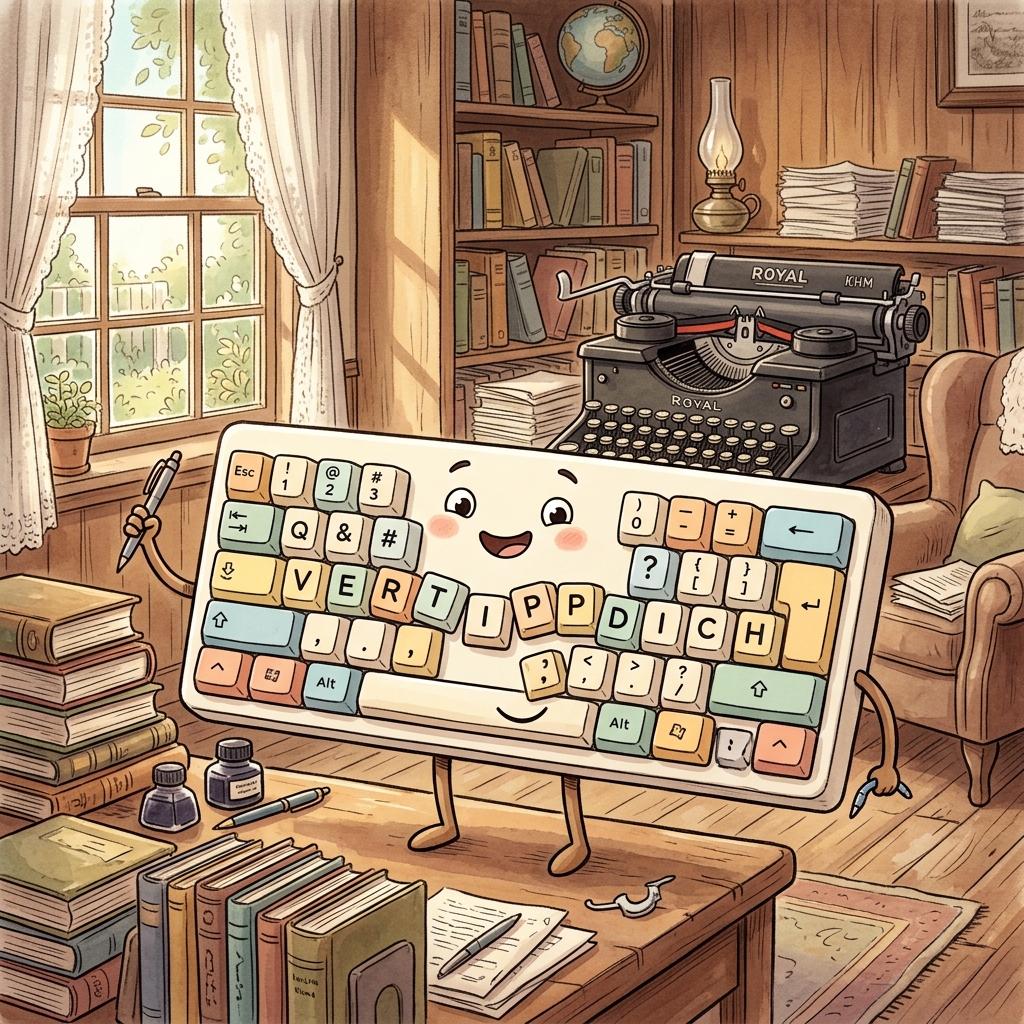
Vertippdich is a German term that directly translates to making a typing mistake or mistyping a word. Modern internet users frequently associate the concept of Vertippdich with specialized online search tools designed to hunt down misspelled eBay listings to secure massive consumer discounts.
Understanding how these linguistic errors occur helps practitioners navigate both human psychology and digital commerce. We will explore the mechanisms behind mistyped words, the historical cost of typographical errors, and how professionals manage text accuracy.
The Core Concept of Vertippdich
The term Vertippdich originates from the German verb “sich vertippen,” which specifically describes the physical act of hitting the wrong key on a keyboard. This phenomenon happens constantly across all languages and digital platforms.
Vertippdich tools capitalize on these exact human errors in the e-commerce sector. Sellers frequently misspell product titles, causing their listings to completely bypass standard search algorithms.
Consequently, these hidden auctions receive zero bids. Savvy buyers use a Vertippdich eBay search strategy to locate these invisible items and purchase them at extremely low prices.
Standard Search vs. Vertippdich Search Mechanics
The following table illustrates the functional differences between standard marketplace queries and targeted typographical error searches.
|
Search Strategy |
Typical User Behavior |
Algorithm Response |
Market Outcome |
|---|---|---|---|
|
Standard Search |
Types exact product name (e.g., “PlayStation 5”) |
Displays optimized, highly contested listings |
High competition, retail pricing |
|
Vertippdich Search |
Types intentional errors (e.g., “PlayStaton 5”) |
Bypasses main results to find hidden listings |
Low competition, heavy discounts |
Historical Context: The Evolution of Typos
High-priced typos have occurred consistently since the invention of the first printing press. A single misplaced character can completely alter the meaning of a legal document or a financial transaction.
One of the most expensive typographical errors occurred during the NASA Mariner 1 mission in 1962. A missing hyphen in the guidance software code caused the rocket to veer off course.
NASA was forced to intentionally destroy the spacecraft just minutes after launch. That specific coding error cost the agency approximately $80 million, proving that mechanical typos carry massive real-world consequences.
The Psychological Aspects of Typos
Psychologists have heavily studied why intelligent people consistently miss their own typographical errors. The reason we fail to catch a Vertippdich mistake is actually tied to high-level cognitive functioning.
When you type, your brain is actively mapping out complex meaning rather than focusing on individual letters. It prioritizes the overarching message.
Your brain automatically corrects visual errors on the screen because it already knows the intended destination of the sentence. This cognitive blind spot explains why the author of a document is often the worst person to proofread it.
Why Our Brains Ignore the Details
To type quickly, our motor systems operate on autopilot. We rely on muscle memory to execute the physical keystrokes while our conscious mind constructs the next argument.
This separation of tasks makes us highly efficient communicators. It also guarantees that a Vertippdich error will occasionally slip past our visual filters.
The Impact of Vertippdich in Professional Fields
People form concrete opinions about your brand in mere seconds. If your corporate website or printed brochure contains glaring typographical errors, consumers immediately raise red flags regarding your overall competence.
A high frequency of Vertippdich incidents actively damages brand credibility and reduces conversion rates. Online consumers hesitate to enter credit card information on a checkout page that contains misspelled security assurances.
Maintaining immaculate text is a strict requirement for financial institutions and medical practitioners. A single decimal point error in a patient dosage or a financial ledger creates catastrophic liability issues.
Tools and Techniques for Preventing Typos
Professionals employ multiple strategies to completely eliminate Vertippdich errors before publication. The most effective approach combines automated software with rigorous human review processes.
- Wait before proofreading: Step away from the text for several hours to reset your cognitive familiarity with the document.
- Change the visual format: Altering the font size or background color forces your brain to process the text as new visual information.
- Read the text backward: This technique isolates individual words from their contextual meaning, making spelling errors instantly visible.
- Use text-to-speech software: Hearing the words spoken aloud easily highlights missing words and awkward phrasing.
- Deploy professional grammar checkers: Software solutions like LanguageTool provide a baseline defense against common mechanical errors.
The Future of Vertippdich in an AI-Driven World
Artificial intelligence is rapidly altering how operating systems handle user input errors. Predictive text algorithms now anticipate the user’s intent with remarkable precision.
Modern Large Language Models (LLMs) do not simply check against a static dictionary. They analyze the semantic context of the entire paragraph to determine if a specific word usage is statistically probable.
Despite these advancements, the concept of Vertippdich remains relevant. AI models still occasionally hallucinate corrections, altering the author’s intended tone or technical terminology without warning.
Human oversight remains mandatory for highly regulated industries. Medical professionals and legal teams cannot blindly trust an algorithmic correction tool to interpret nuanced diagnostic data.
Expert Verdict on Managing Typographical Errors
Language is inherently messy, and human motor function will always produce occasional keystroke errors. A comprehensive defense against Vertippdich requires treating proofreading as a distinct, mechanical process separate from content creation.
You must build systemic friction into your publishing workflow to catch errors effectively. Mandate secondary human reviews for all high-stakes communications, and utilize dedicated software to scan for localized spelling variations.
By understanding the cognitive reasons behind why we mistype words, you can implement smarter operational safeguards. Protect your professional credibility by treating every final draft as a completely new document.
Frequently Asked Questions (FAQ)
What does Vertippdich mean in English?
Vertippdich translates directly from German as the act of making a typing mistake. It specifically refers to hitting the wrong keys, resulting in a mistyped word or typographical error.
How do people use Vertippdich to find eBay bargains?
Buyers use specialized search platforms to intentionally look for misspelled auction titles on eBay. Because standard buyers search for the correct spelling, these hidden listings receive no bids and sell for exceptionally low prices.
Why is it so hard to spot my own typos?
Your brain focuses on high-level meaning rather than individual letters when reading your own writing. Because you already know what the sentence is supposed to say, your cognitive systems automatically fill in missing letters and ignore obvious mistakes.
Can typos actually affect website conversion rates?
Yes. Consumers view typographical errors as an immediate indicator of poor quality control. A website littered with spelling mistakes suffers from reduced trust, leading directly to higher bounce rates and abandoned shopping carts.
Will AI completely eliminate the need for human proofreading?
Artificial intelligence significantly reduces baseline spelling and grammar errors through predictive contextual analysis. Human proofreading remains strictly necessary to ensure technical accuracy, maintain brand voice, and prevent unwanted algorithmic alterations.











Leave a Reply