
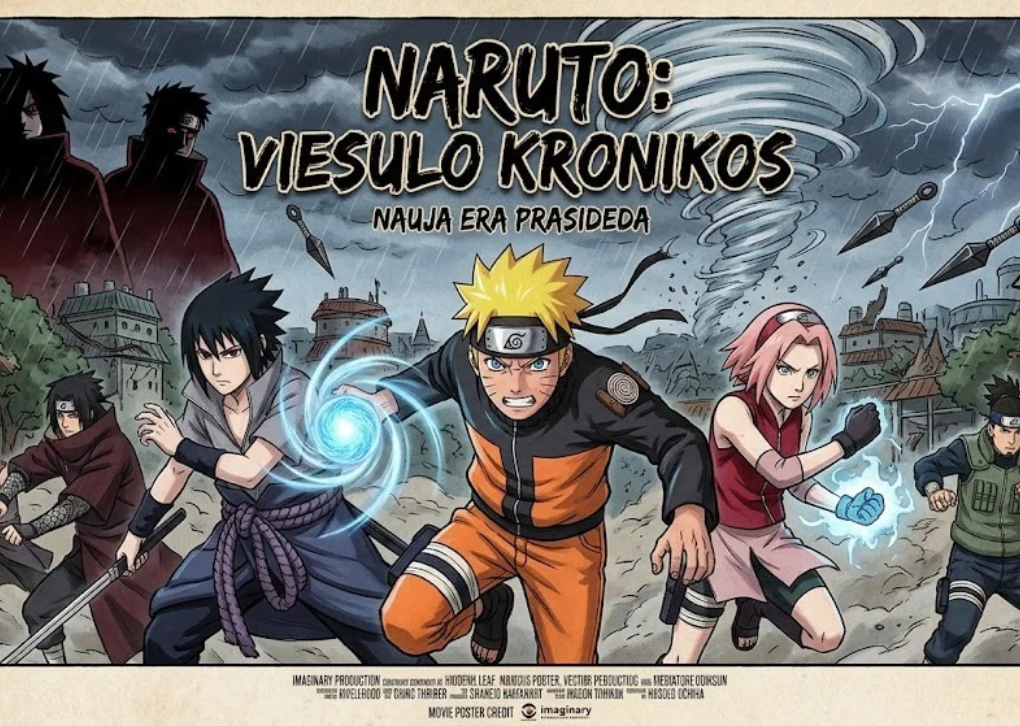
If you have searched for Narutas viesulo kronikos, you may have wondered whether it is a separate anime, a Lithuanian television adaptation, or another chapter in the famous Naruto franchise. The answer is simpler than it might appear. The name refers to Naruto: Shippuden, the second major anime series following Naruto Uzumaki, a young ninja whose journey develops into an extraordinary story of friendship, determination, sacrifice, and personal growth.
Originally created from the manga by Masashi Kishimoto, the series takes viewers into a much larger and more dangerous ninja world. Naruto is no longer the inexperienced child audiences first encountered. After spending approximately two and a half years training with his mentor, Jiraiya, he returns to the Hidden Leaf Village with improved abilities and a stronger understanding of what it means to protect others.
Narutas viesulo kronikos is particularly interesting because its localized title reflects how Japanese anime travels across languages and cultures. Understanding the name also opens the door to exploring the characters, story arcs, legendary battles, and emotional ideas that made Naruto Shippuden an internationally recognized anime.
This guide explains everything new viewers and longtime fans should know, from the meaning behind the title to the series’ episode structure and its lasting influence.
What Is Narutas Viesulo Kronikos?
Narutas viesulo kronikos is the Lithuanian title associated with Naruto: Shippuden. It is not an independent anime or an alternative storyline. Instead, it refers to the continuation of the original Naruto television series, following the same characters and central narrative.
The Japanese title is Naruto: Shippūden (NARUTO -ナルト- 疾風伝). The subtitle is commonly translated into English as Hurricane Chronicles or Chronicles of the Hurricane.
The Lithuanian wording communicates a similar idea through its references to a whirlwind, storm, and chronicles. This makes the localized title recognizable while preserving the energetic feeling of the Japanese original.
Is Narutas Viesulo Kronikos Different From Naruto Shippuden?
No. Both names identify the same underlying anime series.
Here is a simple comparison:
| Detail | Information |
|---|---|
| Lithuanian title | Narutas Viesulo Kronikos |
| International title | Naruto: Shippuden |
| Original language | Japanese |
| Original creator | Masashi Kishimoto |
| Animation studio | Studio Pierrot |
| Original Japanese broadcast | 2007–2017 |
| Total episodes | 500 |
| Genre | Action, adventure, fantasy |
| Main character | Naruto Uzumaki |
The series originally premiered in Japan on February 15, 2007, and concluded on March 23, 2017. Its 500 episodes adapt the second major part of Kishimoto’s Naruto story.
NARUTO OFFICIAL SITE (NARUTO & BORUTO)+1
What Does the Title Mean?
The title has three recognizable elements:
-
Narutas: The Lithuanian form of Naruto, the central character’s name.
-
Viesulo: Associated with a whirlwind, storm, or hurricane.
-
Kronikos: Means chronicles or a recorded sequence of events.
Together, the phrase can be translated approximately as Naruto: Hurricane Chronicles or Naruto: Storm Chronicles.
The wording is more than a decorative title. It reflects the increasingly intense conflicts that define this stage of Naruto’s life.
The Story Behind Narutas Viesulo Kronikos
The story begins after Naruto has spent years away from his home village.
During this period, he trains under Jiraiya, one of the legendary Sannin. His goal is not simply to become stronger. He wants to bring his former teammate Sasuke Uchiha home and prove that he can protect the people who matter to him.
When Naruto returns to Konohagakure, commonly known as the Hidden Leaf Village, he discovers that his friends have changed too. Sakura Haruno has developed impressive medical ninja abilities, while other members of the village have continued their own training.
But the reunion does not last long.
A dangerous criminal organization called Akatsuki has begun capturing individuals who carry powerful Tailed Beasts. One of its first major targets is Gaara, the Kazekage of the Hidden Sand Village and someone who understands Naruto’s experience of growing up isolated.
Naruto and Sakura join Kakashi Hatake on a mission to rescue Gaara. Their mission introduces viewers to the greater threat facing the shinobi world.
NARUTO OFFICIAL SITE (NARUTO & BORUTO)
The Main Story Developments
Several interconnected developments shape the narrative:
-
Naruto’s return: He reunites with his friends and demonstrates the results of his training.
-
The Akatsuki threat: The organization begins pursuing the Tailed Beasts and their hosts.
-
Sasuke’s journey: Naruto continues trying to reach his former teammate despite increasingly complicated circumstances.
-
The truth about the shinobi world: Political conflicts, historical rivalries, and personal sacrifices become central to the story.
-
The Fourth Great Ninja War: Different villages must confront a threat that extends beyond their traditional rivalries.
What starts as a rescue mission eventually becomes a conflict involving the survival and future of the entire ninja world.
Main Characters in Narutas Viesulo Kronikos
One of the strongest elements of Narutas viesulo kronikos is its character development. The sequel gives familiar characters more complicated motivations, personal struggles, and opportunities to demonstrate their abilities.
1. Naruto Uzumaki
Naruto is the central character of the entire franchise. He carries the Nine-Tailed Fox, Kurama, inside his body, a circumstance that caused many villagers to fear and reject him during childhood.
Rather than allowing that rejection to define his future, Naruto develops a determination to earn recognition through his actions.
In Shippuden, his abilities expand considerably. He improves his chakra control, develops powerful techniques, and gradually learns how to cooperate with the enormous power sealed inside him.
However, his greatest strength is not simply his physical power. His ability to understand people who have experienced loneliness and hatred becomes one of the most important forces in the story.
2. Sasuke Uchiha
Sasuke is one of Naruto’s most important rivals and emotional counterparts.
His life is shaped by the destruction of his clan and his obsession with becoming strong enough to defeat his brother, Itachi. These experiences gradually push him toward increasingly dangerous decisions.
Unlike Naruto, who searches for connection, Sasuke often chooses isolation.
Their opposing approaches to pain, loyalty, and revenge create one of the series’ most compelling relationships.
3. Sakura Haruno
Sakura becomes significantly more capable during the time between the original Naruto series and Shippuden.
Under Tsunade’s guidance, she develops advanced medical ninja abilities and exceptional physical strength. Her contribution to the team becomes much more important, particularly during dangerous missions involving injured teammates.
Her development also highlights a central idea of the series: strength does not always come from destructive techniques. Healing, intelligence, and emotional resilience are equally valuable.
4. Kakashi Hatake
Kakashi remains one of the most recognizable characters in the franchise.
As Team 7’s teacher, he has a complicated history involving friendship, loss, and responsibility. His experience makes him an important mentor for Naruto, Sakura, and Sasuke.
His Sharingan and tactical intelligence make him a formidable fighter, but his emotional connection to his students is what gives his character much of its depth.
5. Jiraiya
Jiraiya plays a crucial role in Naruto’s development.
He is not merely a powerful ninja who teaches advanced techniques. He becomes a father figure, mentor, and source of emotional guidance.
His influence extends beyond Naruto’s fighting abilities. He helps shape Naruto’s understanding of responsibility, peace, and the importance of protecting others.
6. Itachi Uchiha
Itachi is one of the most complex characters in the story.
Initially presented as a dangerous antagonist, his background gradually reveals a much more complicated history involving his family, the Uchiha clan, and the political tensions surrounding the Hidden Leaf Village.
His relationship with Sasuke becomes one of the most emotionally significant elements of the entire franchise.
Understanding the Akatsuki Organization
The Akatsuki is one of the most memorable antagonist organizations in anime history. Its members are powerful rogue ninja who operate outside the traditional village system.
Their distinctive black cloaks decorated with red clouds make them instantly recognizable. However, their appearance is only part of what makes the group interesting.
Akatsuki members have different backgrounds, personalities, and motivations. Some are driven by money, others by revenge, and some believe their actions are necessary to create a different kind of world.
What Is Akatsuki Trying to Achieve?
The organization’s central objective involves collecting all nine Tailed Beasts.
These enormous chakra creatures possess extraordinary power, and their energy is essential to Akatsuki’s larger plans. Their hosts, known as Jinchuriki, become targets because they contain these powerful beings within their bodies.
Important Akatsuki members include:
-
Pain (Nagato): A leader whose experiences with war shape his extreme philosophy about peace.
-
Konan: A highly capable ninja who shares a long history with Nagato.
-
Itachi Uchiha: A mysterious figure whose true motivations become increasingly important.
-
Kisame Hoshigaki: A powerful swordsman known for his enormous chakra reserves.
-
Deidara: An explosive-arts specialist who considers destruction a form of artistic expression.
-
Sasori: A puppet master who transforms human bodies into weapons.
-
Hidan: A dangerous fighter who follows a disturbing religious belief system.
-
Kakuzu: A mercenary obsessed with money and survival.
-
Tobi: A mysterious character whose identity and influence become central to the larger storyline.
Why Is Akatsuki Such an Effective Villain Group?
Unlike an organization whose members simply want to destroy everything, Akatsuki represents different interpretations of power and peace.
The series repeatedly asks an uncomfortable question: can violence ever produce lasting peace?
This question connects the organization’s members to Naruto’s own experiences. Both sides understand suffering, but they respond to it in radically different ways.
Major Story Arcs in Narutas Viesulo Kronikos
The anime contains multiple major story arcs, each contributing something different to the overall narrative.
The official Naruto website organizes important sections of the anime into named story arcs, including the Kazekage Rescue, Five Kage Assemble, and Great Ninja War storylines.
NARUTO OFFICIAL SITE (NARUTO & BORUTO)
1. Kazekage Rescue Arc
This opening storyline introduces the more mature version of Naruto and establishes Akatsuki as a serious threat.
Gaara is captured, and Naruto joins Sakura and Kakashi to rescue him. The mission also provides an opportunity to explore the relationship between Naruto and Gaara.
Both characters experienced isolation because of the powerful creatures sealed inside them. Their different responses to that experience make their relationship particularly meaningful.
2. Tenchi Bridge Reconnaissance Mission
This storyline focuses on the continuing search for Sasuke.
Naruto and his teammates follow information connected to Orochimaru, hoping to discover Sasuke’s location. Their mission becomes increasingly dangerous as Naruto struggles with the immense power of Kurama.
The arc explores how difficult it can be to control anger and frustration when someone important is slipping further away.
3. Akatsuki Suppression Mission
The Akatsuki threat becomes more personal when the organization targets people connected to Naruto’s friends.
This storyline gives Shikamaru Nara a particularly important role. His intelligence, planning skills, and emotional maturity become essential during the conflict involving Hidan and Kakuzu.
It also demonstrates that winning a battle requires more than overwhelming strength.
4. Pain’s Assault Arc
Pain’s invasion of the Hidden Leaf Village is one of the most memorable events in the entire anime.
Nagato, operating through Pain, attacks Konoha and challenges the village’s understanding of justice and peace.
Naruto must confront an enemy whose worldview is built around suffering. Their confrontation is not simply a contest between two powerful fighters. It is a philosophical disagreement about how people should respond to violence.
The arc is especially important because Naruto must demonstrate whether his belief in understanding others can survive an encounter with someone who has experienced tremendous loss.
5. Five Kage Summit Arc
The Five Kage Summit brings together the leaders of the major ninja villages.
The meeting highlights the political tensions that exist throughout the shinobi world. It also shows how Akatsuki’s activities have affected international relationships.
Sasuke’s actions create additional instability, while the different Kage struggle to decide how to respond to the growing danger.
This arc expands the story beyond individual friendships and village missions into international politics and collective security.
6. Fourth Great Ninja War Arc
The Fourth Great Ninja War is the largest conflict in the series.
The major villages form an alliance to confront a common enemy. Former rivalries become less important as the shinobi world faces a threat that could affect everyone.
The war brings together several important characters and reveals major secrets about the history of the ninja world.
It also creates opportunities for characters who previously appeared only in supporting roles to demonstrate their abilities and personal values.
7. Naruto and Sasuke’s Final Conflict
The relationship between Naruto and Sasuke reaches its defining moment near the end of the story.
Their final confrontation represents years of friendship, disagreement, rivalry, and emotional separation.
Both characters have become extraordinarily powerful, but their conflict is ultimately about their different visions for the future.
The resolution gives the franchise one of its most important emotional conclusions.
Most Memorable Battles in Narutas Viesulo Kronikos
Action is a major attraction of the series, but its best battles are memorable because they involve personal stakes.
Some confrontations change relationships, reveal hidden abilities, or force characters to reconsider their beliefs.
Here are several standout battles:
| Battle | Why It Matters |
|---|---|
| Naruto vs. Pain | Tests Naruto’s philosophy about peace and revenge. |
| Sasuke vs. Itachi | Reveals important truths about the Uchiha family. |
| Naruto vs. Sasuke | Brings their long-running rivalry to its conclusion. |
| Jiraiya vs. Pain | Connects the history of the Hidden Rain Village to the larger conflict. |
| Kakashi vs. Obito | Explores the consequences of friendship, loss, and different choices. |
| Might Guy vs. Madara | Demonstrates the extraordinary potential of human determination. |
| Shikamaru’s team vs. Hidan and Kakuzu | Highlights strategic thinking and teamwork. |
What Makes These Battles Different?
The strongest fights combine three elements:
-
Character motivation: Viewers understand why the characters are fighting.
-
Strategic creativity: Ninja abilities are used in unexpected ways.
-
Emotional consequences: Victories and defeats have lasting effects on the story.
That combination is one reason the series remains popular among action-anime fans.
The Powers and Fighting Techniques of Naruto Shippuden
The combat system is built around chakra, the energy that ninja use to perform specialized techniques.
Different characters develop distinct fighting styles depending on their training, natural abilities, and experience.
Understanding a few basic concepts makes the battles easier to follow.
Chakra and Ninjutsu
Chakra is the energy required to perform many ninja techniques.
Ninjutsu includes specialized abilities that manipulate chakra to produce different effects. These can involve elemental attacks, defensive techniques, transformations, and other extraordinary abilities.
Genjutsu
Genjutsu involves techniques that influence an opponent’s perception.
Rather than physically attacking an enemy, the user creates illusions that affect the target’s senses and understanding of reality.
Itachi Uchiha is particularly well known for his sophisticated genjutsu abilities.
Taijutsu
Taijutsu focuses on physical combat.
It involves punches, kicks, movement, defensive techniques, and hand-to-hand fighting. Characters such as Rock Lee and Might Guy demonstrate how physical training can become an extremely powerful fighting style.
Sharingan and Rinnegan
The Sharingan is a special visual ability associated with the Uchiha clan. It provides enhanced visual perception and enables several powerful techniques.
The Rinnegan is another extraordinary eye ability connected to some of the most important events in the series.
Both abilities contribute to the complicated history of the shinobi world and explain why certain characters possess abilities far beyond ordinary ninja techniques.
Sage Mode
Sage Mode allows a character to use natural energy alongside their own chakra.
Naruto develops this ability through training at Mount Myoboku. It dramatically improves his combat capabilities and becomes especially important during the conflict with Pain.
These techniques help create a combat system that combines physical strength, intelligence, strategy, and supernatural abilities.
The Deeper Themes of Narutas Viesulo Kronikos
Although the series is famous for action, its emotional storytelling is equally important.
Narutas viesulo kronikos explores several themes that give the characters and conflicts greater meaning.
Friendship and Loyalty
Naruto’s determination to save Sasuke is one of the clearest examples of loyalty in the series.
Even when other characters believe the situation is hopeless, Naruto refuses to abandon someone he considers a friend.
This loyalty is sometimes portrayed as unreasonable, but it also becomes one of his defining strengths.
Loneliness and Acceptance
Naruto’s childhood experiences establish an important emotional foundation.
He grows up without the acceptance that most children receive from their communities. Instead of allowing that experience to turn him into someone who hates everyone, he works toward earning the recognition he once lacked.
Gaara’s story offers a powerful parallel, showing how similar circumstances can lead people toward very different outcomes.
Revenge and Forgiveness
Sasuke’s journey demonstrates how revenge can gradually consume a person’s identity.
His decisions raise questions about whether justice and personal revenge are truly the same thing.
The story does not suggest that forgiveness is always easy. Instead, it explores the emotional difficulty of moving beyond painful experiences.
Peace and the Cycle of Hatred
One of the central philosophical ideas is the cycle of hatred.
Different generations inherit the conflicts of earlier generations. Revenge creates additional suffering, which then encourages further revenge.
Naruto attempts to challenge this pattern by understanding the experiences of his enemies rather than treating them as people who must simply be destroyed.
Hard Work and Personal Growth
The franchise repeatedly emphasizes that natural talent does not guarantee success.
Characters such as Rock Lee demonstrate the importance of discipline, preparation, and perseverance.
Naruto’s own journey reinforces this message. His achievements come through training, mistakes, relationships, and an extraordinary willingness to continue after failure.
How Many Episodes Does Narutas Viesulo Kronikos Have?
One of the most common questions from people discovering the series is how long it takes to watch the complete story.
Naruto: Shippuden contains 500 episodes, originally broadcast in Japan between 2007 and 2017. It continues directly from the original Naruto anime, which has 220 episodes.
NARUTO OFFICIAL SITE (NARUTO & BORUTO)+1
Here is the basic franchise viewing order:
| Viewing order | Series | Episodes |
|---|---|---|
| 1 | Naruto (original anime) | 220 |
| 2 | Naruto: Shippuden | 500 |
| 3 | Boruto: Naruto Next Generations | 293 |
Boruto follows the next generation and is a separate continuation of the broader franchise.
Are There Filler Episodes?
Yes. Naruto Shippuden contains anime-original episodes that are not direct adaptations of the main manga storyline.
These episodes are commonly called filler episodes. Some explore supporting characters, provide additional background, or introduce stories that are not essential to the central manga narrative.
However, filler does not automatically mean an episode is worthless.
Some anime-original stories offer entertaining character interactions and additional world-building. Viewers who want the complete television experience may enjoy watching them, while people primarily interested in the central storyline can follow a manga-focused viewing guide.
Should You Skip the Filler Episodes?
That depends on your viewing preferences.
-
First-time viewers: Consider watching the main storyline first and adding optional stories afterward.
-
Character-focused viewers: Some anime-original episodes provide extra moments with supporting characters.
-
Manga readers: You may prefer an episode guide that identifies anime-original material.
-
Completionists: Watching all 500 episodes provides the full television experience.
The official Naruto website provides an overview of the anime’s named story arcs, making it a useful starting point when planning a watch-through.
NARUTO OFFICIAL SITE (NARUTO & BORUTO)
Narutas Viesulo Kronikos Compared With the Original Naruto
Although both series follow the same protagonist, they offer noticeably different experiences.
The original Naruto focuses heavily on childhood, ninja academy life, early missions, and the development of Team 7.
Shippuden expands the narrative into more complicated conflicts involving powerful organizations, international relationships, and the historical origins of the ninja world.
| Category | Original Naruto | Naruto Shippuden |
|---|---|---|
| Naruto’s age | Younger Naruto | Older teenage Naruto |
| Main focus | Growth and early missions | Larger conflicts and maturity |
| Story scale | Primarily village-level | International and world-level |
| Main threats | Orochimaru and other enemies | Akatsuki and major war-related threats |
| Character development | Establishes personalities | Explores deeper motivations |
| Fighting abilities | Developing ninja techniques | Advanced chakra and visual abilities |
| Emotional tone | Adventure and coming-of-age | More complex themes and consequences |
The biggest difference is the scale of the story.
The original anime introduces the world and its characters. Shippuden explores what happens when those characters must face the consequences of their decisions.
Why Is Narutas Viesulo Kronikos Still Popular?
A series with 500 episodes has to offer something more than attractive animation and exciting fights to maintain audience interest.
Several qualities help explain the continuing popularity of Naruto Shippuden.
1. Characters With Meaningful Personalities
Many anime feature powerful protagonists, but Naruto’s character development is particularly important.
He begins as someone desperate for recognition and gradually becomes someone capable of inspiring entire communities.
His development feels connected to his experiences rather than happening simply because the story needs a stronger hero.
2. Emotional Storytelling
The series frequently gives its antagonists personal histories.
Pain, Itachi, Gaara, and other characters are not defined exclusively by their fighting abilities. Their experiences explain why they make certain decisions.
This approach makes the conflicts more interesting because viewers can understand the motivations of characters who oppose Naruto.
3. Memorable Music
Music plays an important role in establishing the emotional atmosphere.
The soundtrack combines dramatic instrumental compositions with recognizable opening and ending songs. These musical elements help distinguish intense battles from quieter moments involving friendship, loss, and personal reflection.
4. A Recognizable Visual Identity
The red clouds of Akatsuki, Naruto’s orange clothing, Sasuke’s Sharingan, and the distinctive appearance of the major villages create an easily recognizable visual world.
These elements have become closely associated with the franchise and remain familiar to anime audiences.
5. A Story That Rewards Long-Term Viewing
Some important revelations take hundreds of episodes to fully develop.
Relationships introduced during the original Naruto series become central to Shippuden’s emotional conclusion. Earlier conversations, rivalries, and decisions gain additional meaning as viewers learn more about the characters’ histories.
This interconnected storytelling encourages fans to revisit earlier episodes.
Where Can You Watch Narutas Viesulo Kronikos?
If you want to watch Narutas viesulo kronikos, search for its internationally recognized title, Naruto: Shippuden, as well as its Lithuanian title.
Streaming availability depends on your country, licensing agreements, and the language options provided by individual platforms.
Useful places to check include:
-
Crunchyroll – Check its regional anime catalogue for Naruto Shippuden.
-
Netflix – Availability varies by country.
-
VIZ Media – A useful official source for Naruto franchise information and licensed releases.
-
Official television and digital distribution services – Check whether Lithuanian-language audio or subtitles are available in your region.
Important: Do not assume that every platform offers all 500 episodes or a Lithuanian-language version. Check the actual episode listing and audio settings before subscribing.
Can You Watch It With Lithuanian Audio?
The title is associated with the Lithuanian presentation of Naruto Shippuden, which is why Lithuanian-speaking audiences may recognize it differently from international viewers.
However, the availability of a complete Lithuanian dub or specific episodes can vary across television archives and licensed streaming services. It is best to verify the language options directly rather than assume that every online version contains Lithuanian audio.
Frequently Asked Questions About Narutas Viesulo Kronikos
1. Is Narutas Viesulo Kronikos the same as Naruto Shippuden?
Yes. Narutas Viesulo Kronikos is the Lithuanian title associated with Naruto Shippuden, the second major anime series in the Naruto franchise. It follows Naruto Uzumaki after his extended training journey with Jiraiya and continues the main storyline from the original anime.
2. How many episodes are in Narutas Viesulo Kronikos?
Naruto Shippuden has 500 episodes. The series originally aired in Japan from February 2007 until March 2017. These episodes cover Naruto’s return to the Hidden Leaf Village, the rise of Akatsuki, the search for Sasuke, and the Fourth Great Ninja War.
3. Who created Narutas Viesulo Kronikos?
The original story was created by Masashi Kishimoto, a Japanese manga artist. The anime adaptation was produced by Studio Pierrot. Kishimoto developed the characters, ninja world, and central storyline that made Naruto one of the most recognizable manga and anime franchises.
4. Do I need to watch the original Naruto before Shippuden?
Yes, watching the original Naruto first is strongly recommended. It introduces the main characters, their relationships, the Hidden Leaf Village, and the events that influence Shippuden. Without that background, some important emotional moments and character decisions may be difficult to understand.
5. Is Narutas Viesulo Kronikos suitable for children?
The series is primarily aimed at a teenage audience, although it has fans of different ages. It includes frequent animated combat, violence, death, emotional trauma, and mature themes involving revenge and war. Parents should consider the child’s age and sensitivity before deciding whether it is appropriate.
Conclusion: Why Narutas Viesulo Kronikos Deserves a Place on Your Anime Watchlist
Narutas viesulo kronikos is much more than an alternative name for a popular Japanese anime. It represents the Lithuanian presentation of Naruto: Shippuden, a story that takes a familiar young ninja and places him in a world of increasingly complicated relationships, powerful enemies, and difficult choices.
From Naruto’s determination to save Sasuke to the mysteries surrounding Akatsuki, every major storyline contributes to a larger exploration of friendship, forgiveness, ambition, and peace.
Its 500 episodes provide extensive character development, memorable battles, and emotional moments that connect the original Naruto story with its larger conclusion.
If you are discovering this anime for the first time, start with the original Naruto series before moving to Shippuden. If you are already familiar with the franchise, explore the major story arcs again and pay attention to the smaller character moments that help explain the larger conflicts.







Leave a Reply