
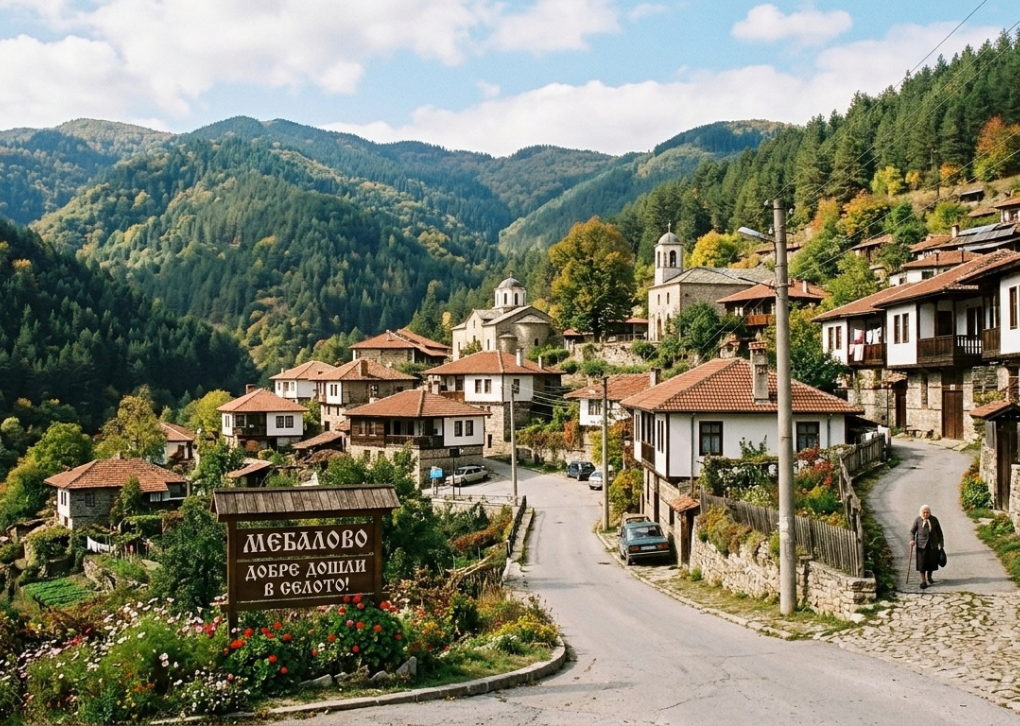
Mebalovo is one of those search terms that becomes more confusing the more pages you open. Some websites describe it as a peaceful Russian village near the Klyazma River; others present it as a lifestyle philosophy, creative-thinking method, digital identity concept, or branding idea. The problem is not a shortage of explanations. It is a shortage of independently verifiable evidence behind them.
As of September 16, 2026, the most responsible way to understand the term is to separate documented facts, repeated online claims, and later interpretations. That distinction matters for readers, publishers, travelers, and anyone trying to judge whether a polished web page is describing a real-world entity or merely recycling a search-friendly narrative.
What Is Mebalovo?
There is currently no single, authoritative definition of Mebalovo. Recent web pages use the name in several incompatible ways: as a supposed rural settlement in Russia, an abstract framework for clearer thinking, a lifestyle concept centered on simplicity, and a synthetic term for digital branding.
That inconsistency is the first important clue. Established places, products, organizations, and academic concepts usually accumulate a trail of primary evidence: coordinates, government records, institutional pages, named founders, publications, patents, dictionaries, or traceable historical references. Here, the strongest presence is a cluster of recent articles that often repeat one another without supplying that underlying documentation.
A practical definition, therefore, is this: Mebalovo is an ambiguous online term whose meaning is being constructed by web content rather than anchored, so far, by a clearly identifiable primary source.
Is Mebalovo a Real Village in Russia?
The most common travel-style claim says Mebalovo is a small village in central Russia, often placed near the Klyazma River. Articles describe birch forests, traditional wooden houses, fishing, agriculture, river trade, local crafts, seasonal scenery, and a slower rural lifestyle.
Those details sound plausible because the regional backdrop itself is plausible. The Klyazma is a real 686-kilometer river flowing through parts of Moscow, Vladimir, Ivanovo, and Nizhny Novgorod regions before joining the Oka. Real cities including Vladimir, Kovrov, Vyazniki, Noginsk, and Orekhovo-Zuyevo lie along its course.
What is missing is the crucial part: verifiable evidence tying the name to a recognized settlement. Searches for the exact English spelling and likely Cyrillic forms do not surface the kind of consistent gazetteer, municipal, postal, map, or administrative record normally expected for a named Russian locality. A recent fact-check reached the same conclusion, noting that established geographic references did not appear to document the supposed village in the claimed location.
That does not prove that no tiny hamlet, historical microtoponym, informal locality, transliteration variant, or obsolete name has ever existed. It does mean publishers should not state the village claim as settled fact until a primary or authoritative geographic source can be produced.
Why the Russian-village story sounds convincing
The name has phonetic features that make it feel geographically credible. Russian and other Slavic place names frequently end in forms such as -ovo, -evo, -ino, and -yno. Linguistic research on Russian toponymy specifically discusses the standardization of village names with those endings.
That matters because a plausible suffix can create instant familiarity. A reader who has seen names such as Ivanovo, Odintsovo, or Kemerovo may intuitively accept another “-ovo” name without checking it. Linguistic plausibility, however, is not geographic proof.
The Other Meaning: A Digital or Creative Concept
A second group of pages treats Mebalovo not as a place but as an idea. Depending on the publisher, it may represent structured thinking, simplicity, creativity, problem-solving, mindfulness, personal growth, flexible identity, or “blank canvas” branding.
There is a useful distinction here. The ideas themselves may be sensible—breaking complex problems into smaller parts, challenging assumptions, creating memorable brand names, or reducing cognitive clutter. But no credible evidence currently shows that these practices originated as a formal methodology under this name.
In other words, a writer can assign a useful meaning to a new word. That does not retroactively make the word an established philosophy, historical tradition, or recognized professional framework.
Is it a branding term?
The branding interpretation is more plausible as a modern use than as a proven origin story. Coined or low-association names can be valuable because they are distinctive, easier to search, and capable of acquiring meaning through repeated use.
But even here, caution is necessary. Some pages claim the term was created specifically for experimental SEO, digital identity, or creative naming. So far, those claims do not point to a documented creator, launch event, trademark history, founding company, or original publication that would establish provenance.
The safest wording is: the word is being used by some publishers as a branding and digital-identity concept; its original creator and intended meaning remain unclear.
Why Mebalovo Appears Across So Many Websites
Search engines create a powerful incentive around unfamiliar queries. When a term has measurable curiosity but little authoritative documentation, publishers see an opportunity: produce a comprehensive page, define the term, and compete for a relatively open results page.
That can create a self-reinforcing content loop. One page supplies an attractive explanation. Other publishers summarize or expand it. A third group adds lifestyle advice, travel details, or business applications. Eventually, repetition makes the claim look established even when the source trail still circles back to other secondary pages.
For Mebalovo, the pattern is especially visible because the narratives conflict. Travel pages may confidently describe a Russian settlement, while technology and lifestyle pages confidently describe an abstract concept. Confidence is high; evidentiary convergence is low.
This is a classic reason to evaluate source independence, not just source volume. Twenty pages repeating the same unsupported statement do not equal twenty independent confirmations.
How to Verify Claims About Mebalovo
Readers can investigate an unfamiliar term surprisingly quickly. The goal is not to distrust everything online; it is to ask what kind of evidence should exist if a claim is true.
Use this verification sequence:
- For a place: look for coordinates, an administrative district, a postal code, government or municipal records, recognized mapping databases, and local-language references.
- For a historical claim: look for dated archival material, books, museum records, academic papers, or primary documents that predate the recent web-content cluster.
- For a philosophy or method: identify the originator, first publication, formal definition, training body, scholarly discussion, or documented community of practice.
- For a company or platform: verify the legal entity, official domain, leadership, product documentation, privacy terms, app listings, or corporate registry entries.
- For a branding trend: look for dated case studies, trademark filings, campaign records, agency portfolios, or contemporary discussions from identifiable practitioners.
One more test is extremely effective: change the language of the search. A genuine rural Russian place would normally have some Russian-language footprint, even if English-language tourism coverage were scarce. Searching transliterations and Cyrillic variants helps distinguish a truly local entity from an English-language content artifact.
Red Flags in “Hidden Gem” Travel Content
Travel writing can be vivid without being reliable. First-person details, sensory descriptions, named craftspeople, precise seasonal imagery, and claims of “local secrets” can create the feeling of firsthand experience. None of those elements substitutes for a checkable location.
Be especially careful when a destination page contains several of these signals at once:
- no coordinates or map reference;
- no region, district, municipality, or postal information;
- no links to local authorities, accommodation providers, transport operators, or cultural institutions;
- generic claims about “centuries of history” without dated sources;
- personal travel anecdotes that cannot be corroborated;
- identical or near-identical descriptions across unrelated sites;
- recommendations to visit without practical routing information;
- stock-like imagery that is not tied to an identifiable landmark.
For Mebalovo, practical travel planning should stop at the verification stage. Do not book transport, accommodation, guides, or paid experiences for an alleged destination until you can identify the actual settlement and confirm how to reach it.
Mebalovo and the Klyazma Connection: What We Can Verify
The Klyazma River is not fictional. It is a major geographic feature of central European Russia and a left tributary of the Oka. Its basin has a long documented history, and numerous settlements along the river are well established in maps and reference works.
That real geography may be one reason the village narrative feels persuasive. Pairing an unfamiliar name with a genuine river, plausible forests, familiar rural architecture, and historically credible trade routes produces a story that “fits” the region.
But verification works in the opposite direction: every added specific should create more evidence to check. If a village has centuries of river-trade history, local crafts, residents, hiking routes, and tourism appeal, we should expect some combination of maps, records, photographs with identifiable landmarks, local-language mentions, transport information, or archival references. The absence of that trail is meaningful.
Could Mebalovo Be a Misspelling or Transliteration Variant?
Yes, and this possibility should remain open. Russian names can be transliterated into Latin characters in more than one way, and a single-letter difference can point to a completely different settlement.
There is also the possibility of confusion with a similarly spelled real locality. That is why a responsible researcher should not jump from “I cannot verify this spelling” to “the place definitely does not exist.” The correct editorial status is unverified under the currently circulating name and description.
If a future primary source supplies a Russian spelling, coordinates, administrative jurisdiction, or historical record, the assessment can change. Good fact-checking is updateable. For anyone researching Mebalovo, that distinction prevents uncertainty from being mistaken for a definitive negative.
The SEO Lesson Behind Mebalovo
This topic is a useful case study in entity verification and information gain. Search-focused content often fails when it tries to satisfy every possible interpretation of a keyword without first deciding which interpretation is evidenced.
A stronger content strategy does the reverse. It maps the entity, identifies contradictions in the search results, checks primary-source expectations, labels uncertainty, and answers the question users are actually struggling with: “Which of these claims can I trust?”
For publishers, this also aligns with E-E-A-T principles. Demonstrating experience and expertise does not mean inventing a personal visit or adding confident detail. It means showing method, source quality, limitations, and editorial judgment.
That distinction is increasingly important for obscure or emerging entities. A page does not become more authoritative because it contains more adjectives, more invented history, or a fabricated first-person experience. Authority comes from knowing which claims can be supported—and refusing to disguise assumptions as facts.
What Mebalovo Most Likely Represents Online
Based on the evidence currently available, the clearest description is not “Russian hidden gem” or “new productivity philosophy.” It is an emerging, weakly defined internet term that has accumulated multiple narratives through recent online publishing.
That description accounts for the evidence without overreaching. It explains why searchers encounter conflicting answers, why the term appears meaningful in several unrelated niches, and why confident definitions remain difficult to trace to a primary source.
The next decisive evidence would be straightforward: an authoritative geographic record for the village claim, or a dated first-party source establishing a creator and definition for the conceptual claim. Until then, uncertainty is part of the answer—not a gap to fill with invention.
FAQ
1. What does Mebalovo mean?
There is no universally accepted meaning at present. Online pages variously describe it as a Russian village, a creative-thinking framework, a lifestyle philosophy, and a digital-branding concept. Because those uses conflict and no authoritative origin has been established, the meaning should be treated as context-dependent and still evolving.
2. Is Mebalovo a real place in Russia?
The claim is currently unverified. Several travel-style pages place it near the Klyazma River, but the exact name does not appear to have the expected supporting trail of authoritative geographic, administrative, or local-language documentation. A spelling or transliteration variant remains possible, so “unverified” is more accurate than an absolute claim that it cannot exist.
3. Where is Mebalovo supposed to be located?
Most travel-oriented descriptions place the alleged village somewhere in central Russia near the Klyazma. The difficulty is that they usually do not provide dependable coordinates, a district, municipality, postal code, or verifiable transport route. Without those identifiers, “near the Klyazma River” is too broad to function as a reliable location.
4. Is Mebalovo a philosophy or problem-solving method?
Some recent articles use the word that way, connecting it with creativity, simplicity, mindfulness, or flexible thinking. Those are recognizable ideas, but there is currently no strong evidence of a formal school, established methodology, academic literature, or identifiable founder that defines a distinct method under this name.
5. Why is Mebalovo suddenly appearing in search results?
The term appears to have attracted a cluster of recent web publishing across travel, lifestyle, technology, and branding sites. Low-competition or poorly defined queries can invite publishers to create explanatory content, and repeated secondary articles can quickly make a term appear more established than its primary-source record supports.
The best response is to follow the evidence chain rather than the number of search results. Recent fact-checking around the term has likewise focused on the discrepancy between numerous confident articles and the lack of corresponding authoritative documentation.
Conclusion: Verify the Entity Before You Trust the Story
Mebalovo is interesting because it demonstrates how quickly the web can manufacture apparent certainty around an unclear term. The Russian-village story uses credible regional details, while the digital and lifestyle interpretations attach useful modern ideas to the same word. Neither path currently has the primary-source foundation required for a definitive origin story.
If you are researching the term, save the strongest primary evidence you can find, compare English and Russian spellings, and treat unsourced location or history claims as provisional. If you are publishing about it, label uncertainty explicitly and update the page when verifiable records emerge.
That approach is more useful to readers—and far more durable in search—than repeating a polished story simply because other websites already have.










Leave a Reply